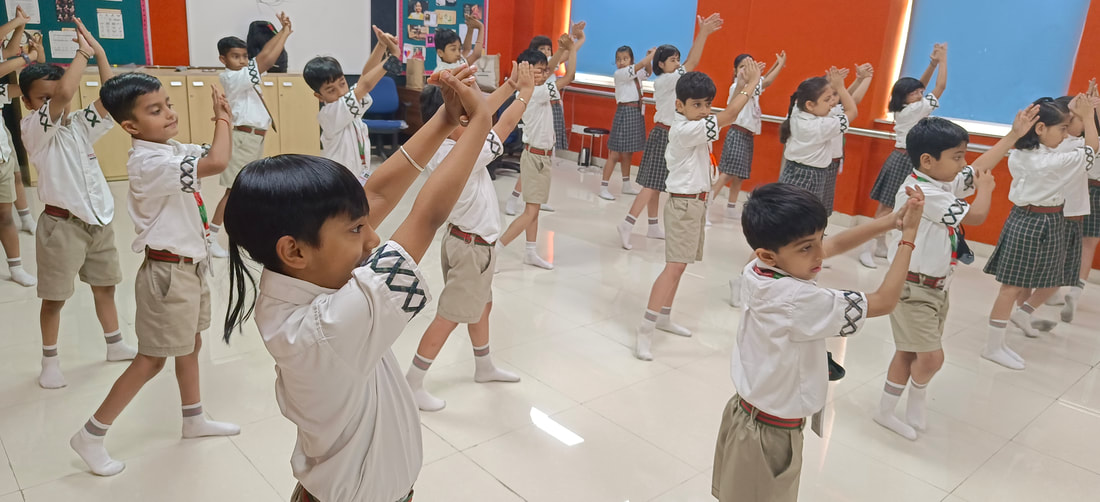
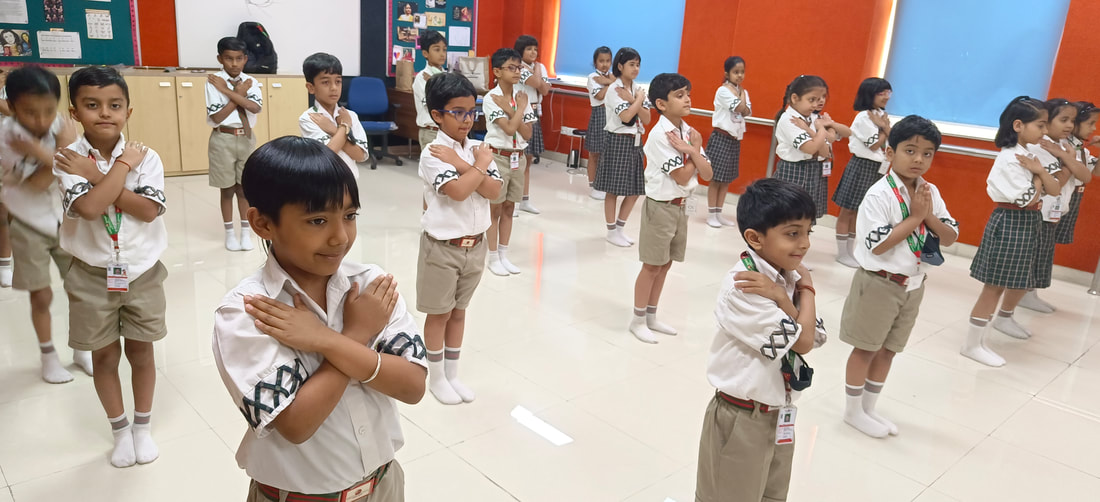
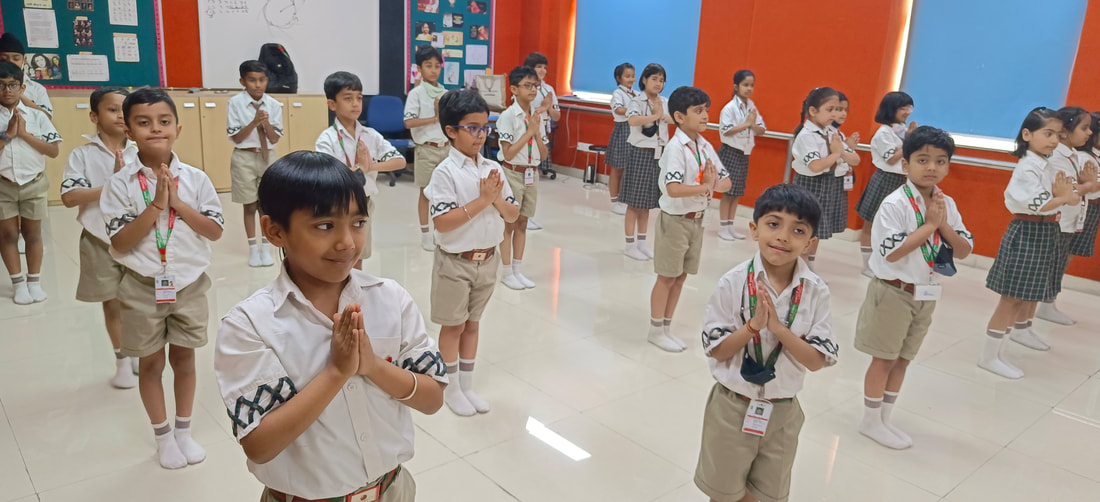
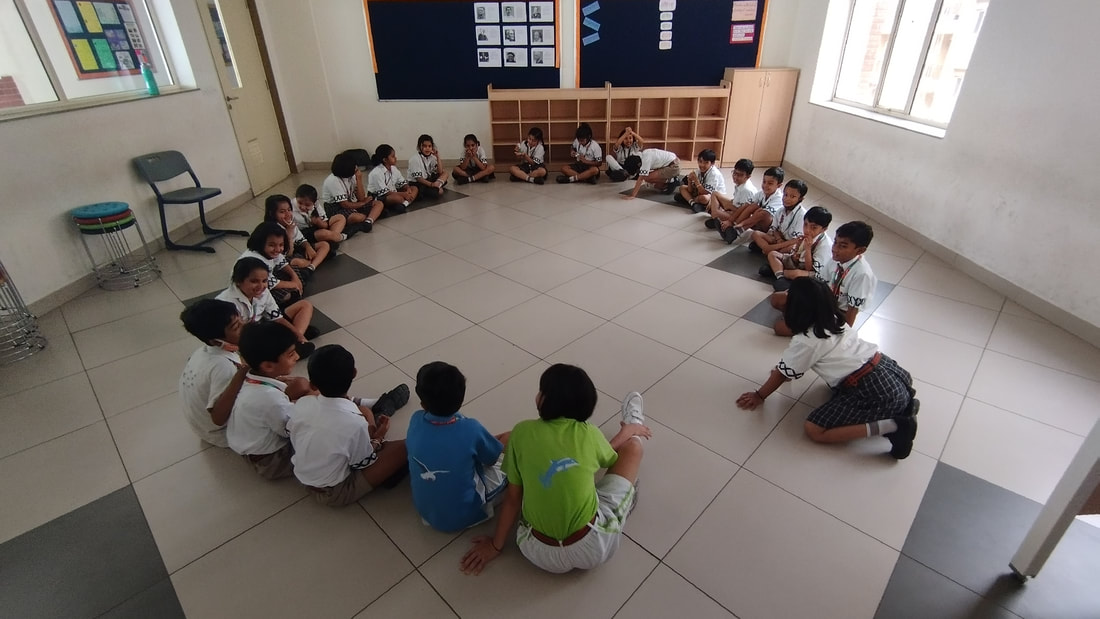
Learning is a TREASURE that will follow its owner everywhere. - Chinese Proverb
  • Blog
  • CLUB
  • Mission and Philosophy

class blog
grade - iII

Nurturing NOVEMEBR

12/4/2025

0 Comments


ENGLISH

​“ A Journey Through Sounds, Stories, and Innovation!”
​
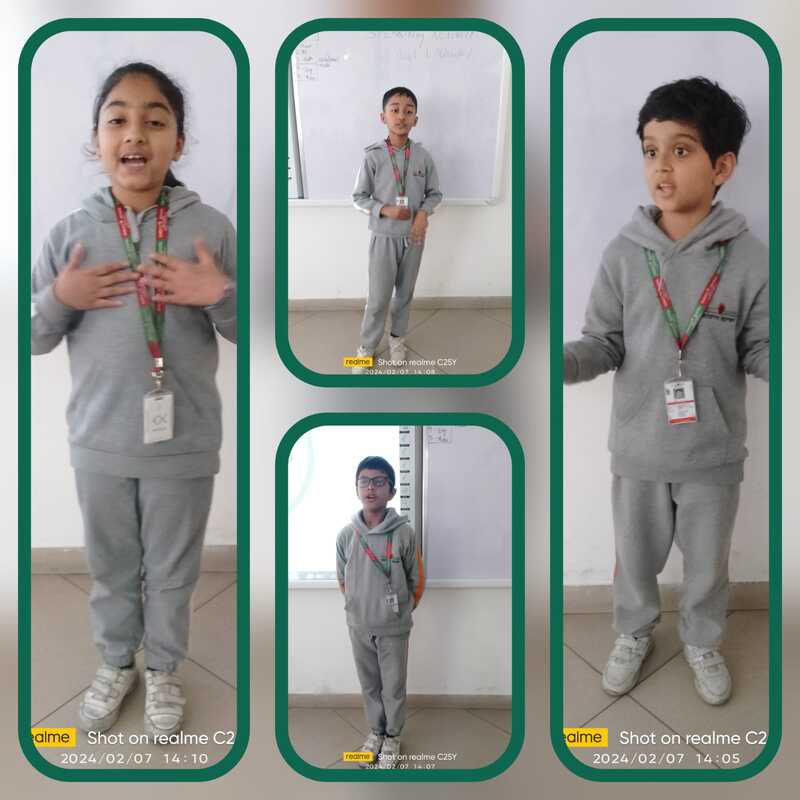
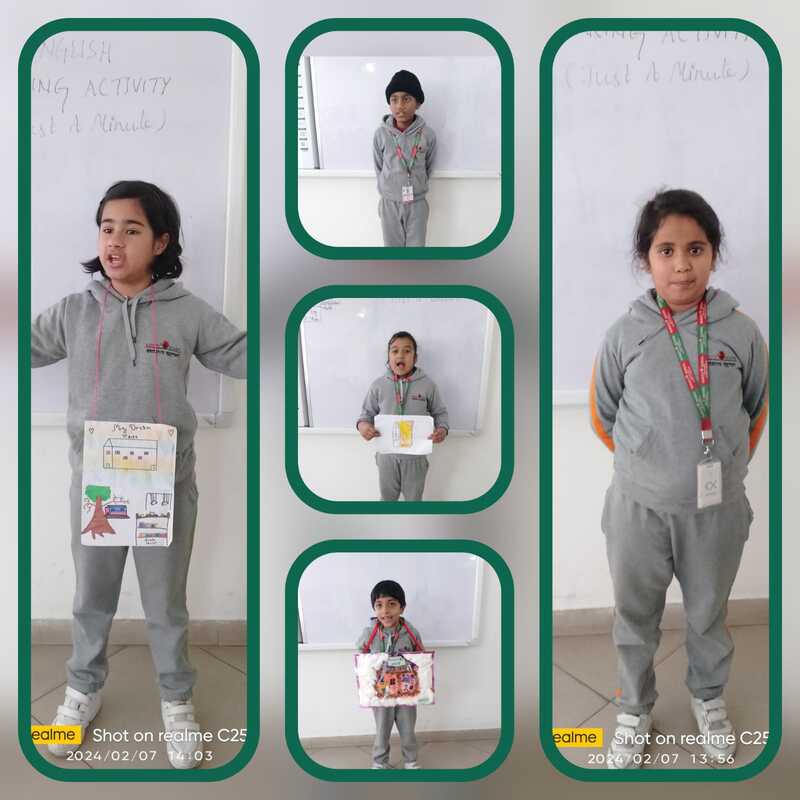
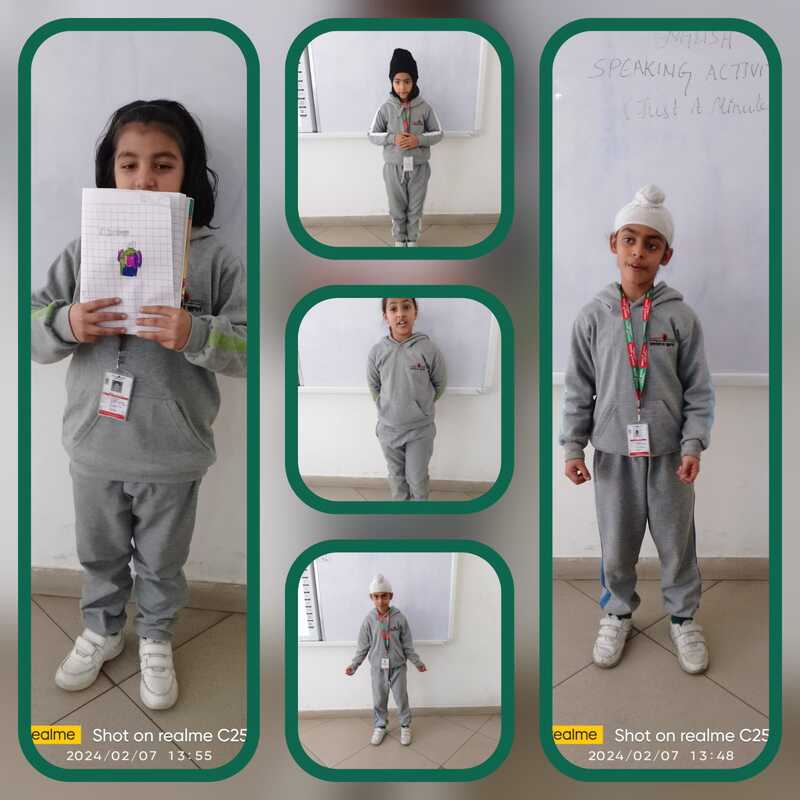
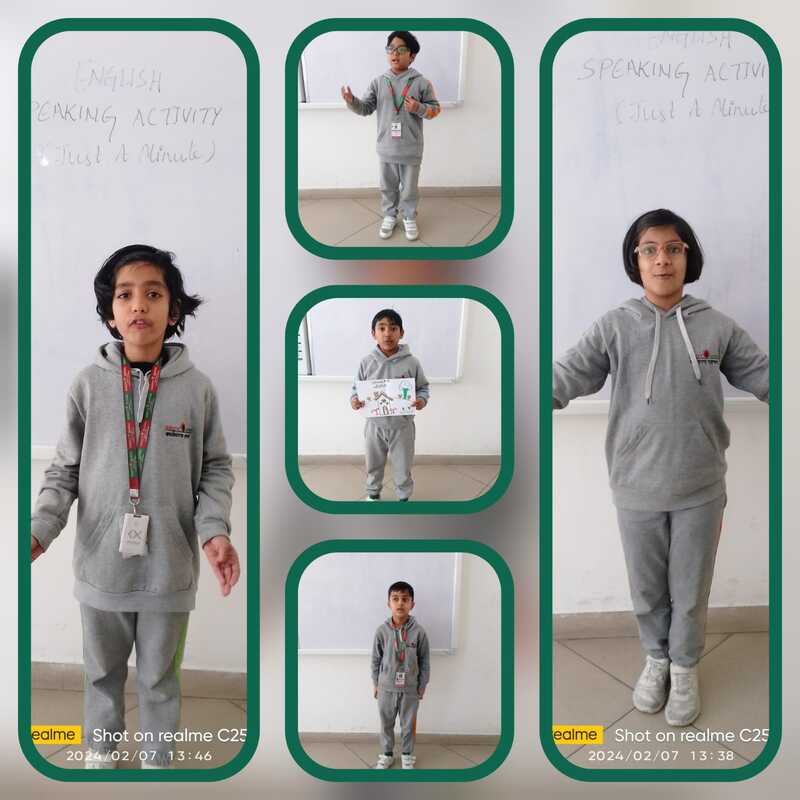
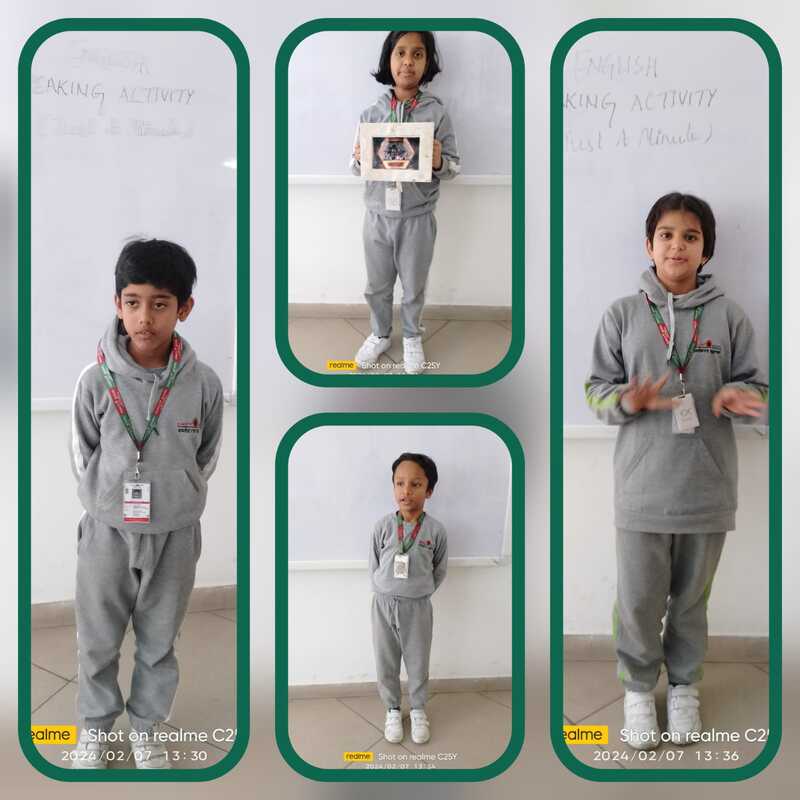
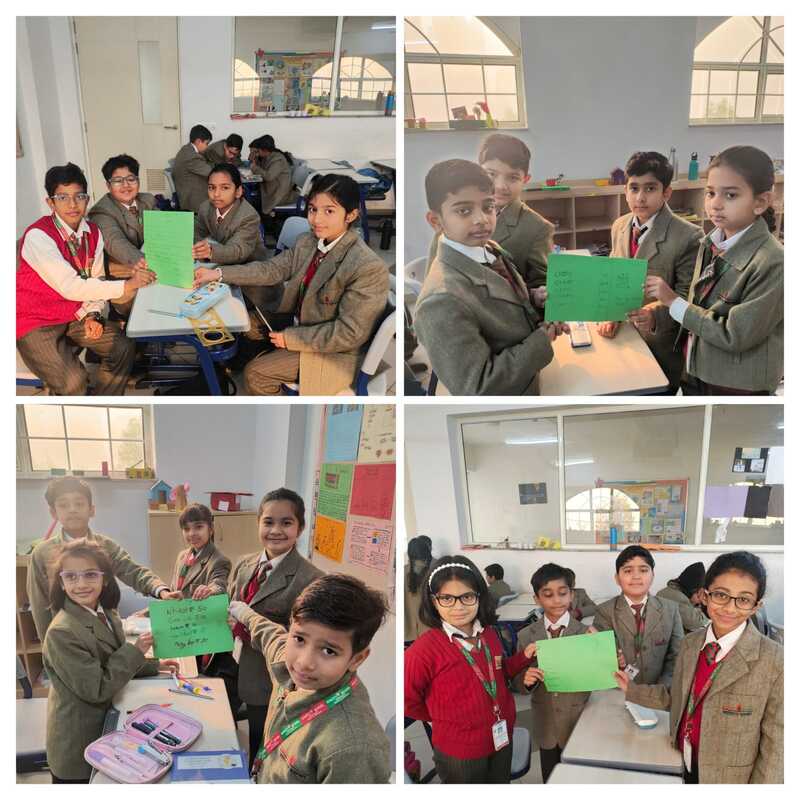
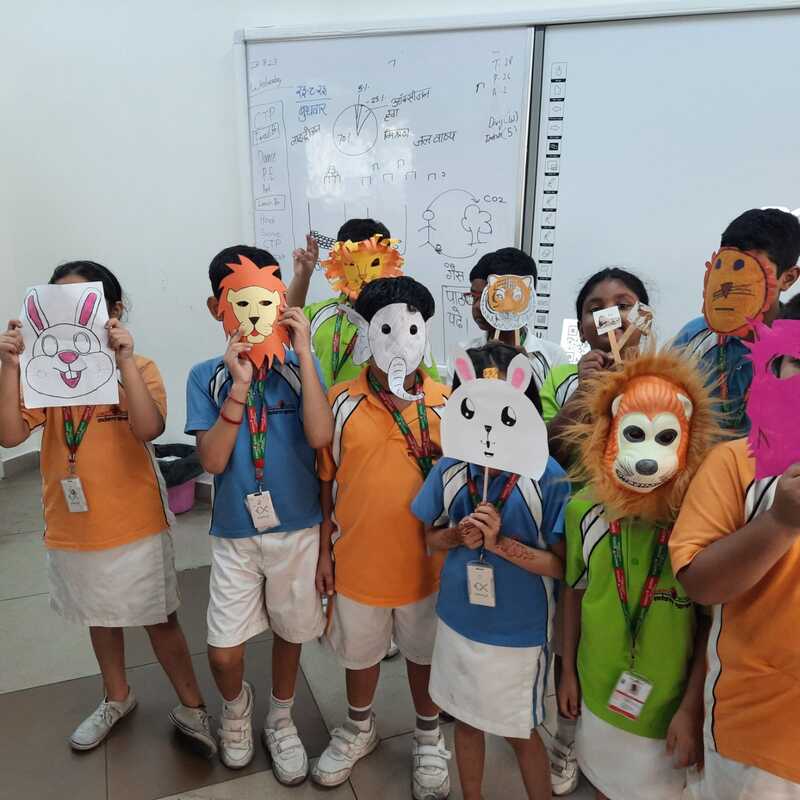
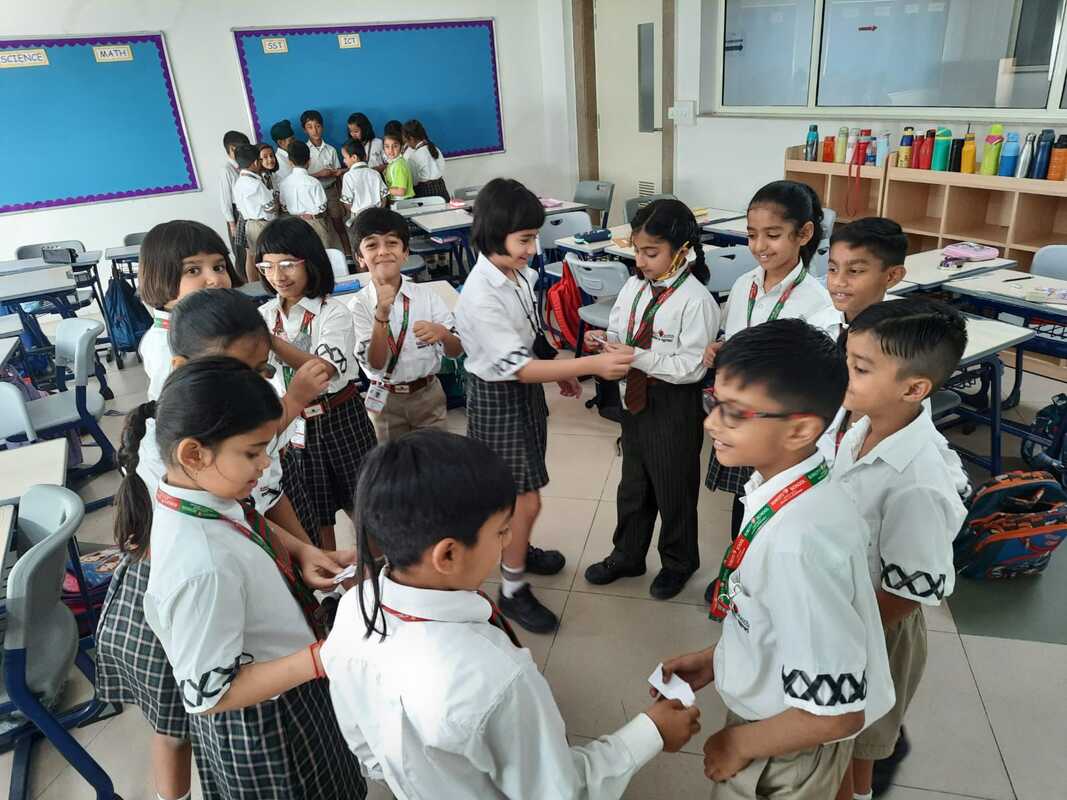
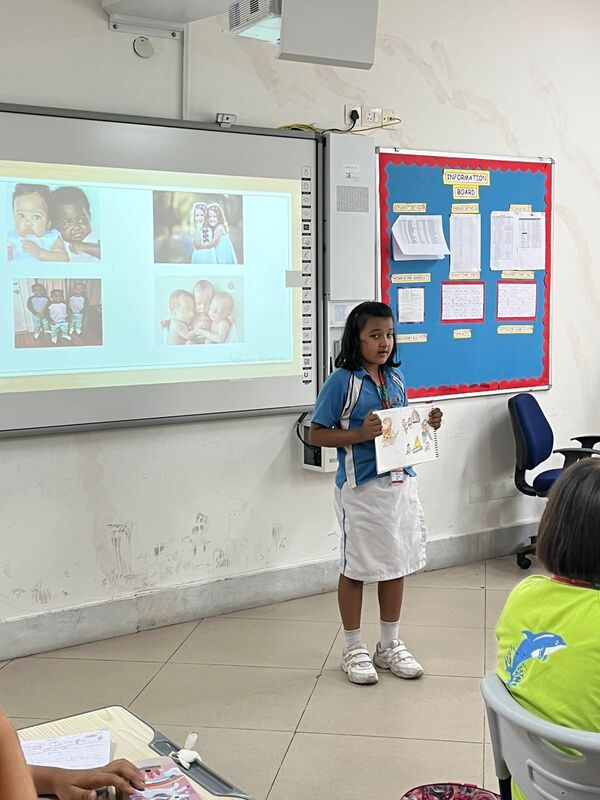
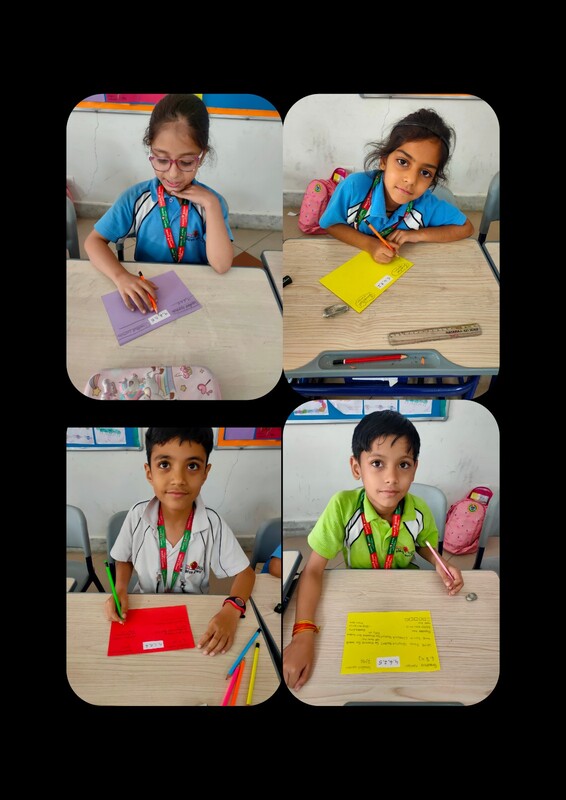
November has been a joyful journey of learning in Grade III, where children explored the theme Transport through engaging PBL-based activities. Through the poem The Sound Collector, students tuned into everyday sounds and experienced how silence changes our surroundings. The exciting Sound Walk turned them into little explorers, listening carefully and listing sounds they discovered around them. They also enjoyed creating transport-themed palindrome tickets, learning how patterns and symmetry connect to real-life designs like roads and vehicles.
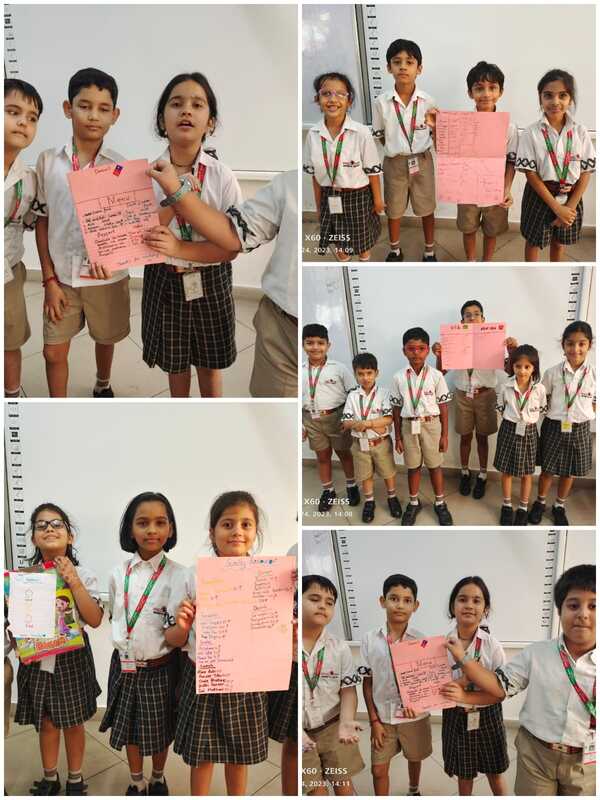
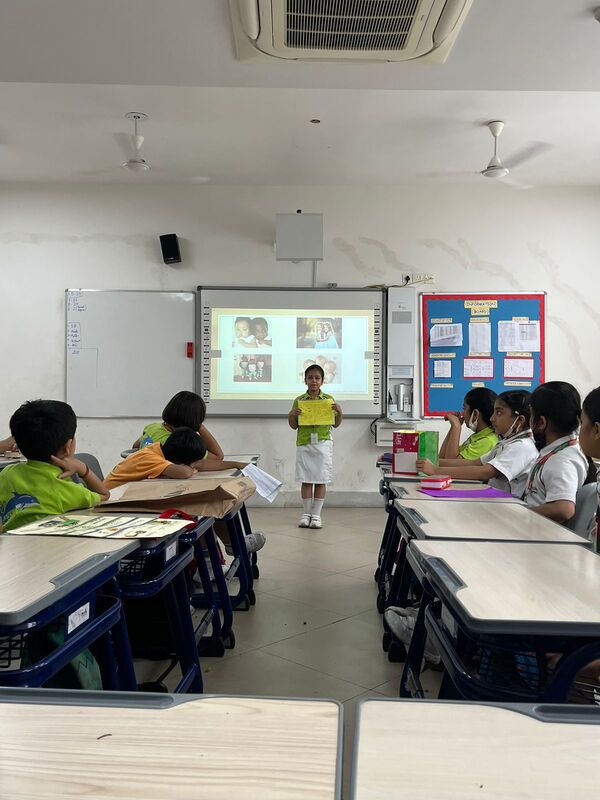
The PBL activity “Innovators of Sound” encouraged students to think creatively about how sound can make travel safer and more efficient. They brainstormed new sound ideas for buses, trains, cycles, and pedestrian crossings—developing problem-solving, collaboration, and presentation skills.
The month beautifully blended language, creativity, and critical thinking, making learning joyful, meaningful, and deeply connected to real life.

HINDI

​सीख और सृजन से भरा नवंबर : हमारे छात्रों  का प्रेरणादायी सफ़र

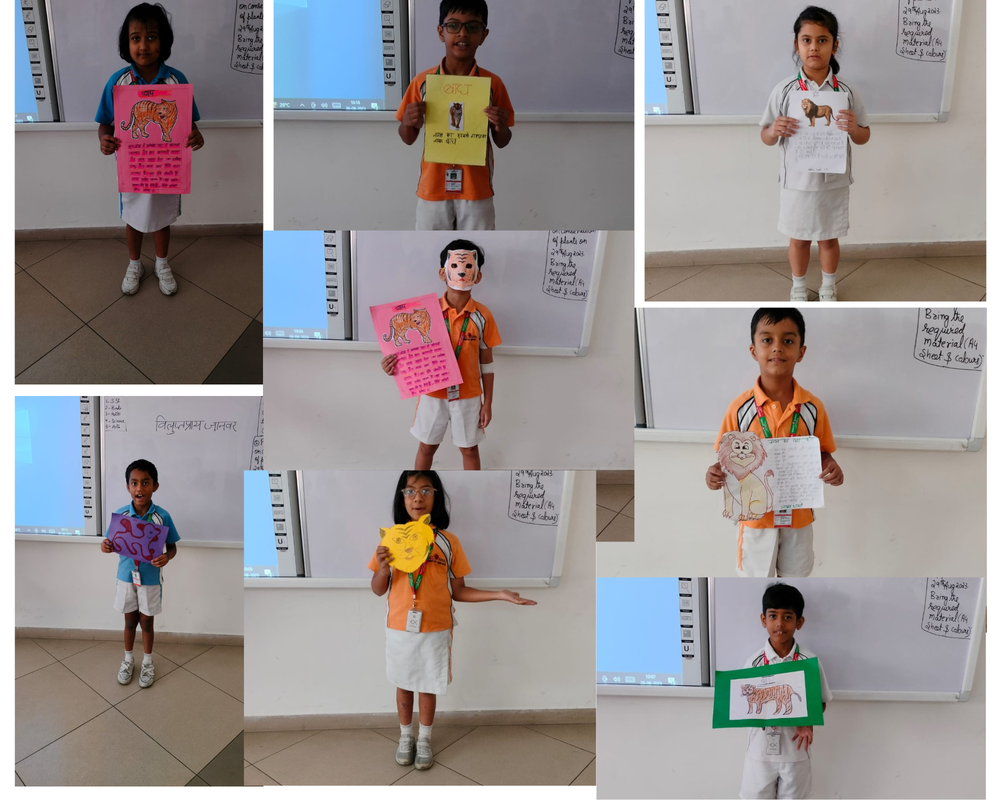
नवंबर का महीना हमारे बच्चों के लिए सीख, रचनात्मकता और मूल्यों से भरपूर रहा। इस महीने में बच्चों ने न केवल भाषा कौशल को मजबूत किया, बल्कि जीवन से जुड़ी महत्वपूर्ण सीखें भी अपनाईं। सबसे पहले बच्चों ने कहानी लेखन का अभ्यास किया, जिसमें उन्होंने कहानी के अंगों—पात्र, स्थान, समस्या और समाधान—को समझा और अपनी कल्पनाओं को सुंदर कहानियों में व्यक्त किया। उनकी रचनात्मकता और सोच स्पष्ट रूप से उभरकर सामने आई, जिससे उनके लेखन कौशल और शब्द ज्ञान में उल्लेखनीय वृद्धि हुई। 
‘बहादुर बच्चे’ पाठ के माध्यम से बच्चों ने जाना कि भारत में बहादुरी पुरस्कार किन बच्चों को दिए जाते हैं और उनके पीछे की प्रेरणादायक कहानियाँ क्या होती हैं। इससे बच्चों में निडरता, साहस, सहयोग और अच्छे गुणों को अपनाने की प्रेरणा विकसित हुई। वहीं ‘साइकिल मिल गई’ पाठ ने उन्हें सिखाया कि मेहनत कभी व्यर्थ नहीं जाती और लगन हमेशा सफलता दिलाती है। इस कहानी ने न केवल उनके नैतिक मूल्यों को मजबूत किया, बल्कि उन्हें एक बेहतर इंसान बनने की दिशा में भी आगे बढ़ाया।इसके बाद बच्चों ने विराम चिह्नों के बारे में सीखा और जाना कि वे वाक्यों को स्पष्ट और अर्थपूर्ण बनाते हैं। उन्होंने हाथों और शरीर के अंगों से विराम चिह्न बनाकर मज़ेदार तरीके से गतिविधियाँ कीं, जिससे उनकी समझ और भी गहरी हो गई।
नवंबर का यह महीना बच्चों के लिए सीख, संवेदना, नैतिकता और अभिव्यक्ति का सुंदर संगम रहा। हमें गर्व है कि हमारे बच्चे पढ़ाई के साथ-साथ गुणों और व्यवहार में भी निरंतर प्रगति कर रहे हैं। 
https://www.youtube.com/watch?v=bHZy2_R5CLA 

Mathematics

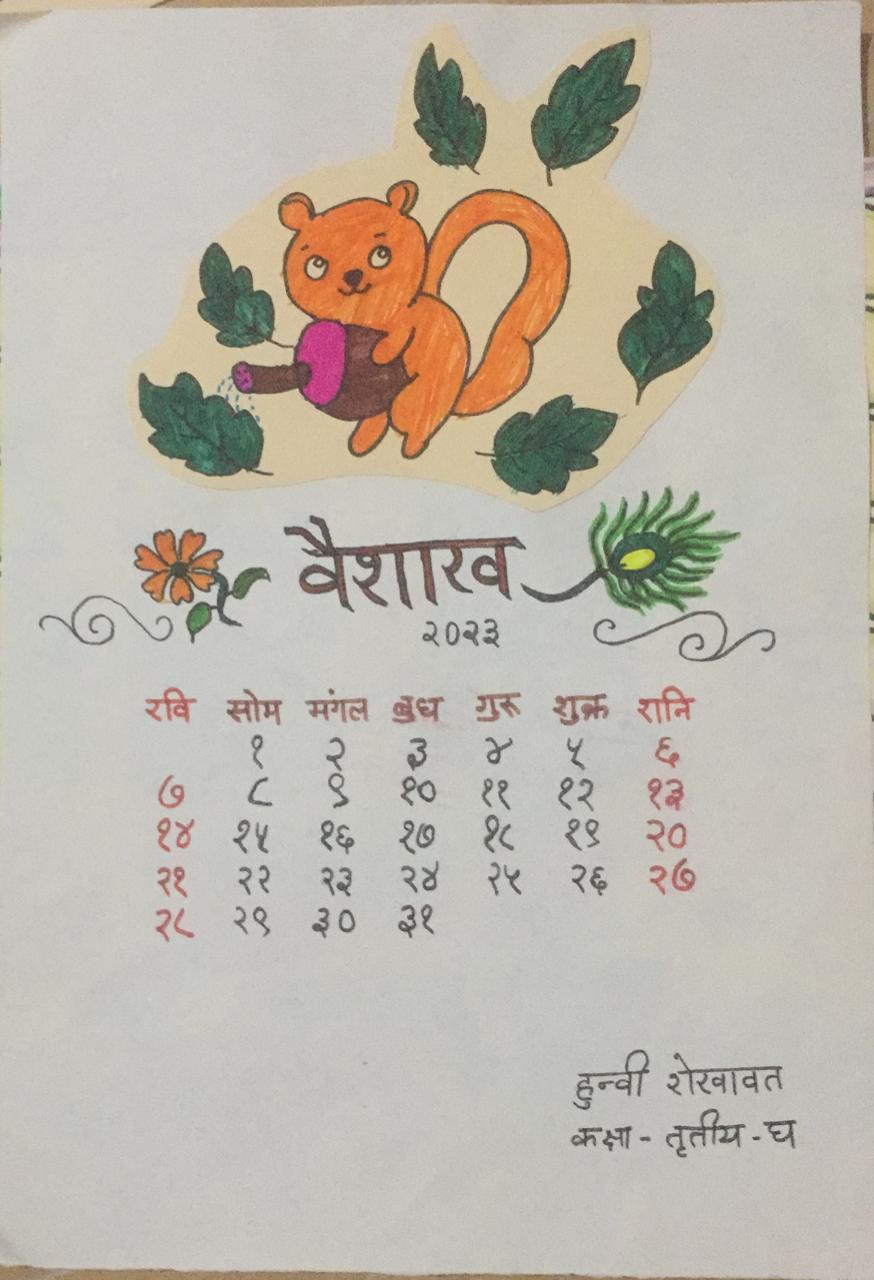
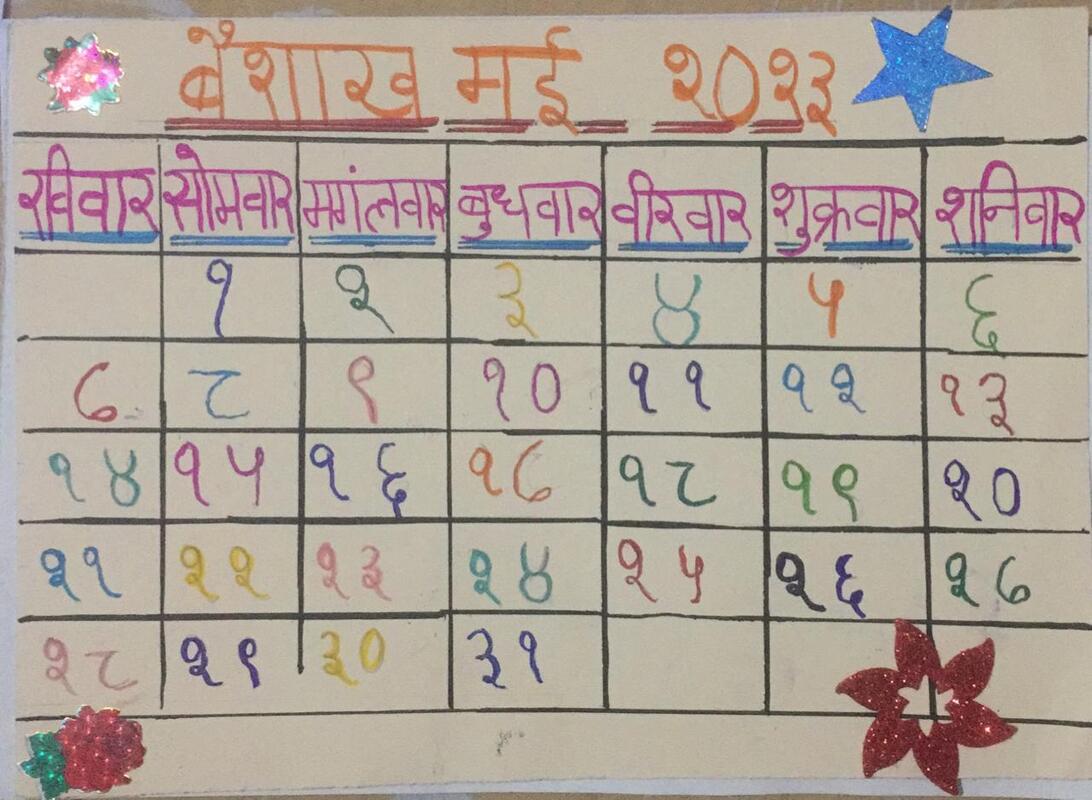
​In November, the young learners were introduced to the concept of Time. They learned to measure time in seconds, minutes, hours, days, weeks, months, and years. Students practiced reading time in various formats such as O’clock, Quarter Past, Half Past, and Quarter To. They also explored the calendar—understanding days, weeks, and months—along with converting years, months, and weeks into days. Additionally, they worked on identifying before and after dates and months. Unit conversions were further strengthened through classroom exercises. As a closure activity for the chapter, an SDG-6 based task, My Daily Schedule of Sanitization, was introduced to help students connect time management with essential hygiene practices.
​


​Science

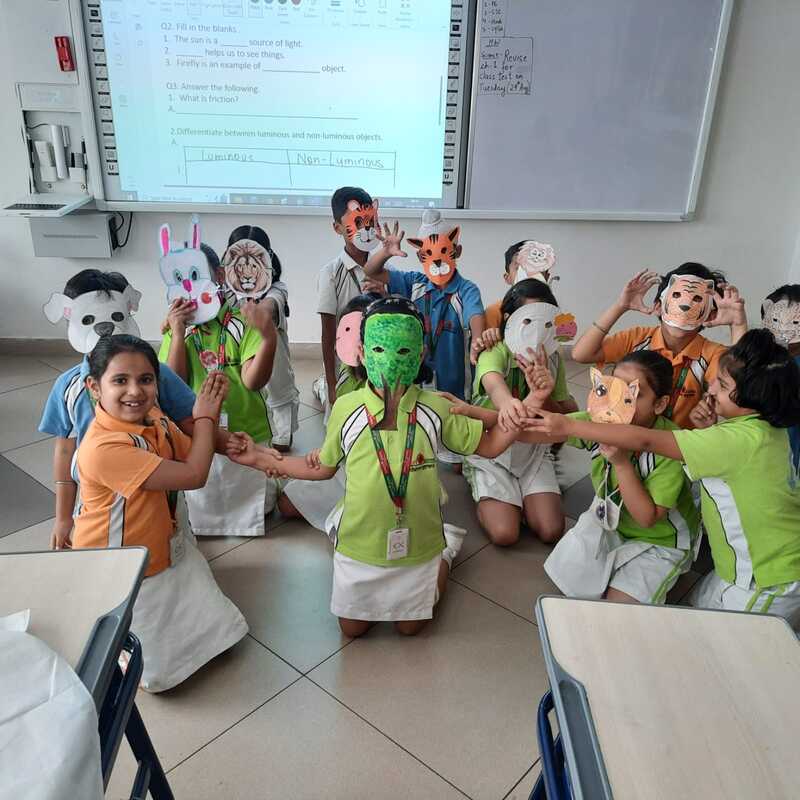
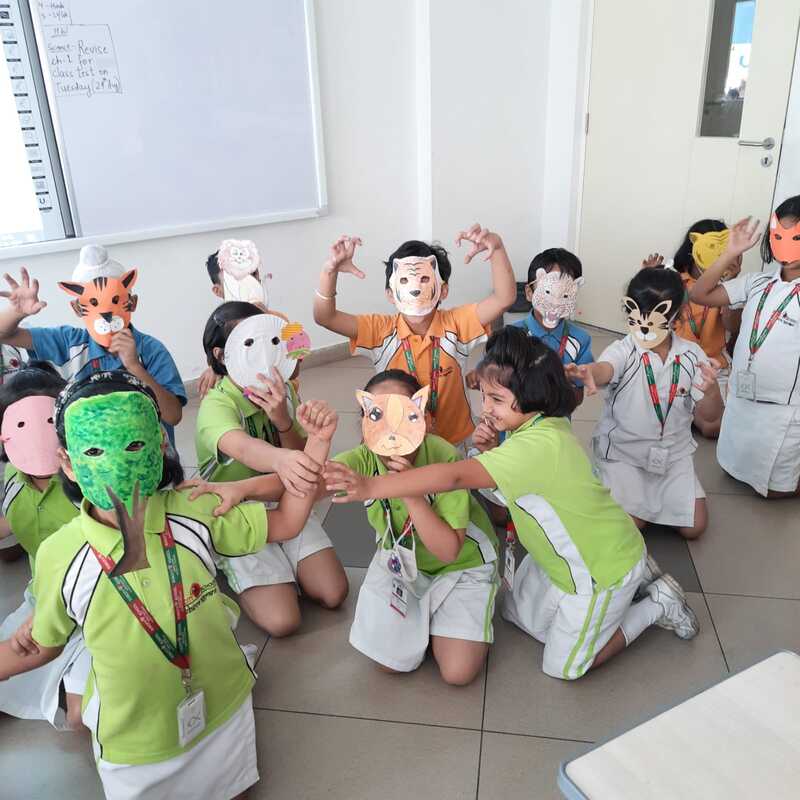
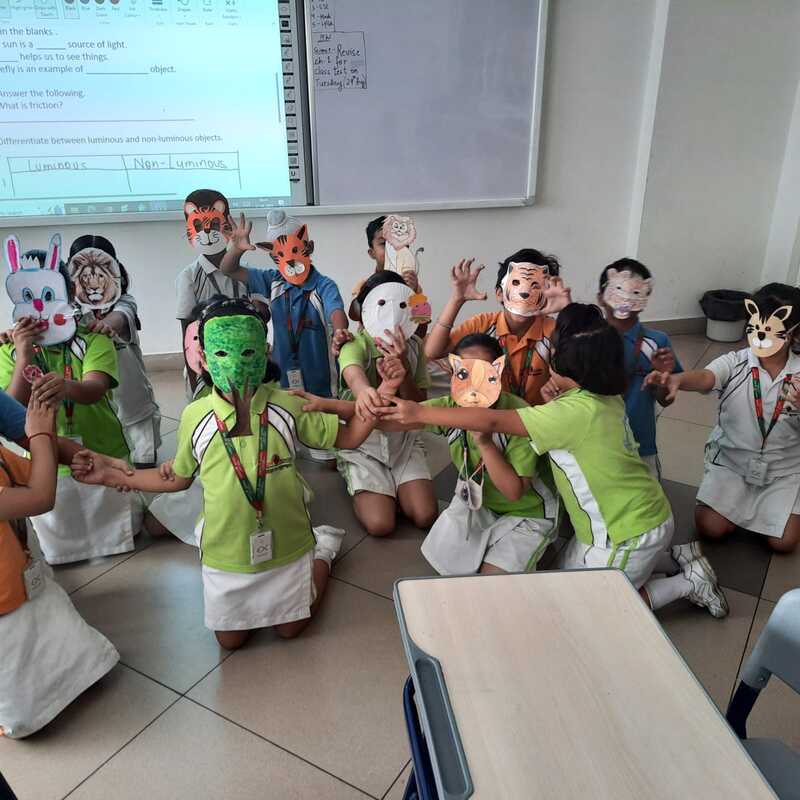
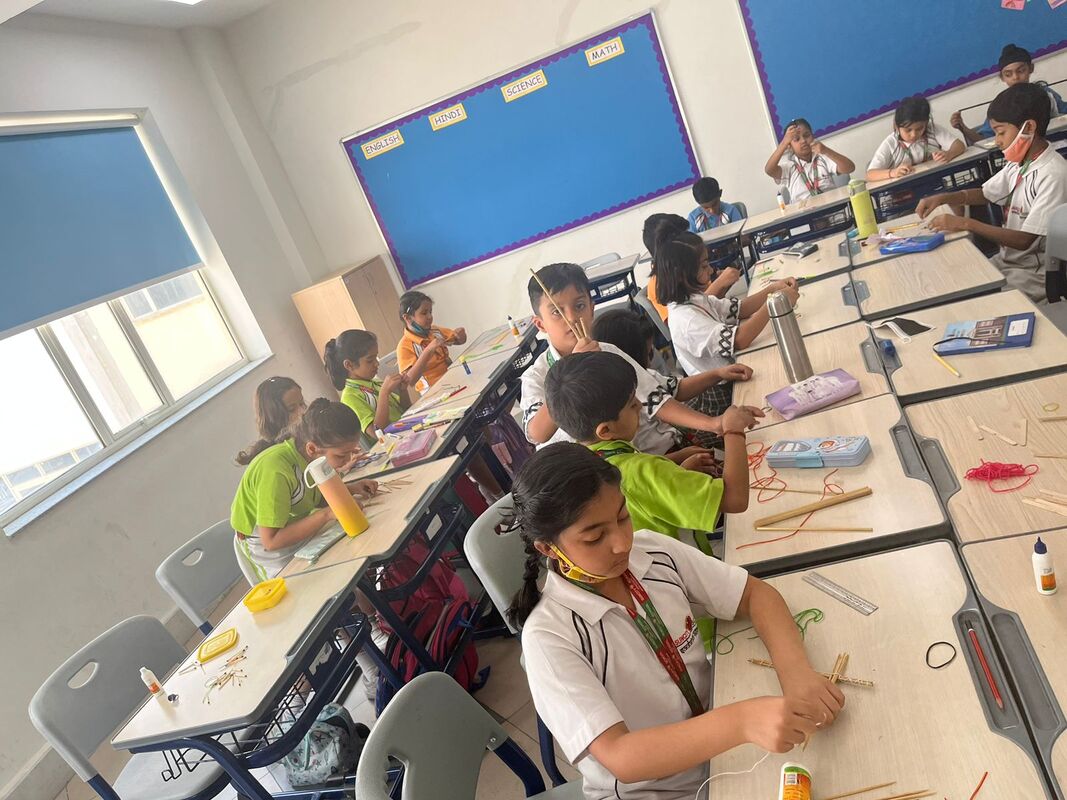
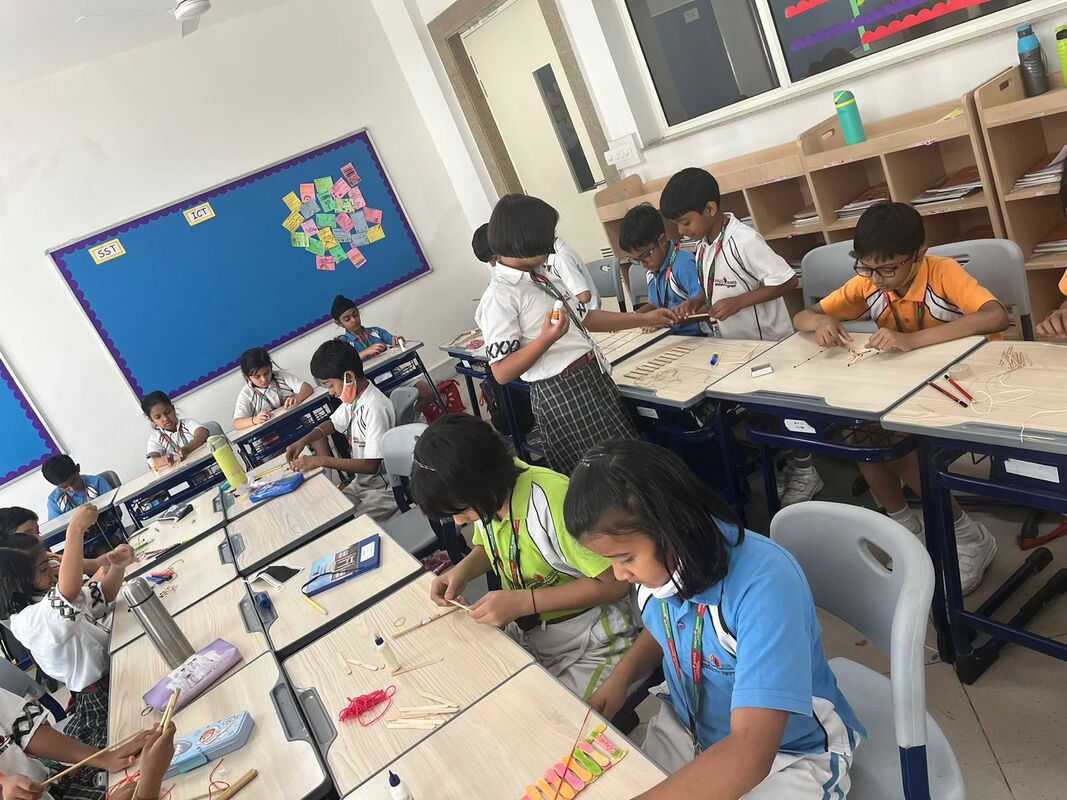
Students explored light by identifying luminous and non-luminous sources and comparing natural and artificial light. They discovered how light travels through transparent, translucent, and opaque materials, creating shadows through fun activities.
They then investigated force and its effects, and differentiated between pleasant and unpleasant sounds. Finally, they learned how friction influences everyday life—helping movement, slowing objects, and changing with increase or decrease. These explorations not only deepened scientific understanding but also nurtured curiosity, making everyday phenomena come alive for the learners.

SOCIAL SCIENCE

Exploring Our Planet – Understanding Earth and Water
​
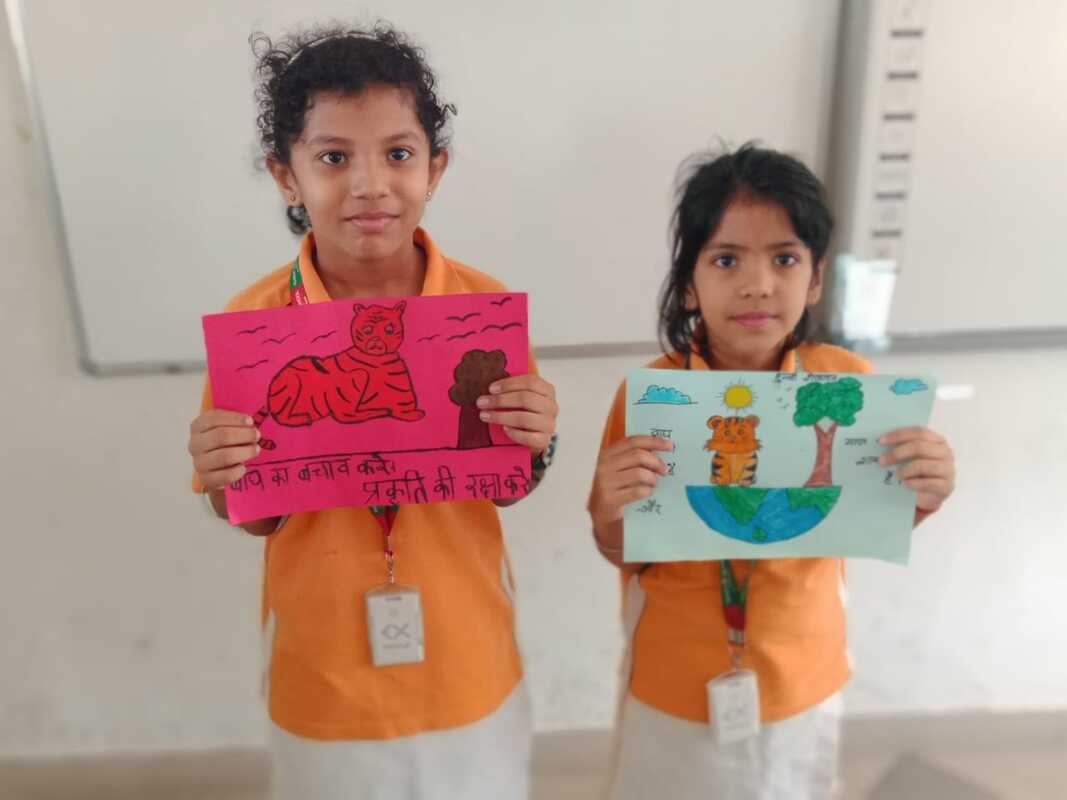
November was an exciting month of exploration for our Group 3 learners as they dived into the themes Knowing Our Earth and Water We Drink. Through meaningful activities and discussions, they discovered how our planet is shaped, how water reaches us, and why it is important to use it wisely.
Students learned about the sources of water—rivers, lakes, ponds, wells, and rain. They discussed how this precious resource reaches our homes and why water conservation is essential. Simple habits like closing taps tightly, avoiding wastage, and reusing water for plants were highlighted to help them become responsible young citizens.
As they continued their learning journey, the children explored the difference between a globe and a map. They enjoyed identifying continents and oceans on the globe and comparing it with flat maps to understand how both tools help us see our world in different ways.
The month also introduced them to the compass and the use of directions. Through hands-on activities, they learned about the four major directions—North, South, East, and West—and how directions help us locate places and read maps accurately.
Linking their understanding to SDG 6 – Clean Water and Sanitation and SDG 13 – Climate Action, students realised that conserving water and caring for our planet are essential steps in protecting Earth for future generations.
November was all about discovering our planet, understanding water, and learning how to navigate the world with curiosity and responsibility.


​ICT

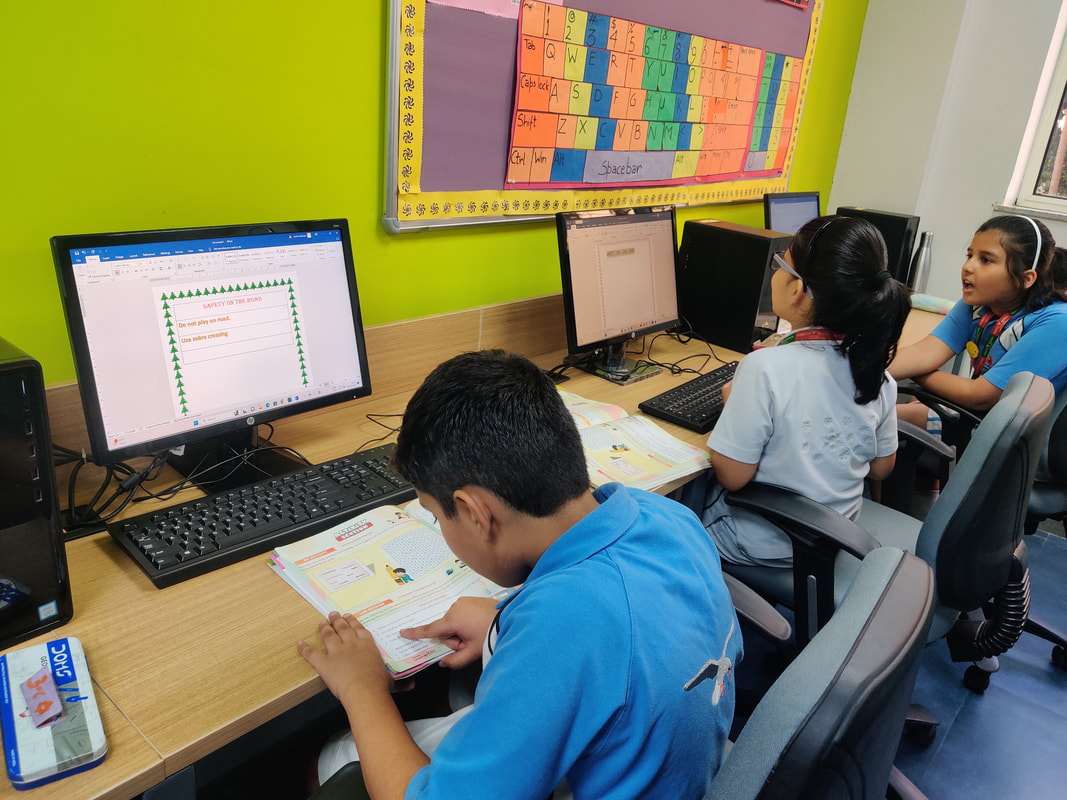
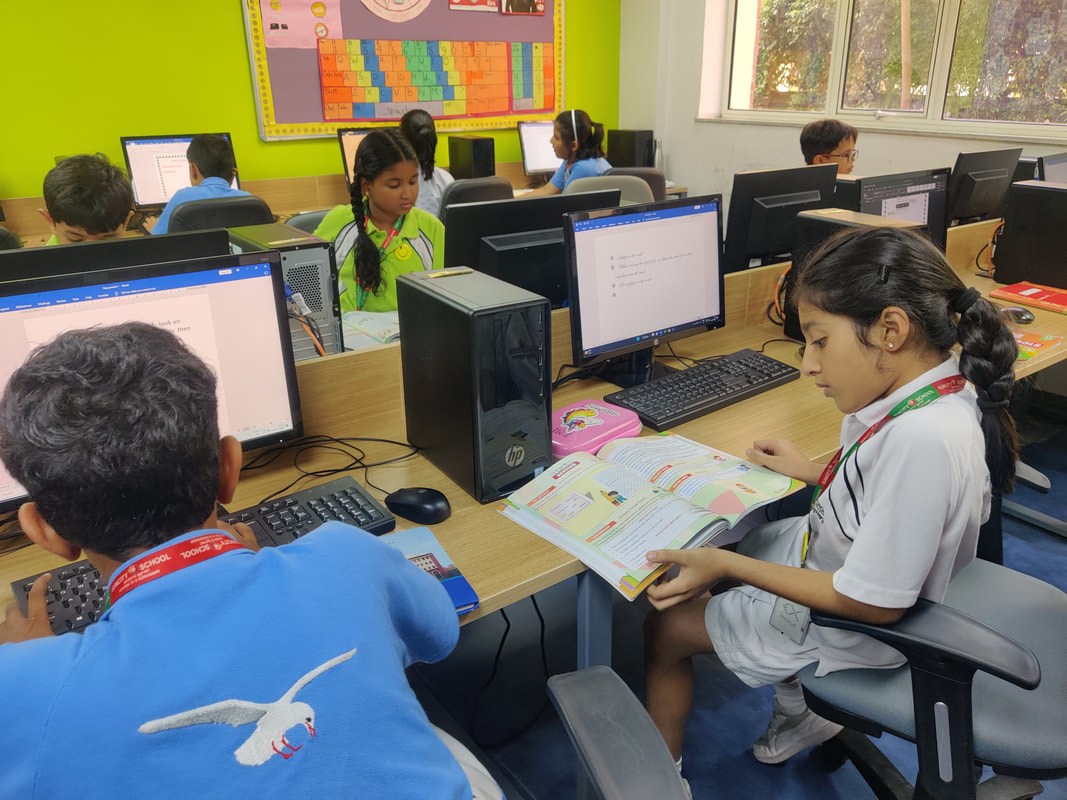
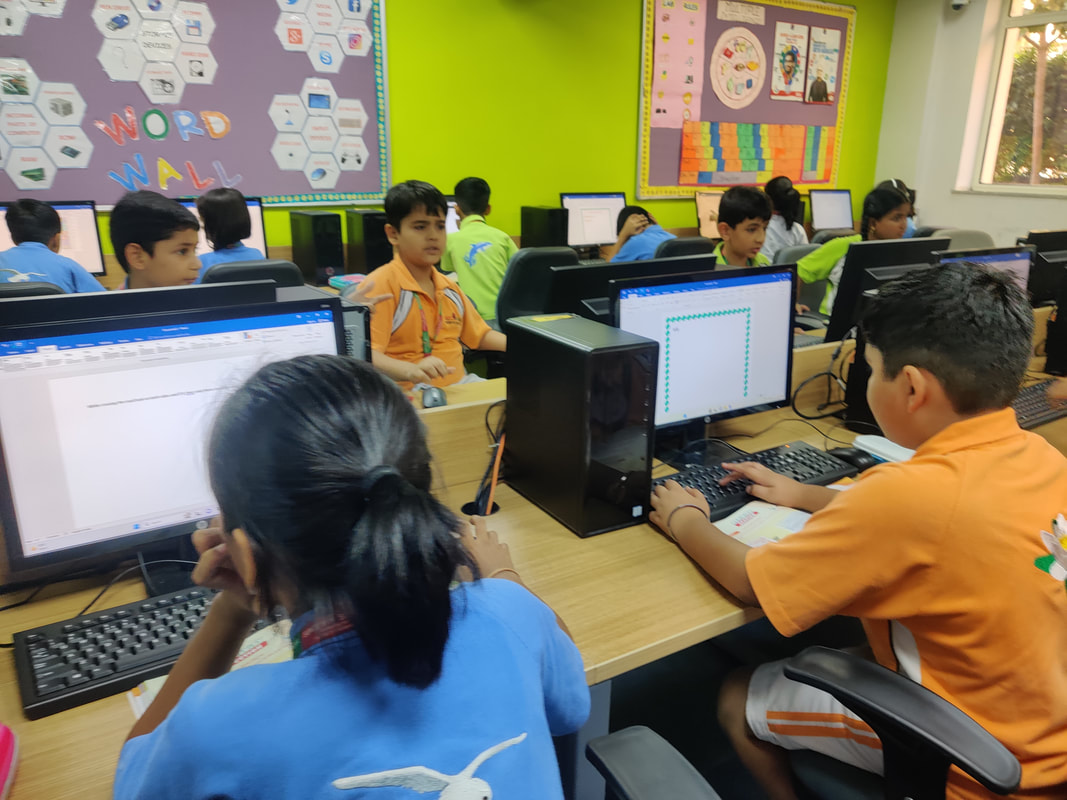
​​Students were introduced to the world of MS Word through a fun hands-on activity. To spark curiosity, they first wrote on paper and tried changing colours and styles manually. Once the facilitator demonstrated the same task digitally in MS Word, the class instantly understood how technology makes everyday work smarter and faster! They explored the components of the Word window, learnt to create a new document, type and edit text, save their work, print, and close files. The young learners thoroughly enjoyed typing short passages and experimenting with different fonts, colours, and formatting tools. Overall, November was a month of discovery, practice, and progress as Grade III students strengthened their foundation in digital writing and document creation!


​3B CLASS ASSEMBLY

​In the Spirit of Guru Nanak: A Special Assembly by Class 3B
The month of November began on a truly inspiring and joyful note as the students of Class 3B presented a special class assembly on 6th November to celebrate the sacred occasion of Guru Nanak Jayanti. The assembly beautifully reflected not just the spirit of the festival, but also the deep values taught by Guru Nanak Dev Ji.
The assembly opened with the introduction of the Word of the Day – “Seva,” meaning selfless service. This powerful word encouraged students to understand the importance of helping others with a kind and open heart, without expecting anything in return. It created a thoughtful beginning and set a meaningful tone for the entire assembly.
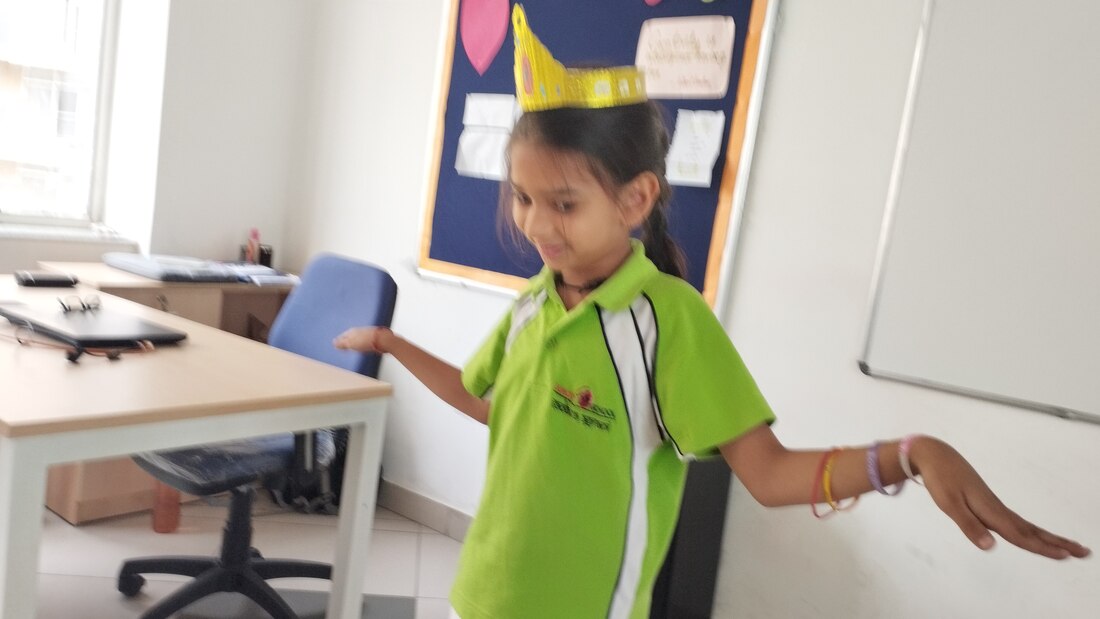
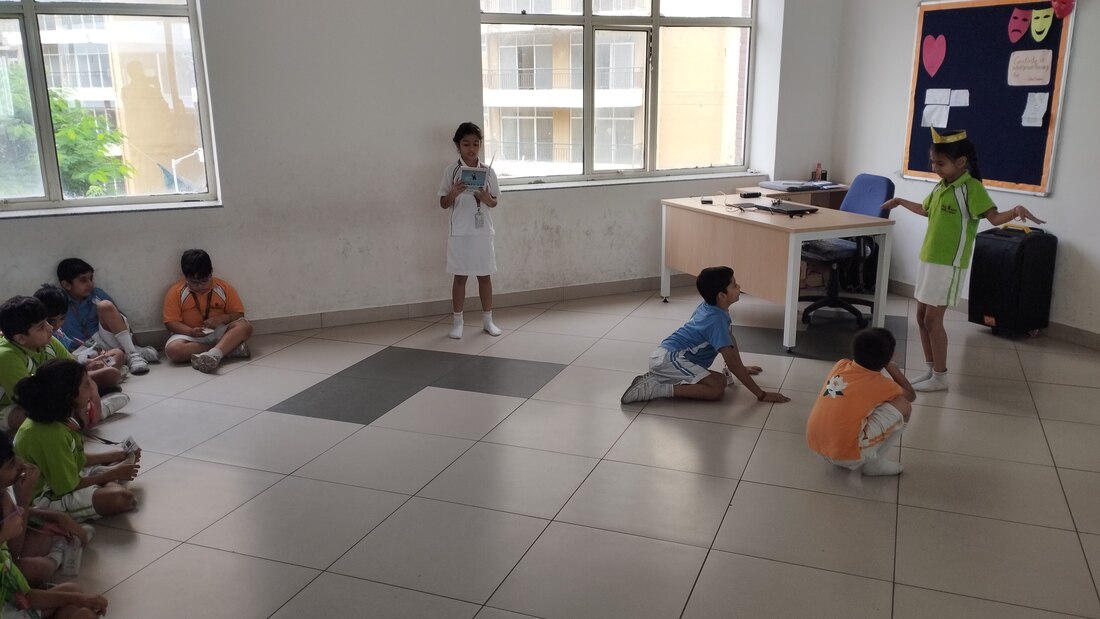
Keeping the theme “Share what you have” at its heart, the students then presented a touching skit based on the life and teachings of Guru Nanak Dev Ji. Their performance beautifully showed how even the smallest act of sharing can bring happiness to others and strengthen bonds of kindness and unity.
The assembly also highlighted the six important teachings of Guru Nanak Dev Ji, reminding everyone to walk on the path of truth, humility, honesty, respect, and service to humanity. These timeless values were shared with clarity and sincerity, leaving a lasting impression on all those who attended.
The children of Class 3B presented the assembly with confidence, grace, and deep understanding. It was not just a performance, but a heartfelt tribute that turned the morning into a moment of reflection and learning for the entire school community.
The assembly concluded on a peaceful and grateful note, reminding everyone that Guru Nanak Dev Ji’s teachings are meant to be lived every single day, not only remembered on special occasions.


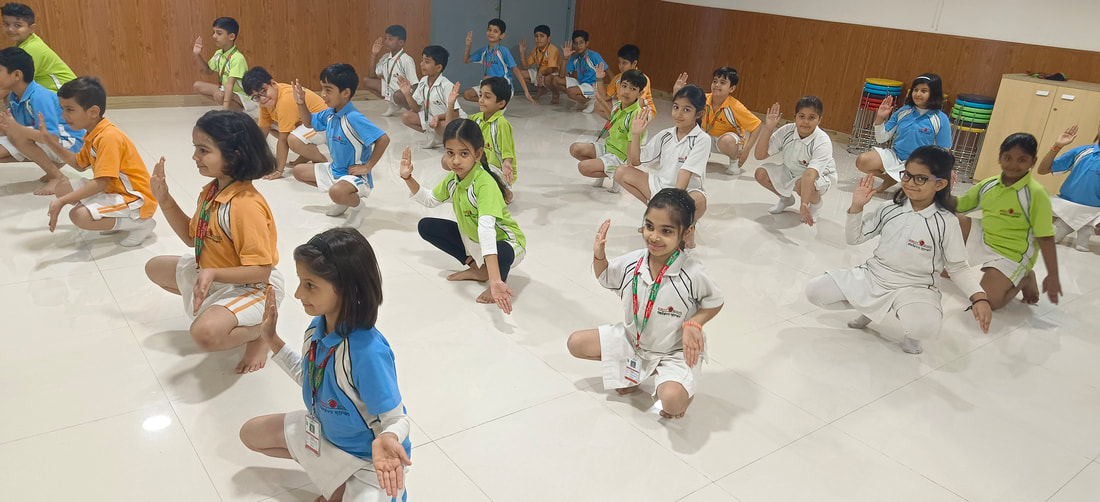
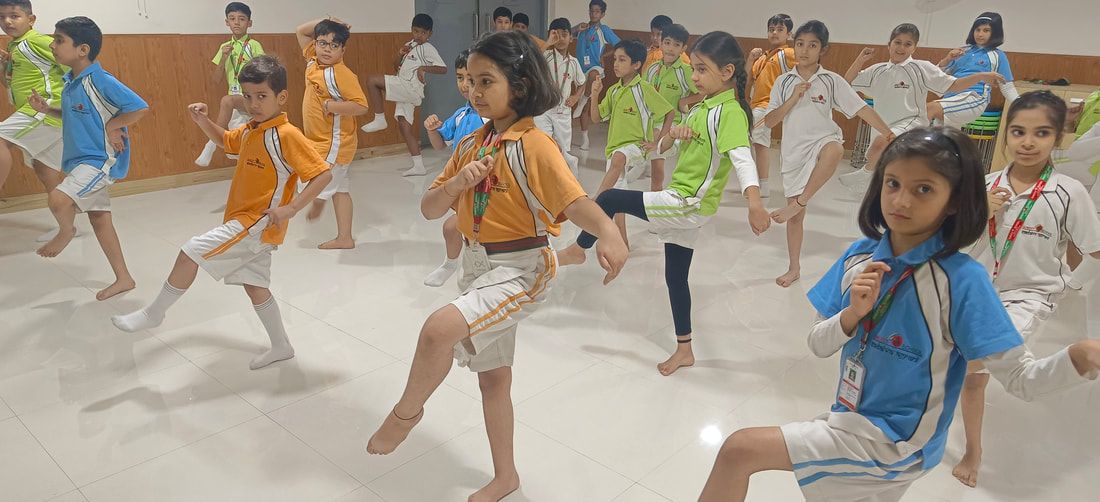
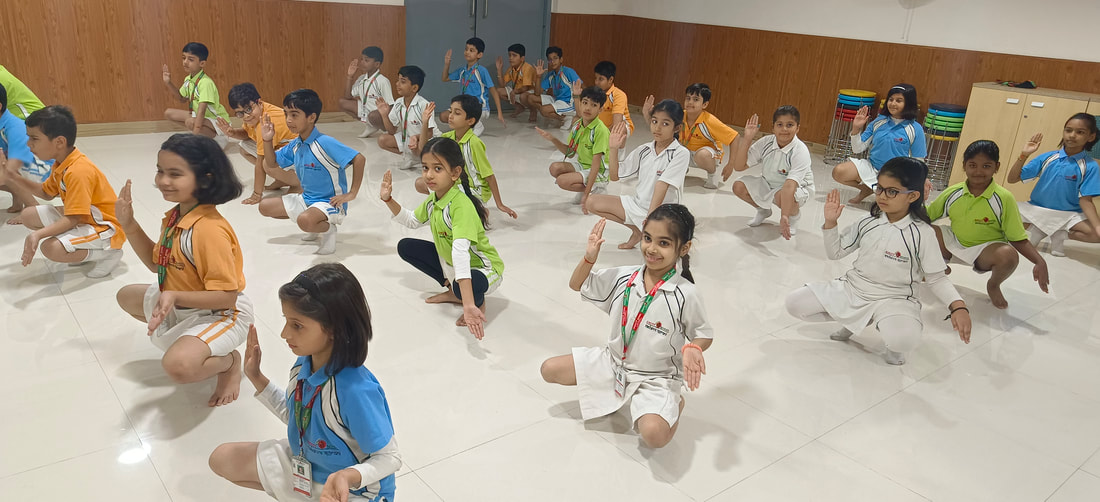
​Physical EDUCATION

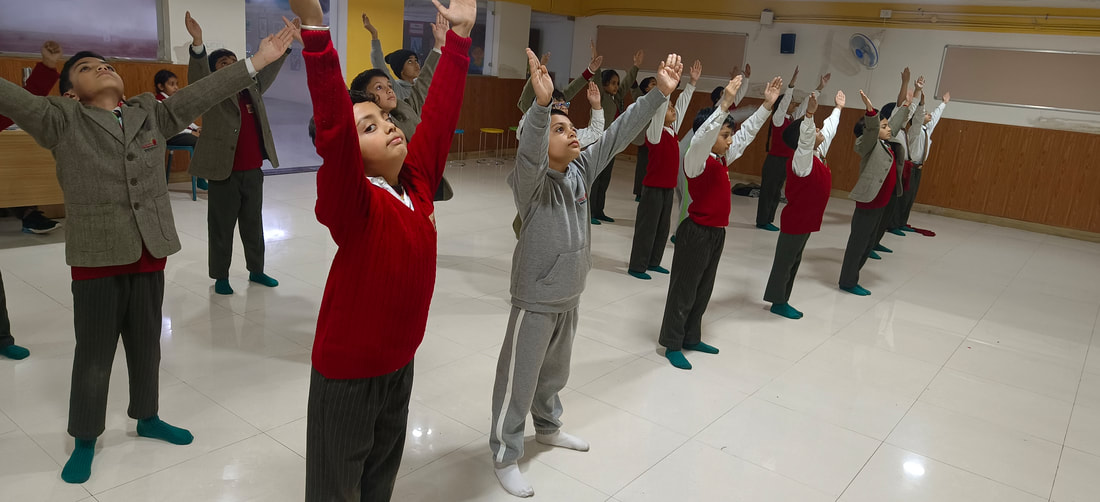
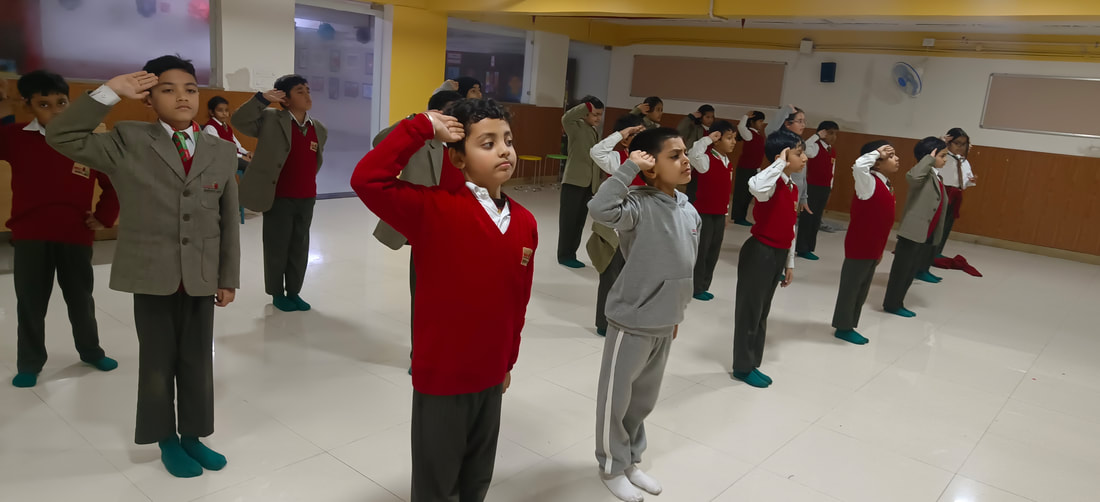
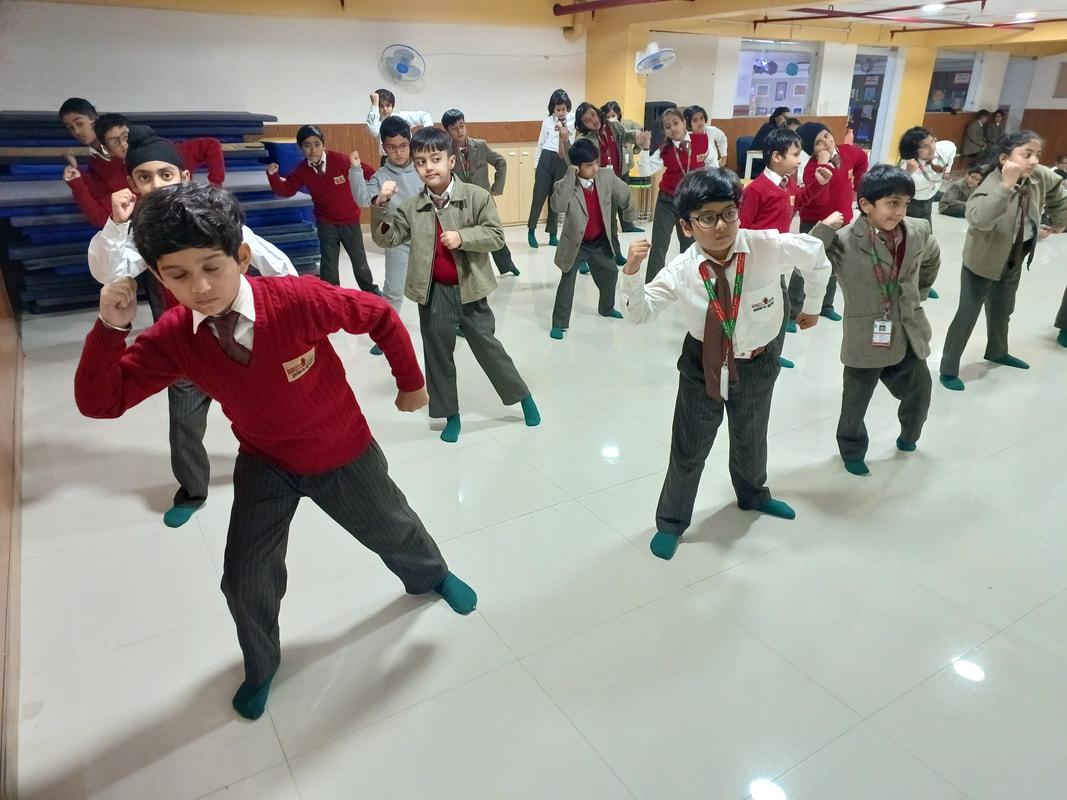
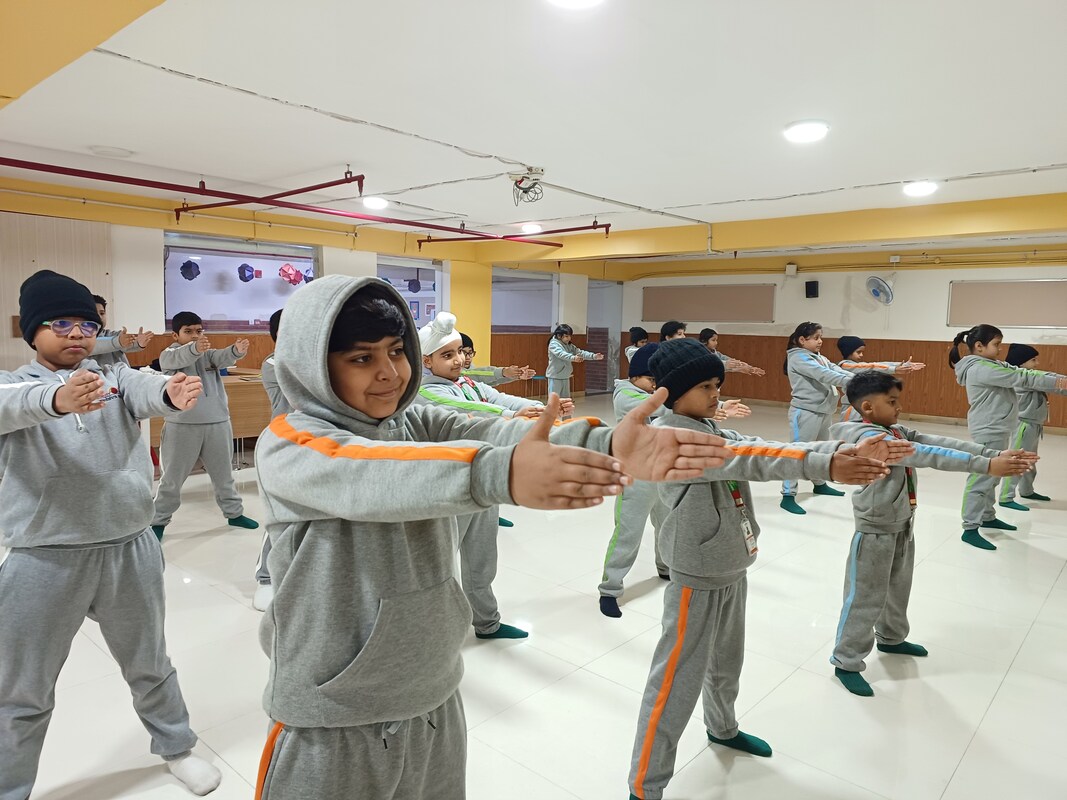
 Badminton: Practicing footwork and movements with a shuttlecock, Task 1: Juggling with shuttle, Task 2: Play with team mates and oppenents to build camadier between the peers. Students were practicing 6 corners footwork and clear skill practice, Match play
Swimming: Breathing techniques inside and outside water, bubbling, freestyle kicking on spot,arm action of freestyle stroke.
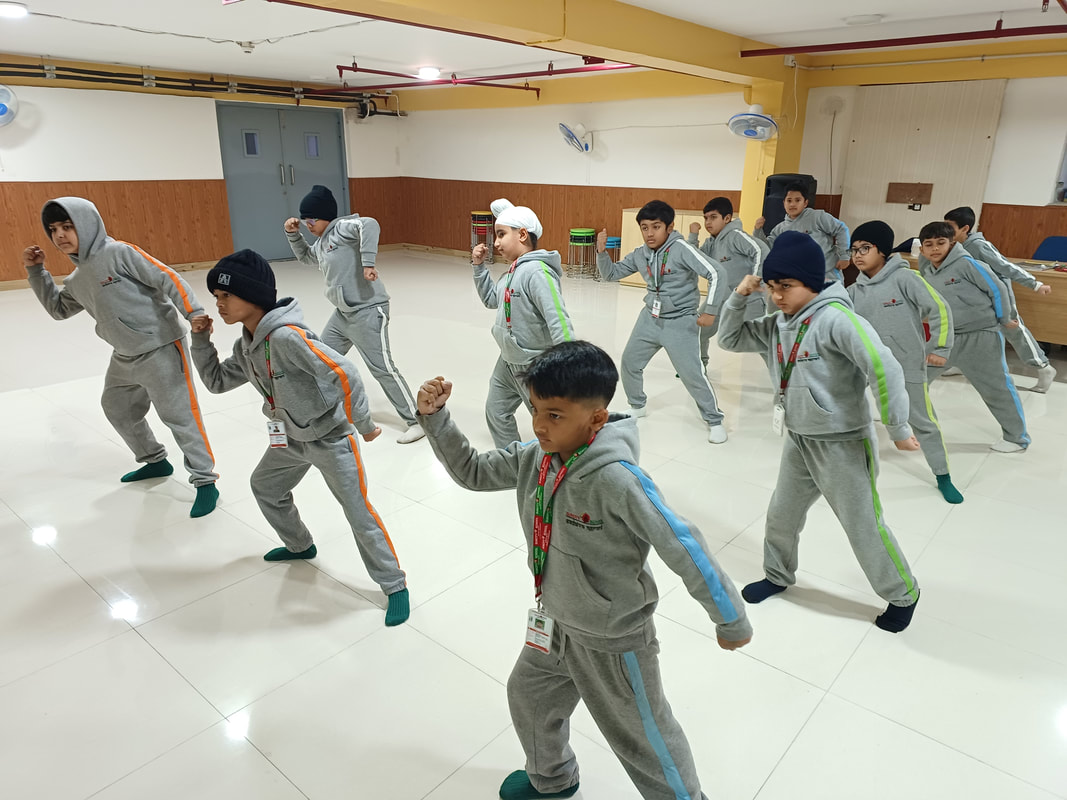
Gymnastics: Standing bridge, hop kartwheel, Wall handstand, High beam, Balancing beam and Podium jump Judo : Ukemi’s (techniques to back fall), Tsugi Ashi (Walking Movement), Mae ukemi (Front fall), Ayumi Ashi ( walking Movement).
Shooting: Weapon introduction, fundamentals and safety rules, range commands, double hand holding with 1Kg dumble (30 sec) without dumble (45 seconds) Dummy holding on the wall, firing position.
​
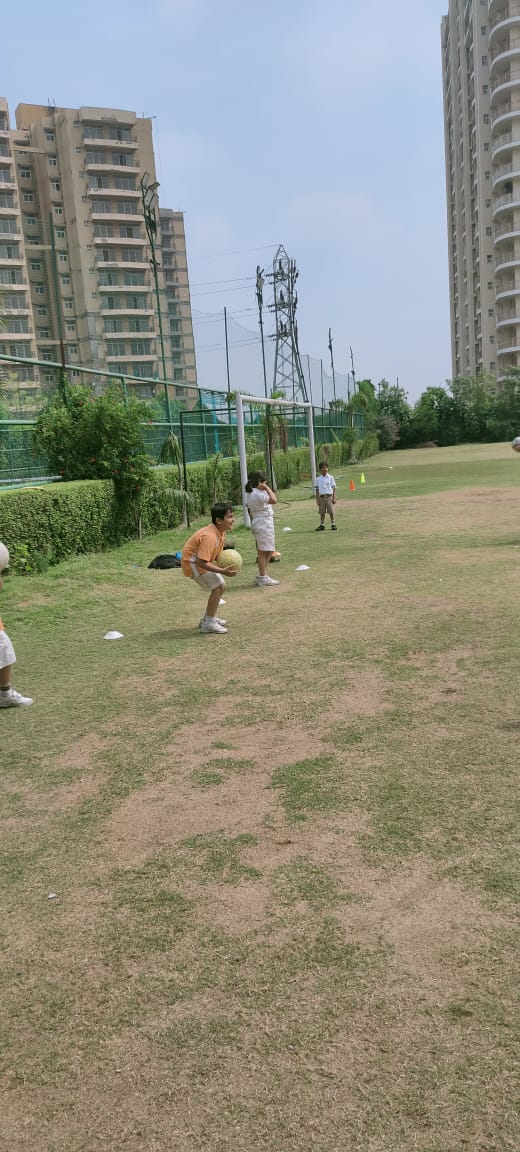
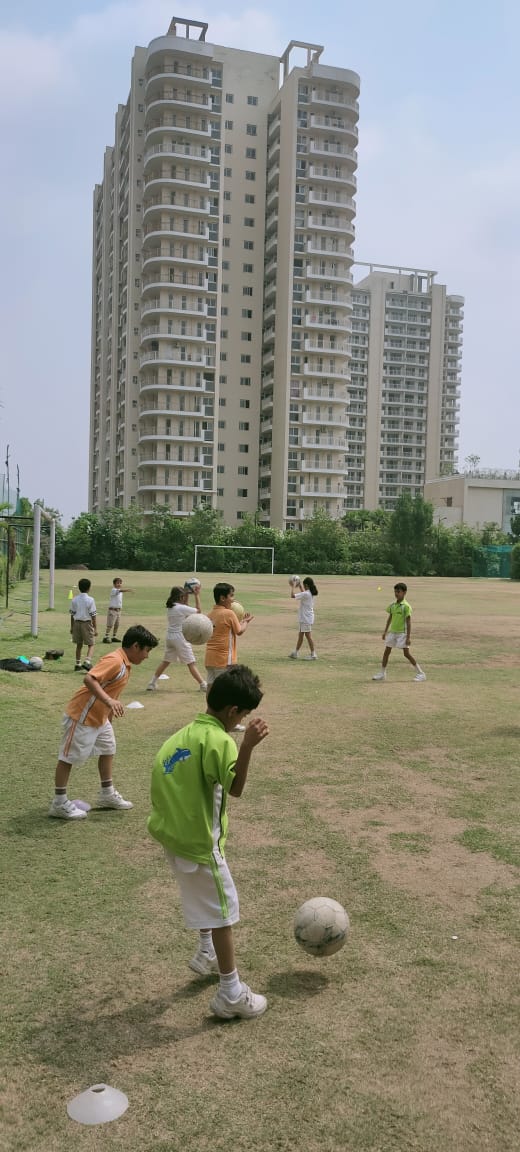
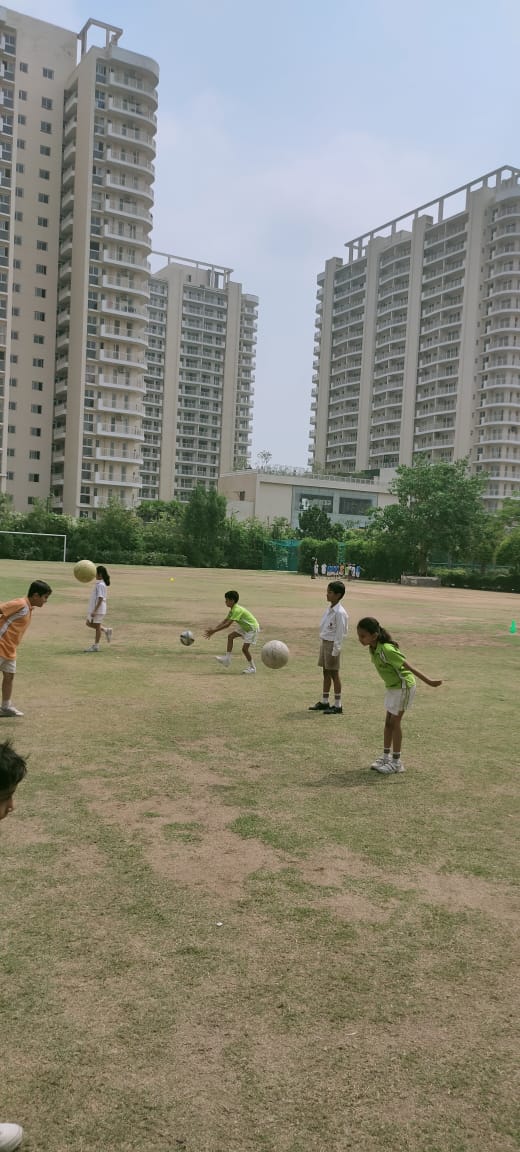
Cricket, Football, Tennis: No outdoor activities due to poor AQI :


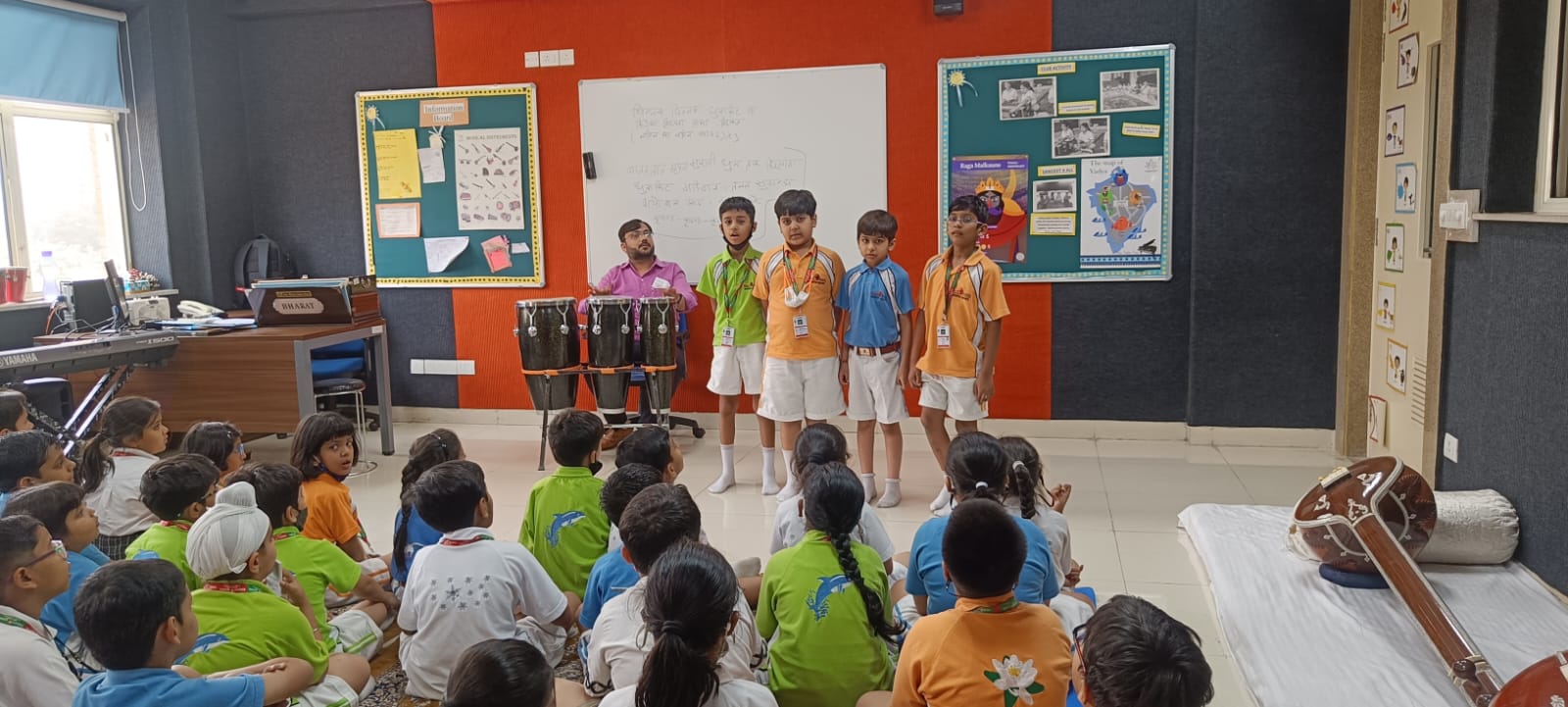
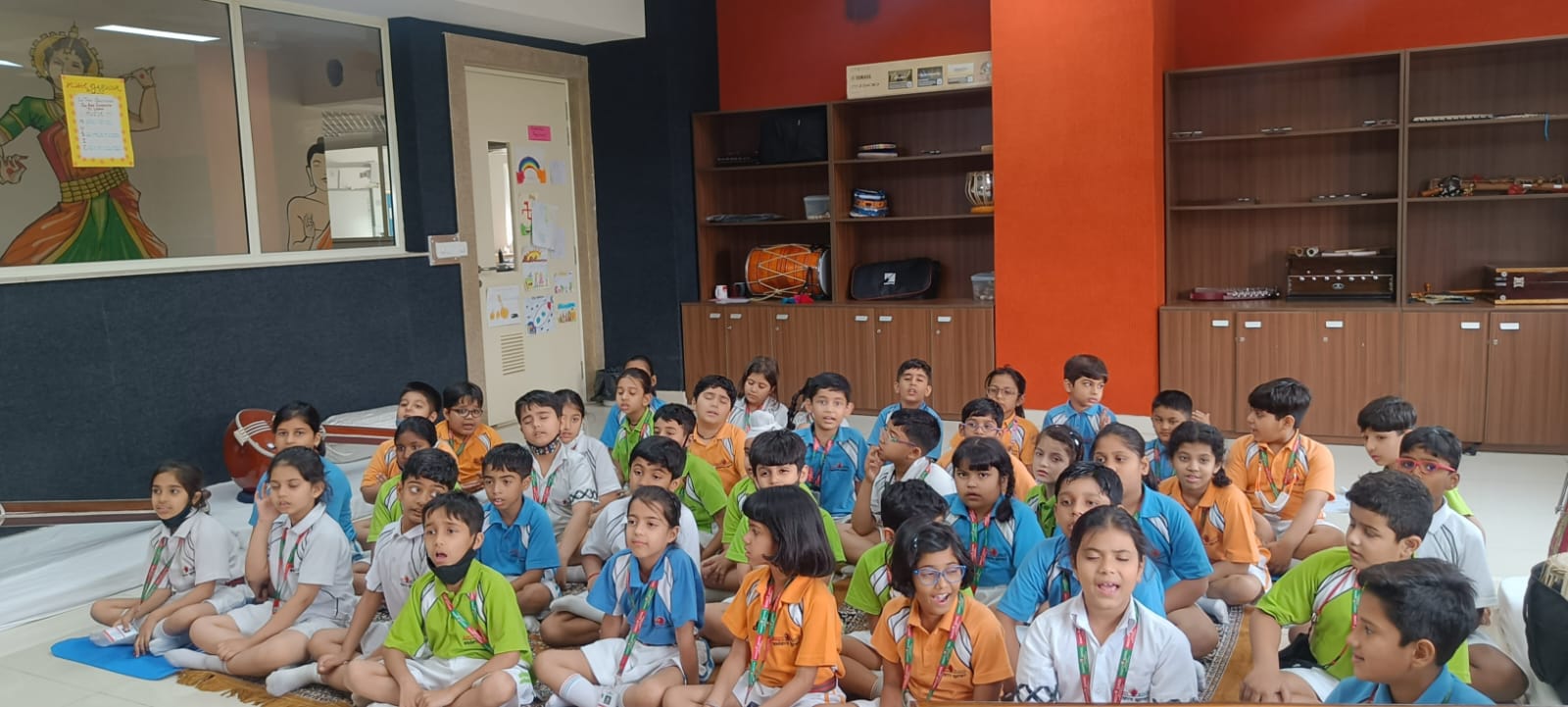
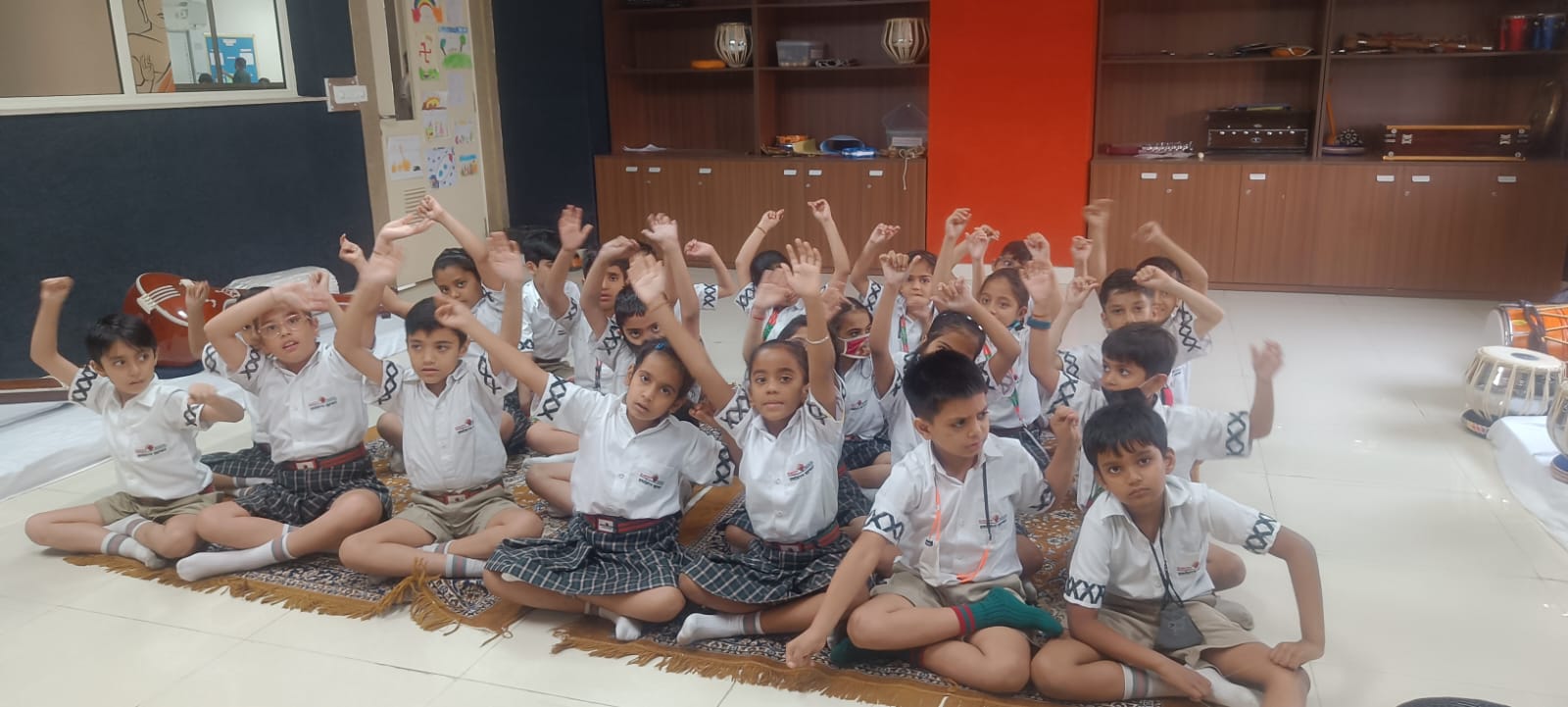
INDIAN MUSIC

​Children day song

​It’s a Small World” is a joyful song that celebrates togetherness,
 kindness, and the idea that children all around the world are connected. 
It highlights friendship, peace, and unity, making 
it a perfect message for Children’s Day.

PRAYER SONG
“Subha Savere Leke Tera Naam” is a peaceful prayer song that 
expresses gratitude to God at the start of the day.
 It encourages beginning the morning with devotion, positivity, and a pure heart. 
The song inspires students to stay kind, truthful, and sincere throughout the day,
 trusting that God’s guidance brings light and goodness into their lives

DHOL PATTREN
Taal Kahrwa is an 8-beat rhythmic cycle commonly used in light music, 
folk songs, and dance. When played on the dhol, the Kahrwa pattern has a steady, 
energetic feel created by alternating deep bass strokes and sharp treble strokes. 
Its simple 8-beat structure (1-2-3-4-5-6-7-8) makes it easy to follow 
and perfect for group performances,
 marches, and school events. It gives music a lively, 
balanced rhythm that is easy to dance and clap along to


WEstern MUSIC

Our Grades III to V students recently energized the school community with a powerful and inspiring performance of “Fight Song.” Their confident voices and expressive singing beautifully captured the song’s message of courage, determination, and believing in oneself.

To enhance the experience, some students also played the Clapbox, adding rhythmic strength and unity to the performance. This instrumental involvement encouraged teamwork, coordination, and musical discipline.
Learning Objectives:
1. Express confidence, resilience, and emotion through music
2. Build teamwork and stage confidence
3. Explore tempo, rhythm, and dynamics using instruments
SDG 4: Quality Education
This activity supports Quality Education by nurturing creativity, collaboration, and social-emotional development through musical expression.
We are incredibly proud of our young performers for showing that when we believe in our inner strength and raise our voices together, every student can shine with their own “fight song.” 🌟"


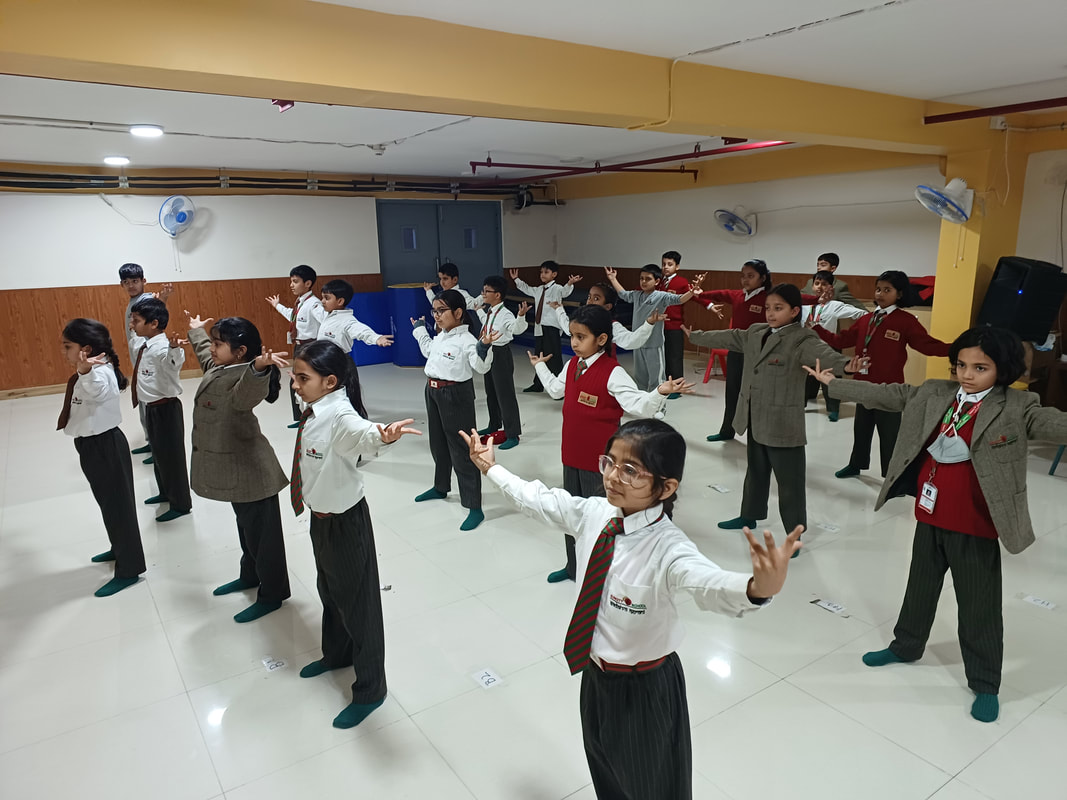
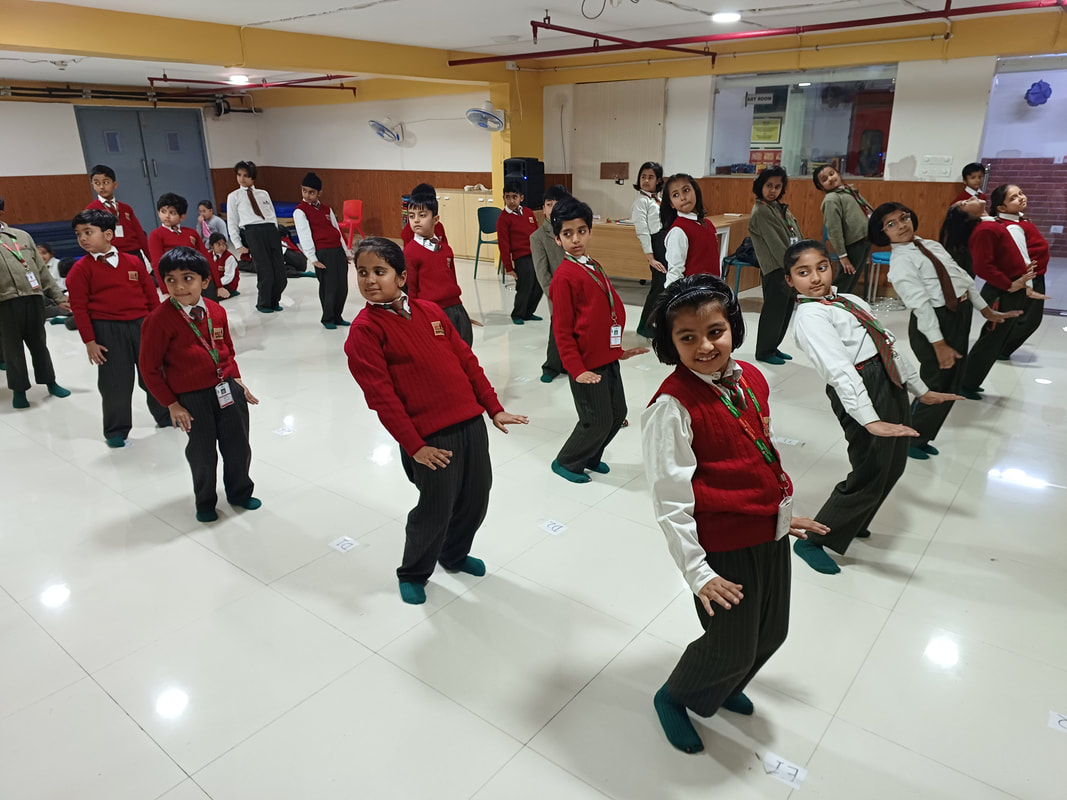
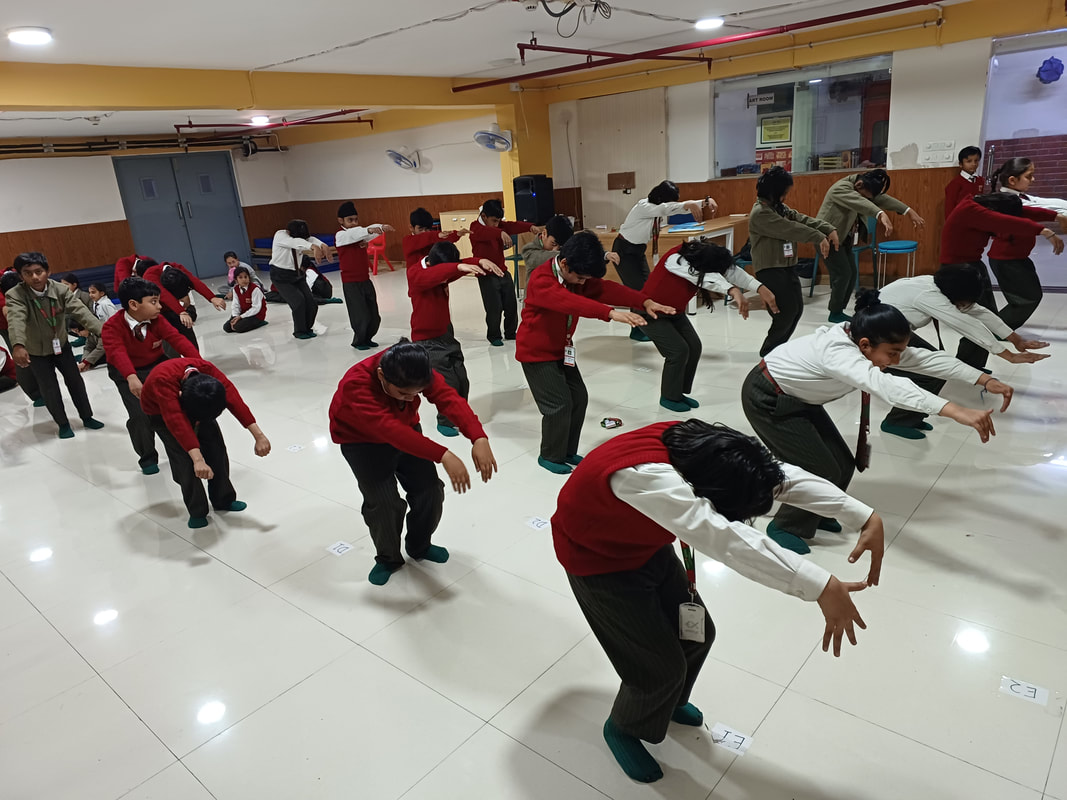
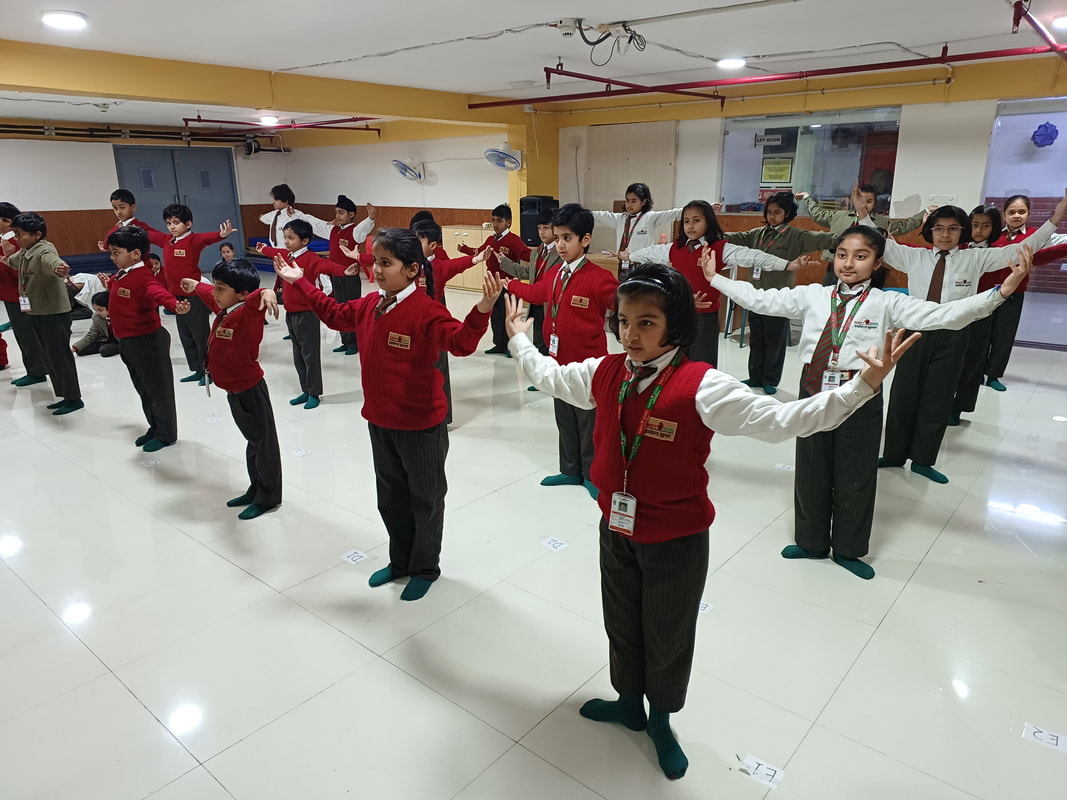
​WESTERN DANCE

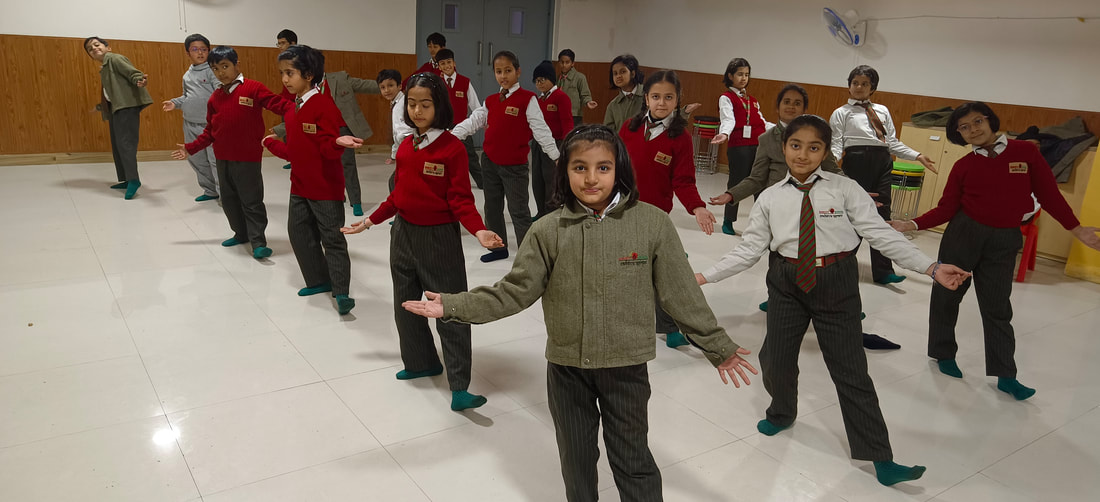
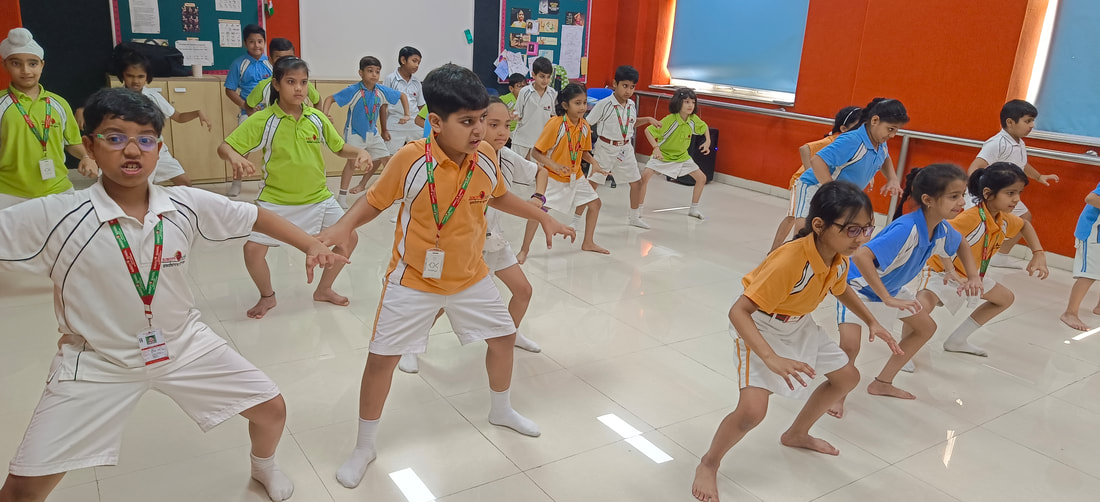
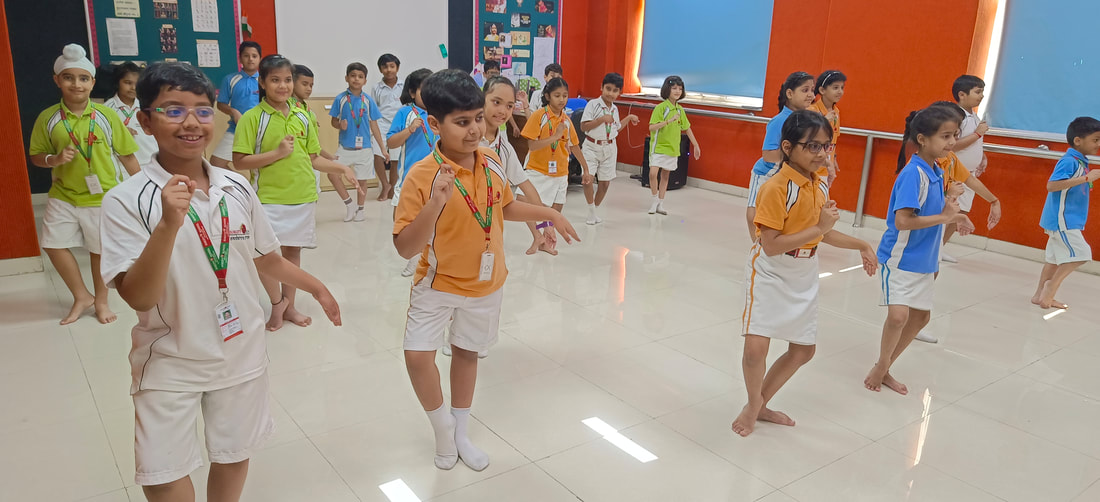
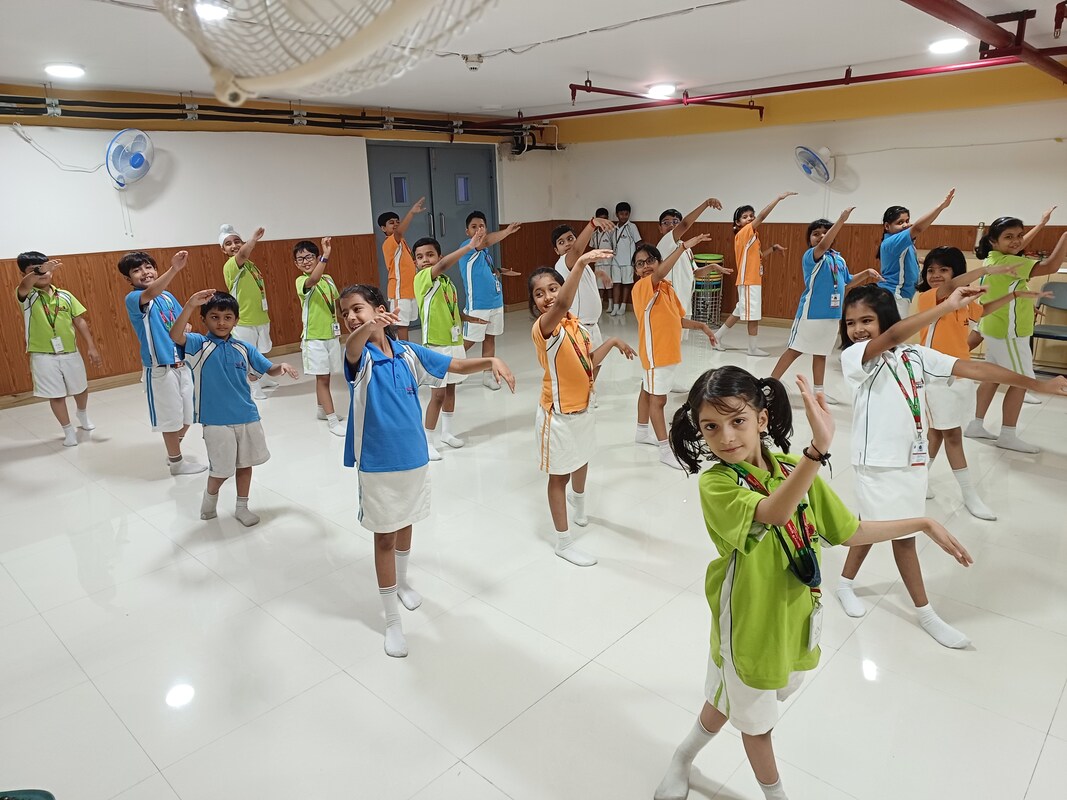
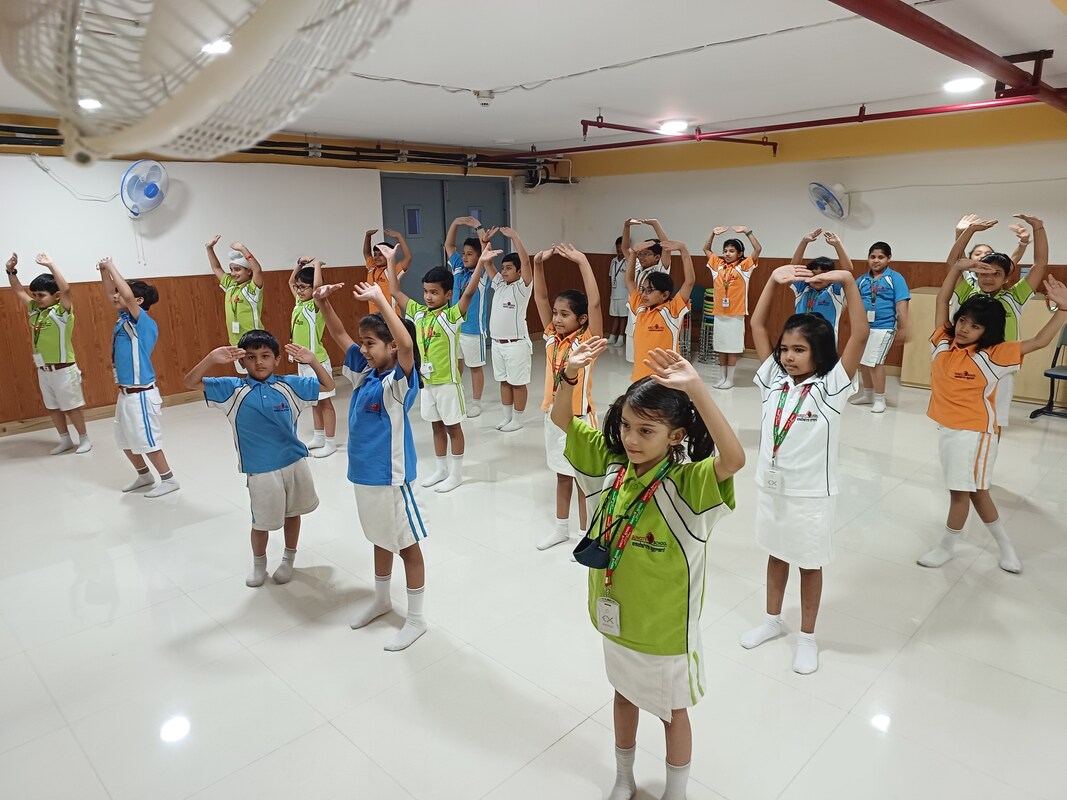
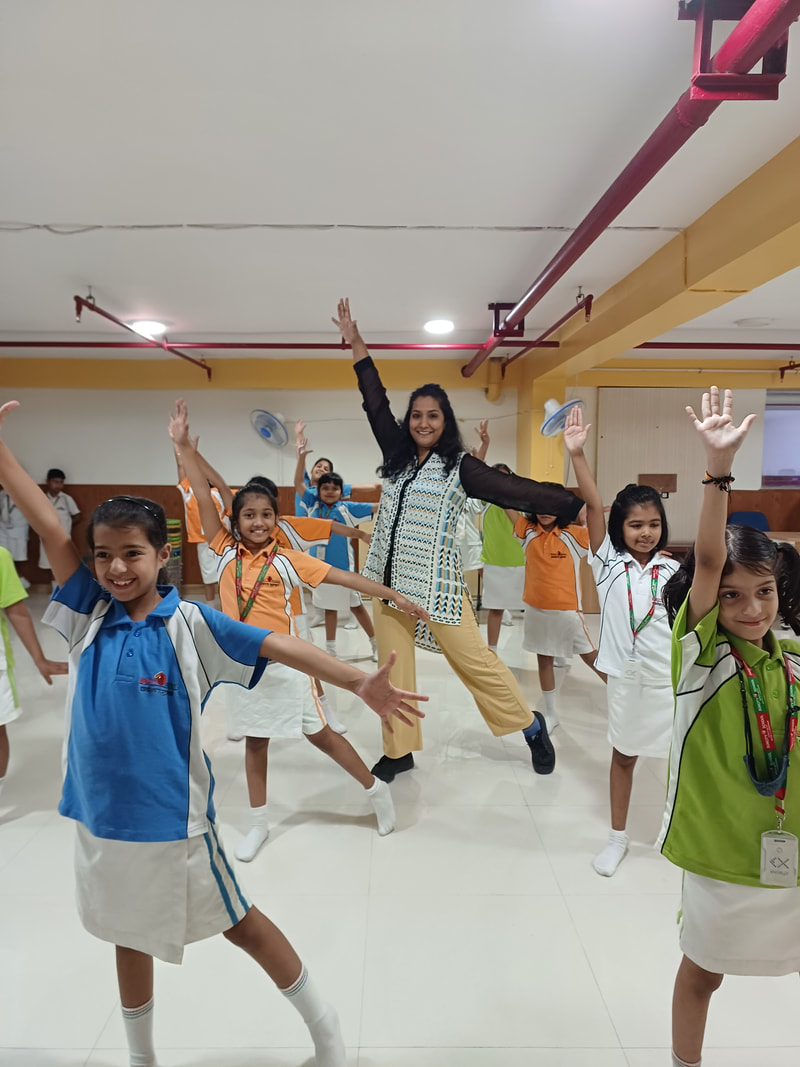
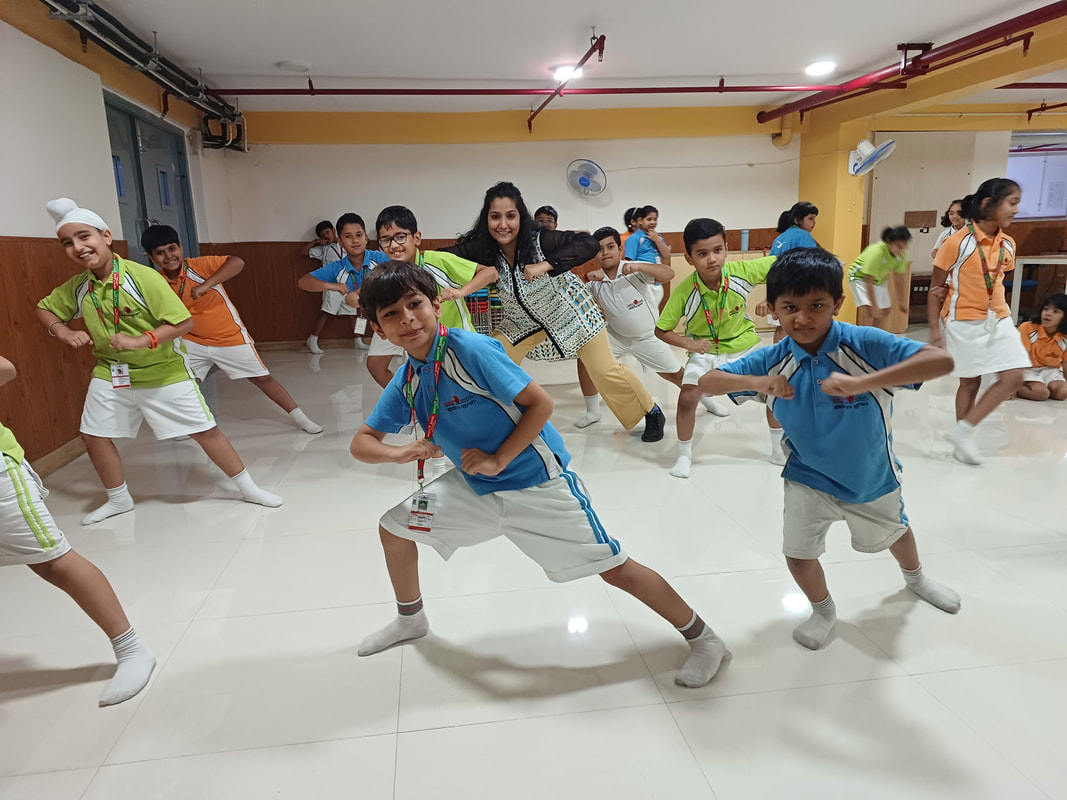
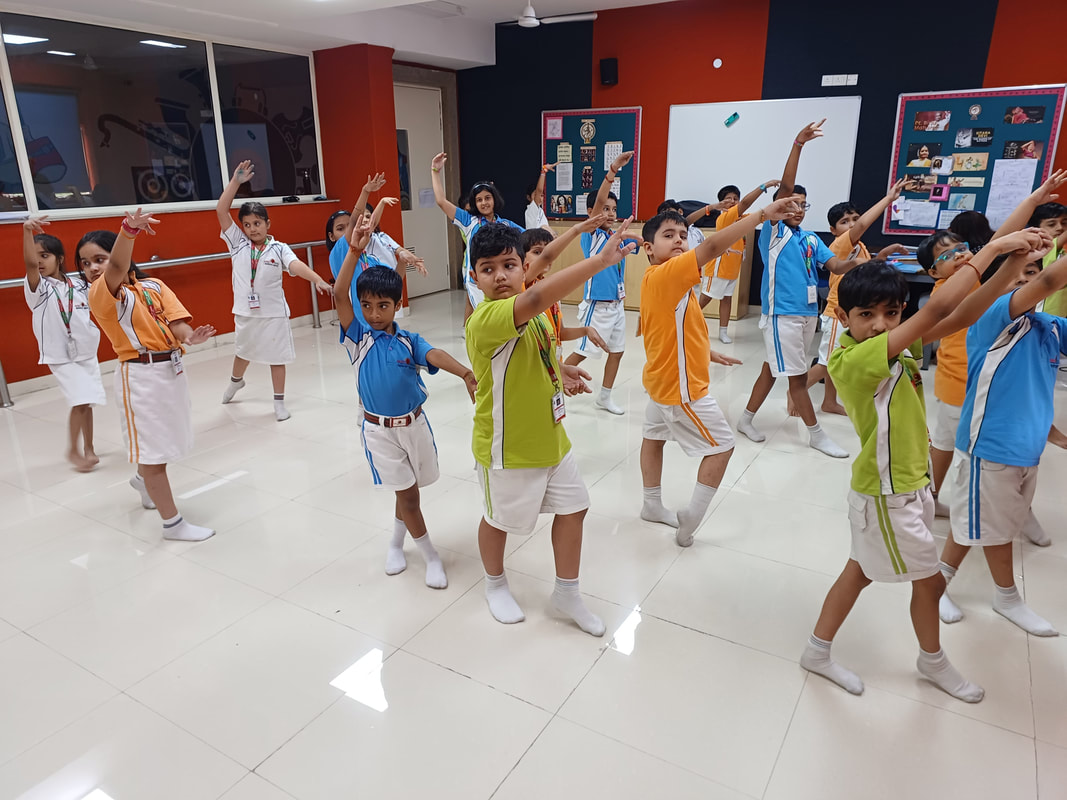
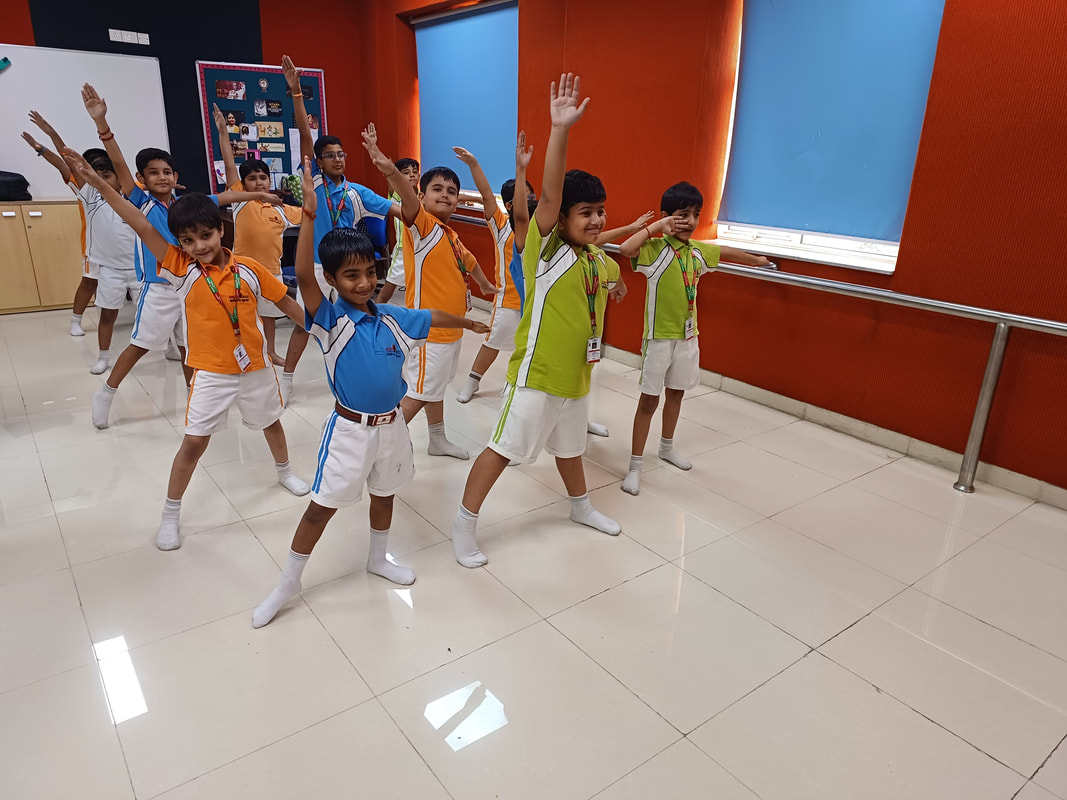
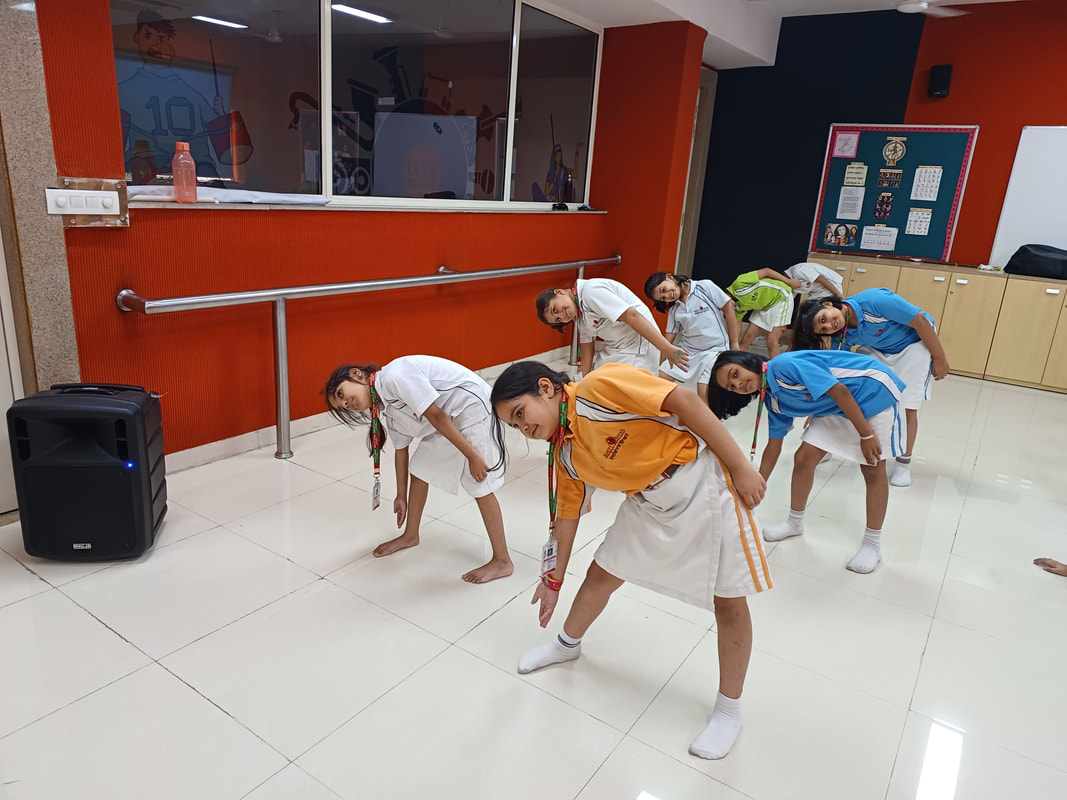
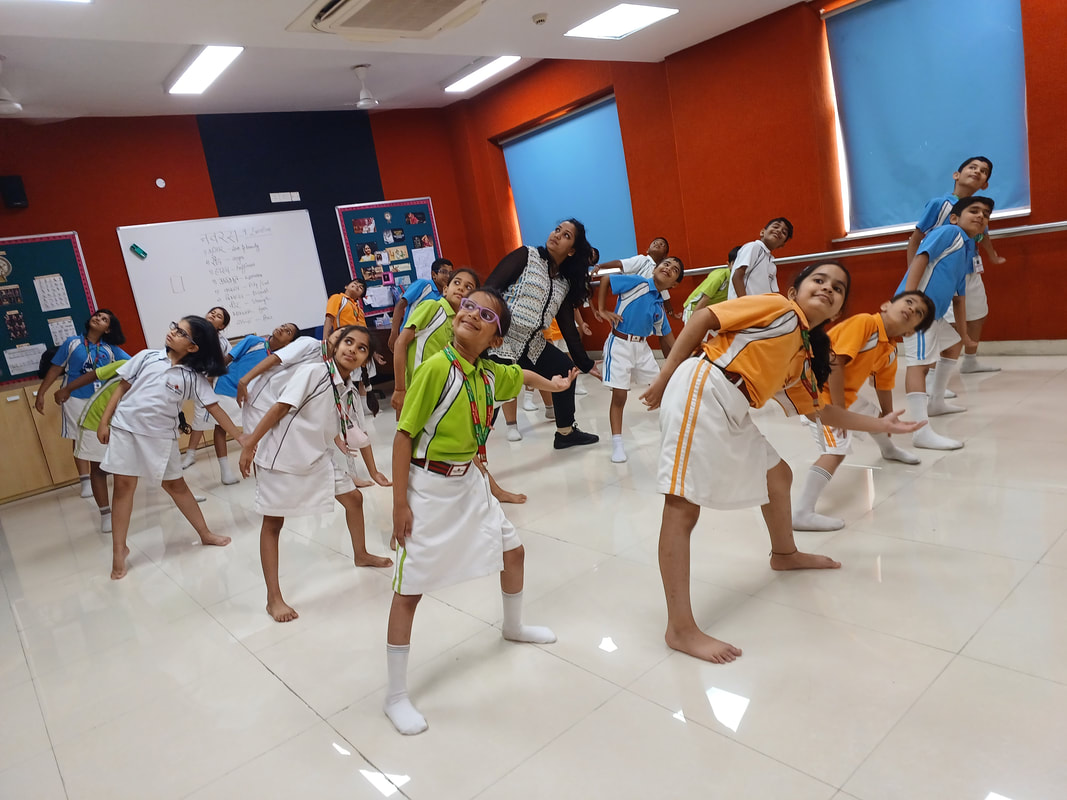
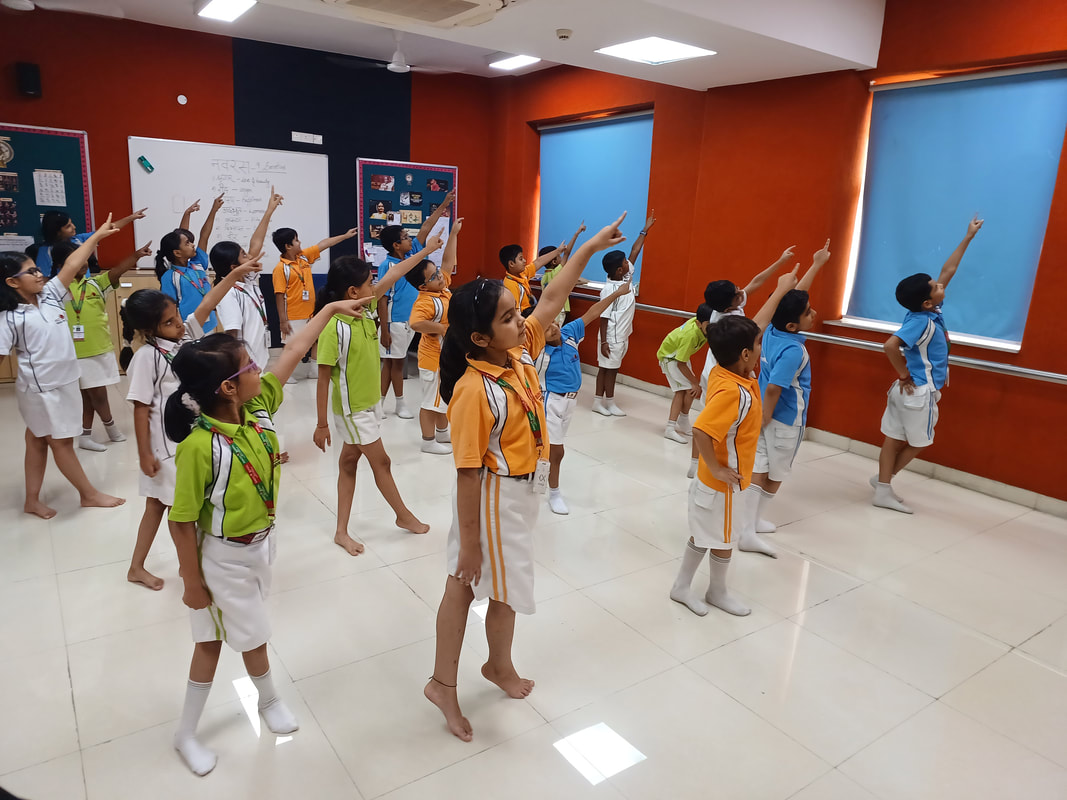
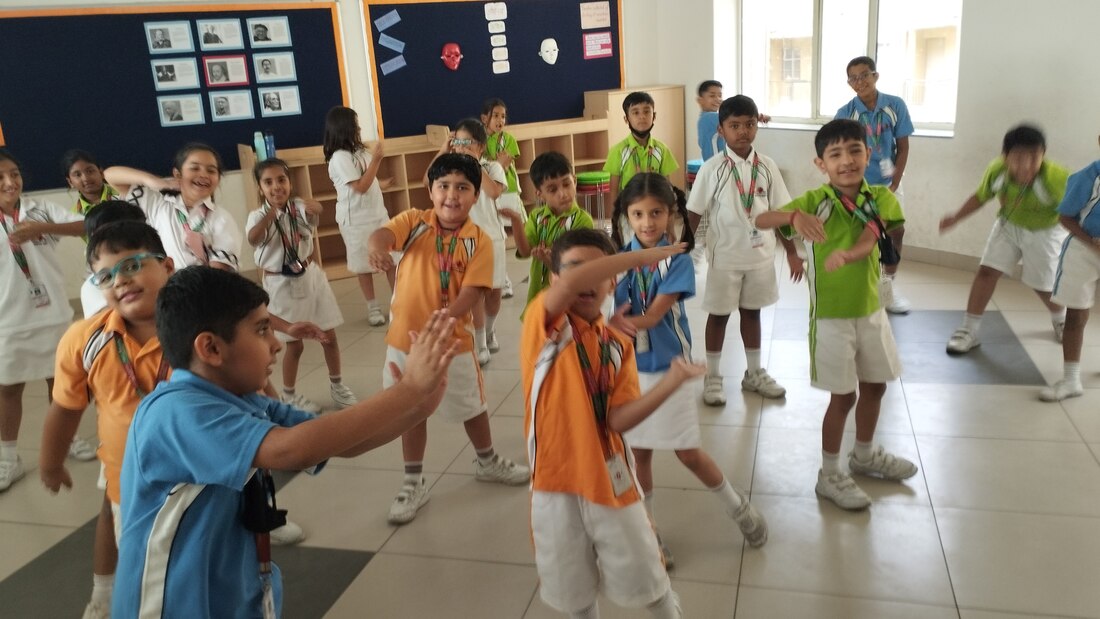
 TOPIC: HIP-HOP BEGINNERS. Students learnt the following:       
1. Groove: Feel the Bounce, Rock, and Flow- Students learnt to embody the essence of hip-hop through bounce (soft knee pulses), rock (weight shifts), and flow (smooth transitions).                                                    2. Rhythm: Beats, Tempo & Clapping Drills- Through clapping games and tempo exercises, students developed an awareness of musical timing. They learnt to move in sync with beats, building coordination and musical sensitivity.                                                                                                       
 3. Isolation: Control One Part at a Time- Students practiced moving individual body parts—head, shoulders, chest, hips, knees—without engaging the rest.                    
 4. Footwork: Steps & Directional Movement- Basic hip-hop steps like the Two-Step, Grapevine, and Step-Touch were introduced. Students explored movement in different directions—forward, backward, sideways.   5. Musicality: Match Movement to Music- They experimented with timing, pauses, and dynamic changes to bring music to life through dance.


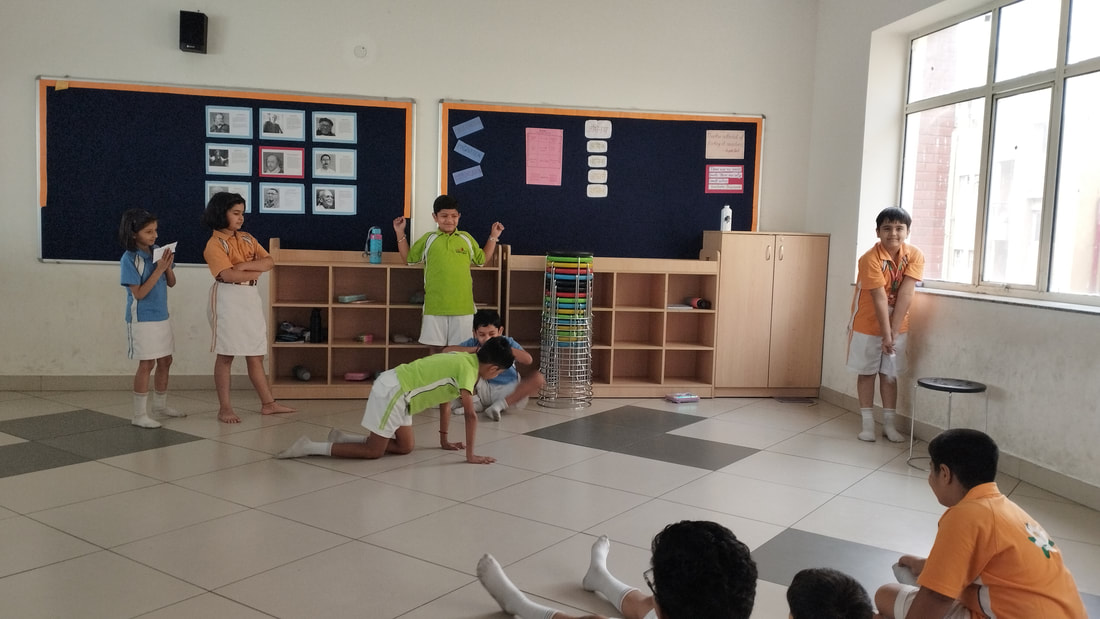
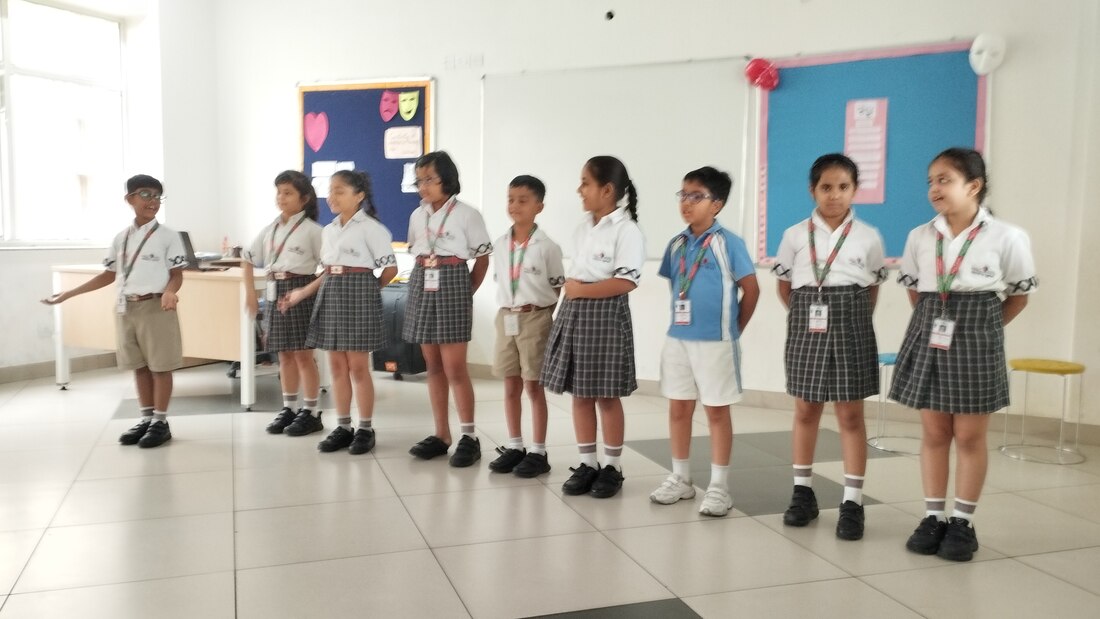
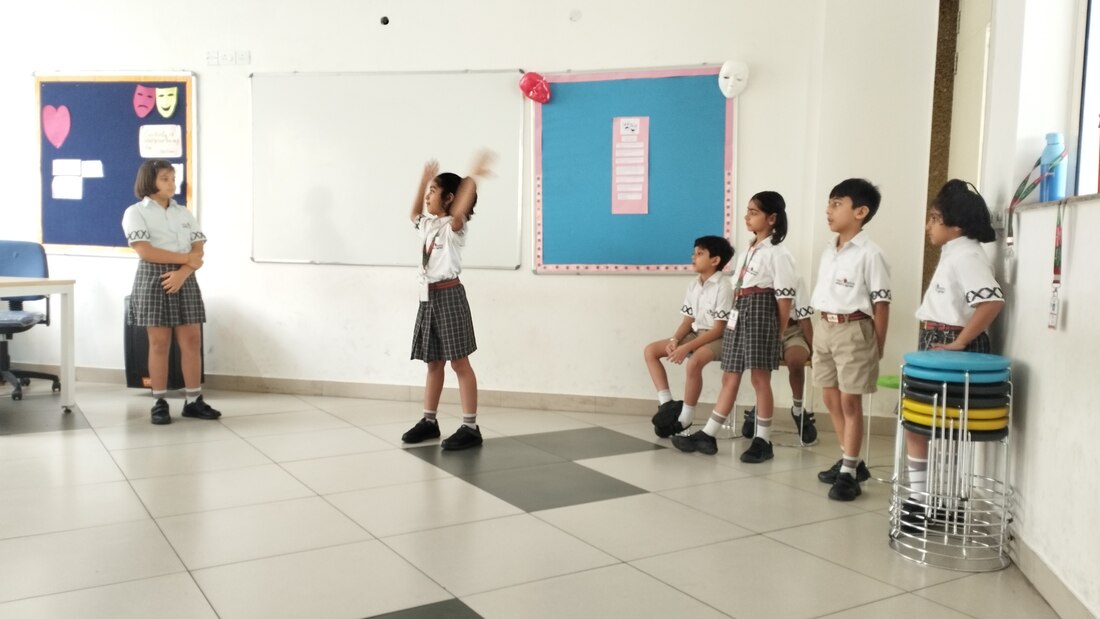
DRAMA

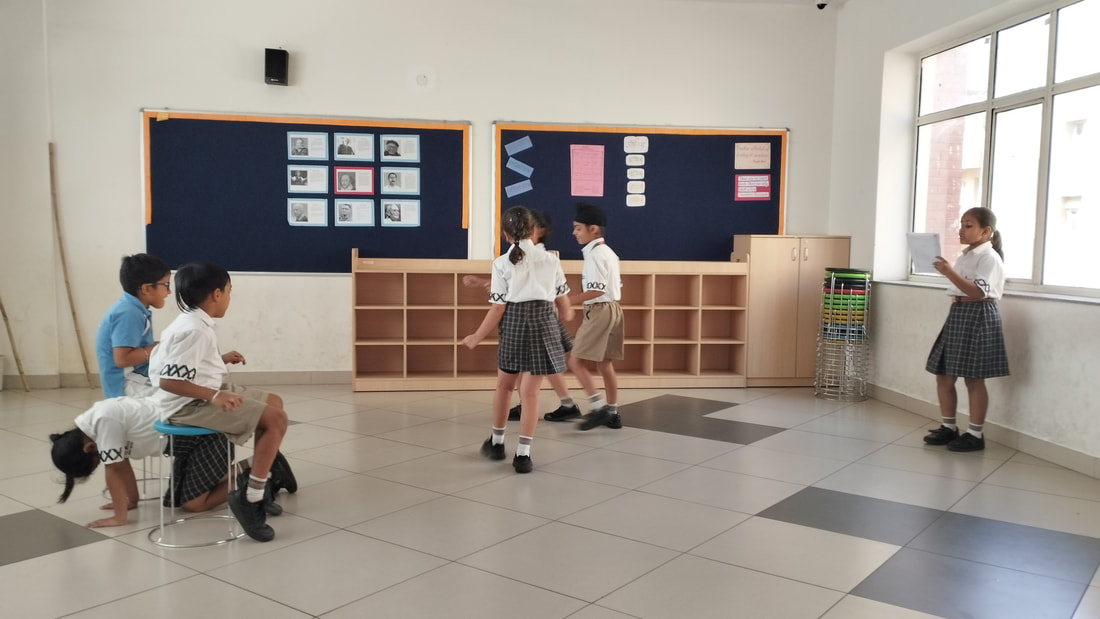
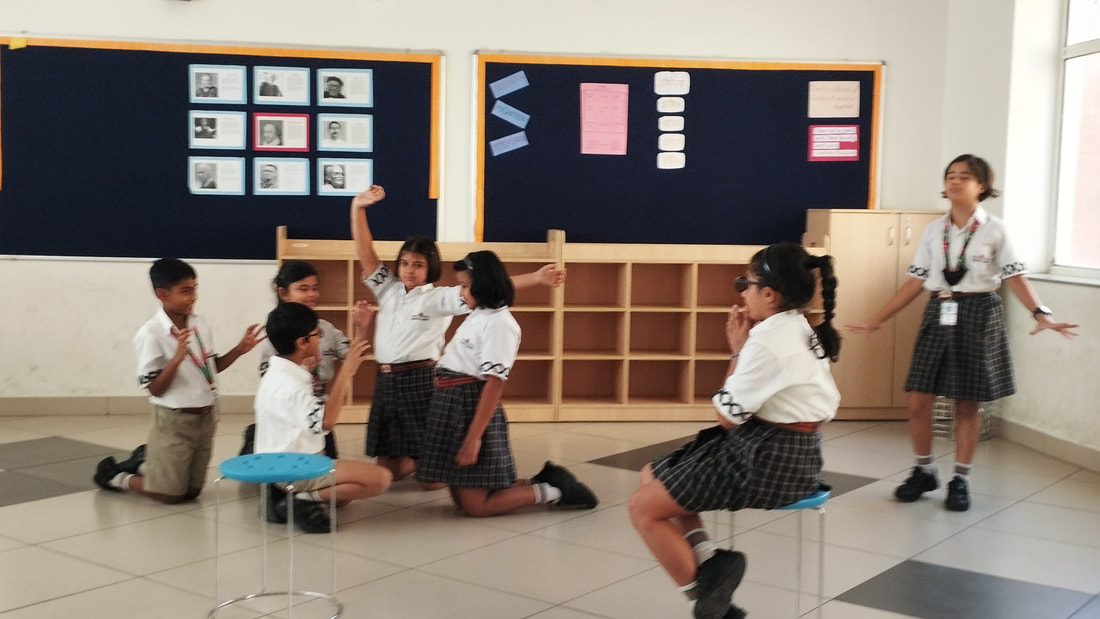
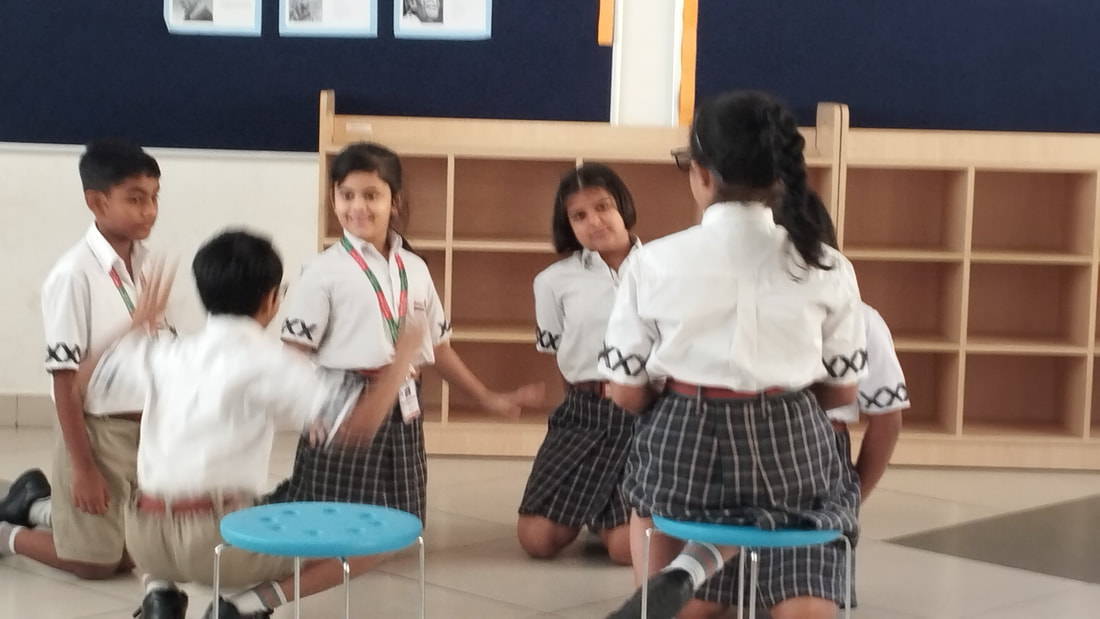
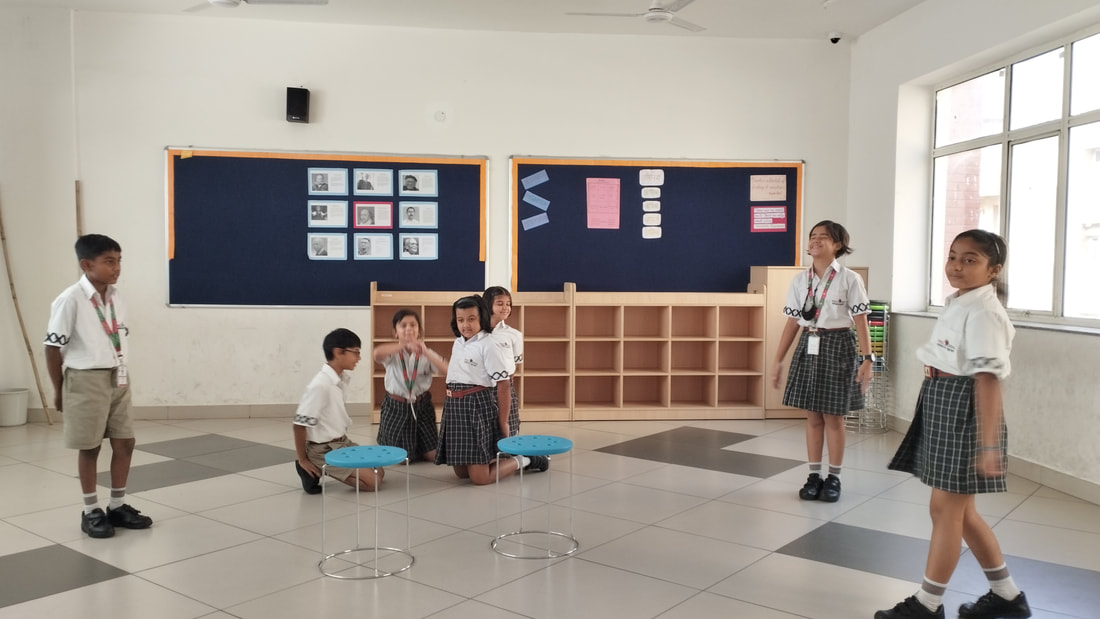
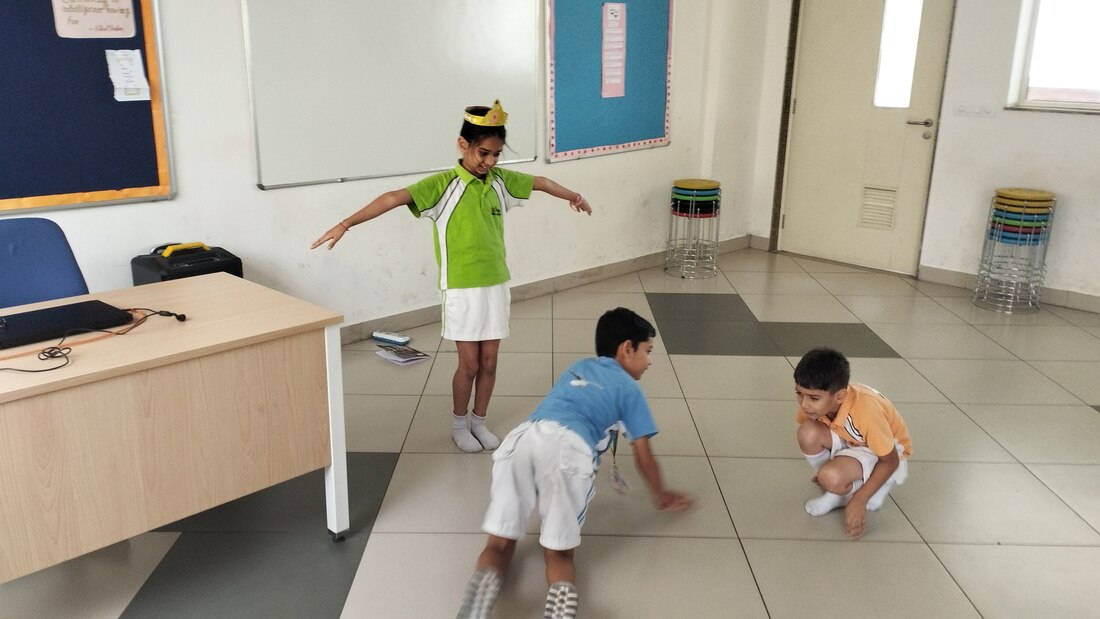
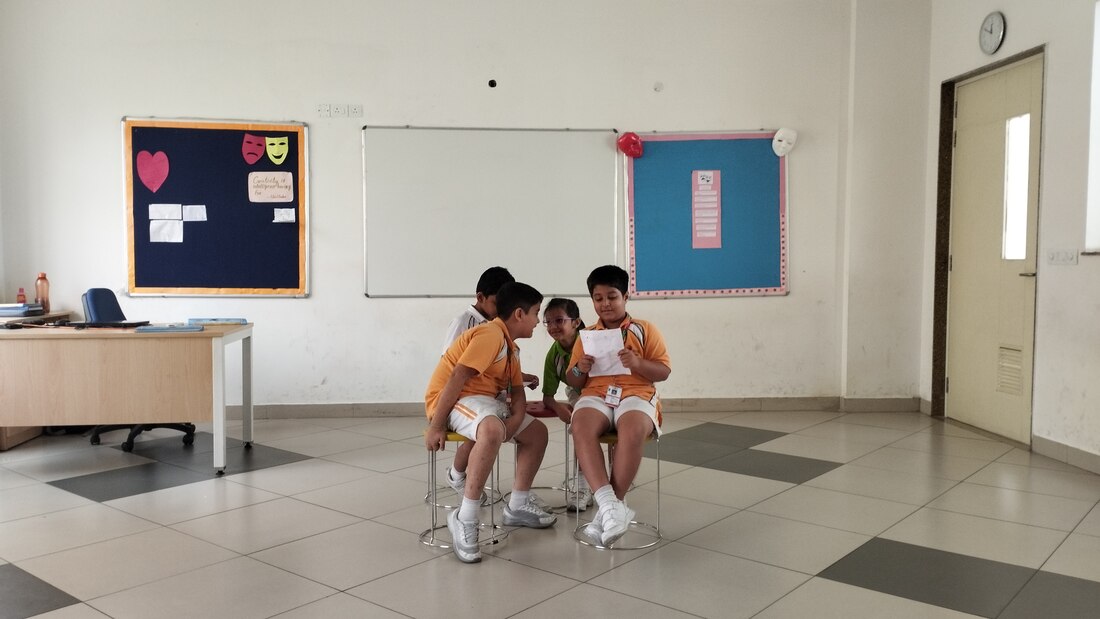
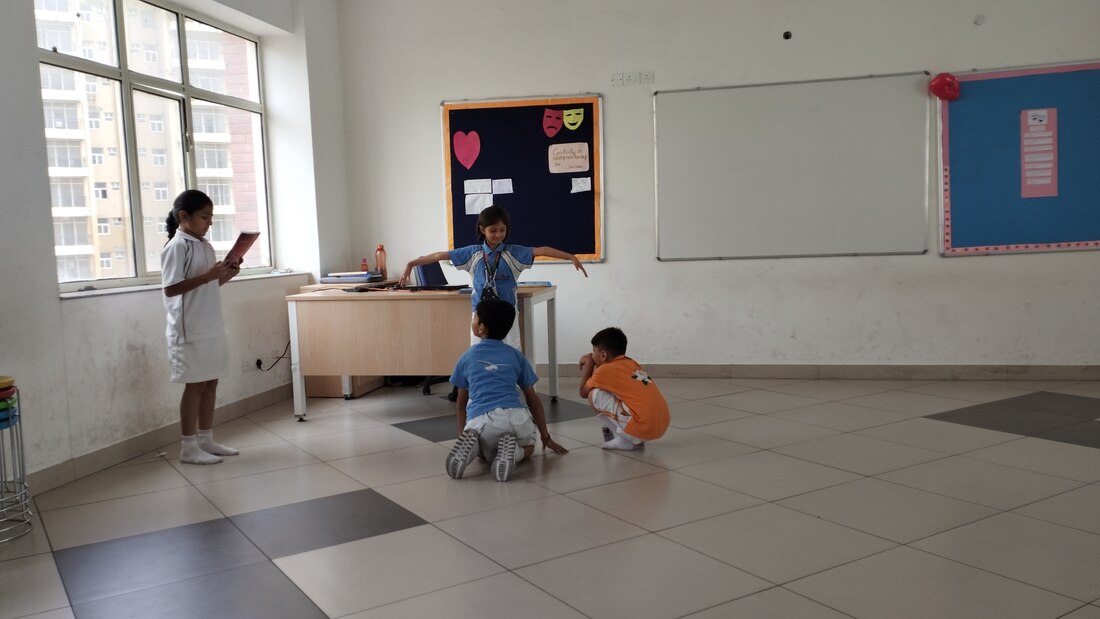
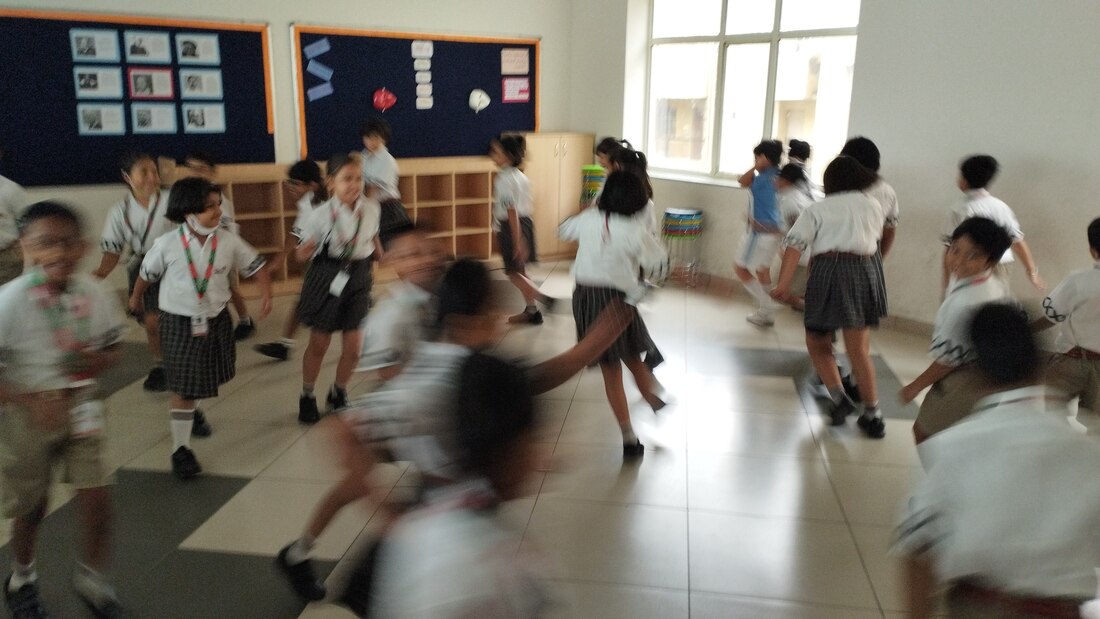
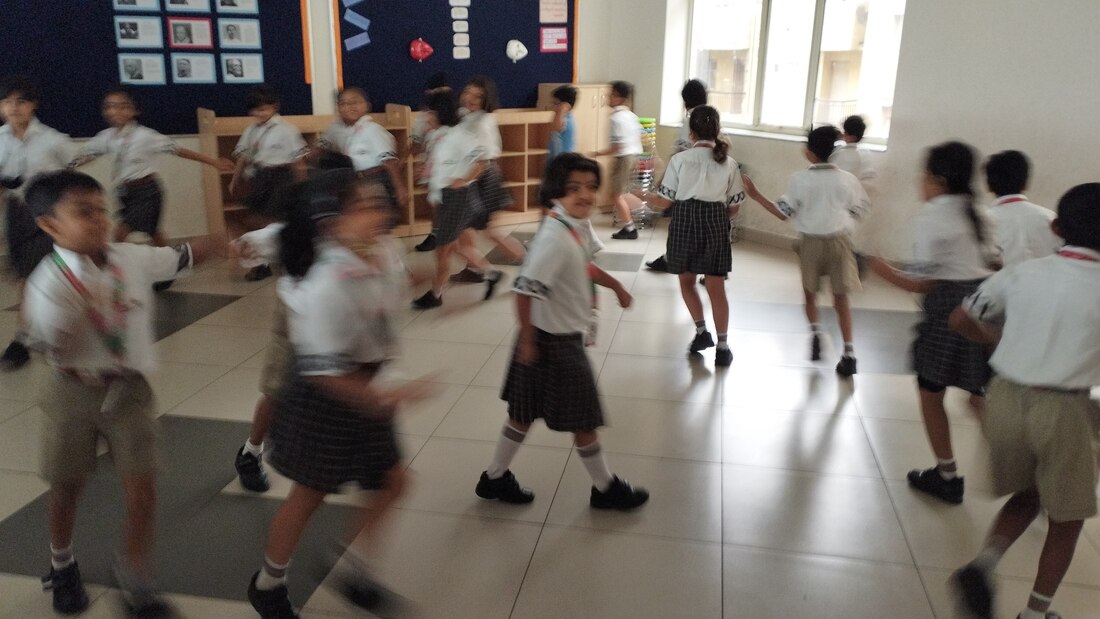
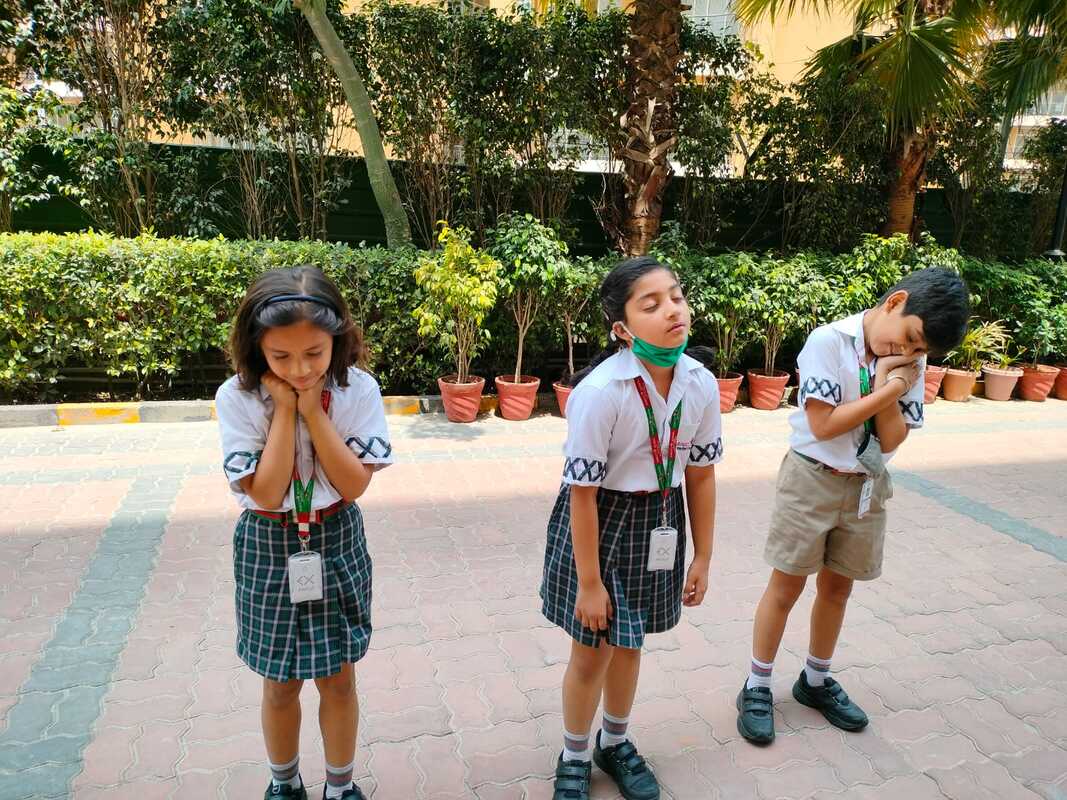
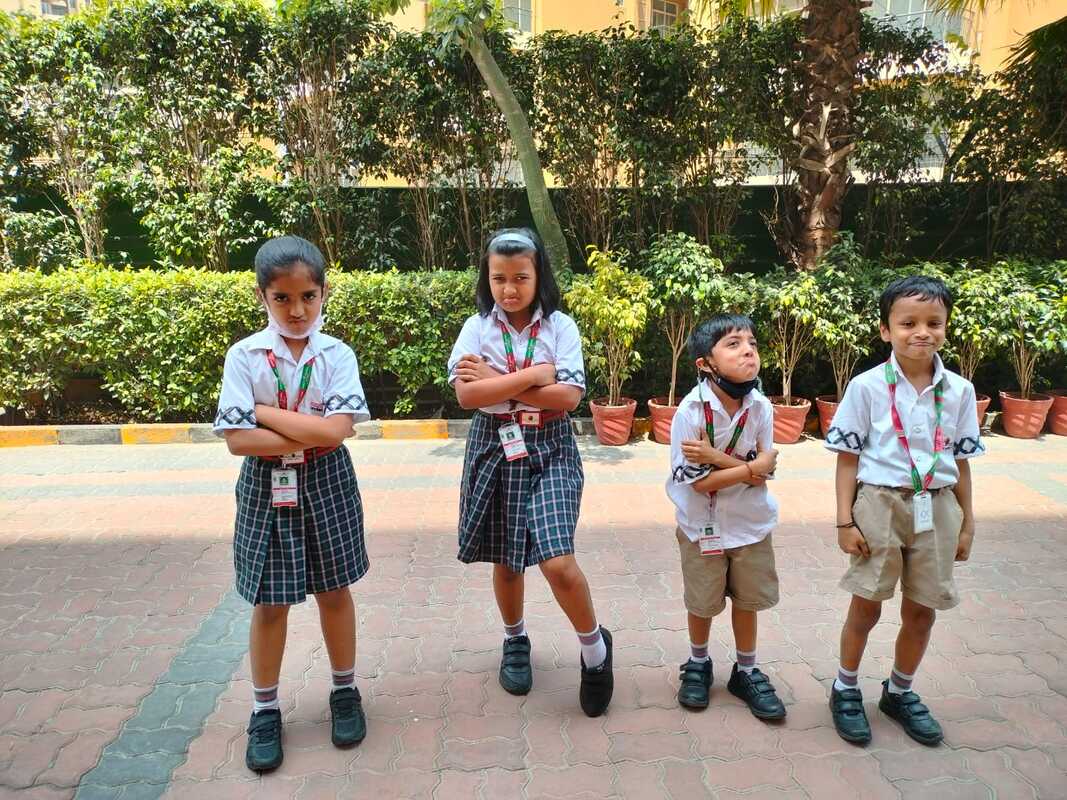
In November, students explored two dynamic theatre techniques that strengthened their expressive and creative abilities.
Freeze Frame Improvisation:
•  Students learned how still images can reveal relationships, emotions, and unspoken stories.
•  They explored space, levels, body language, and facial expressions to create meaningful frozen moments.
•  Through observation-based activities, students practiced holding emotions, noticing subtle expressions, and interpreting scenes without movement or dialogue.
•  This technique helped them understand the depth hidden within a single moment of a story.
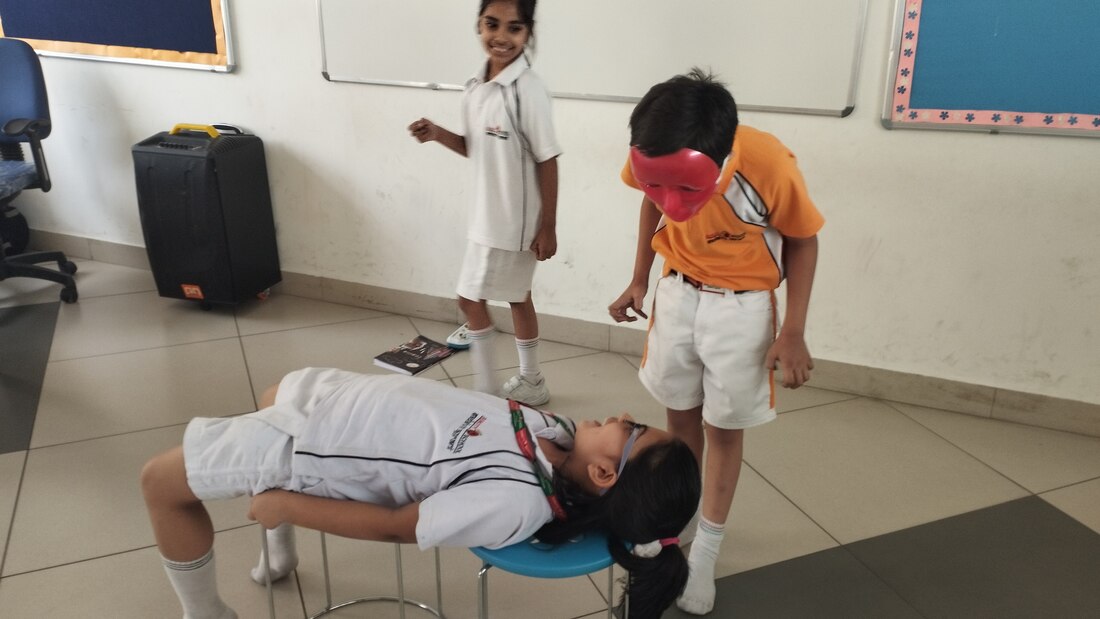
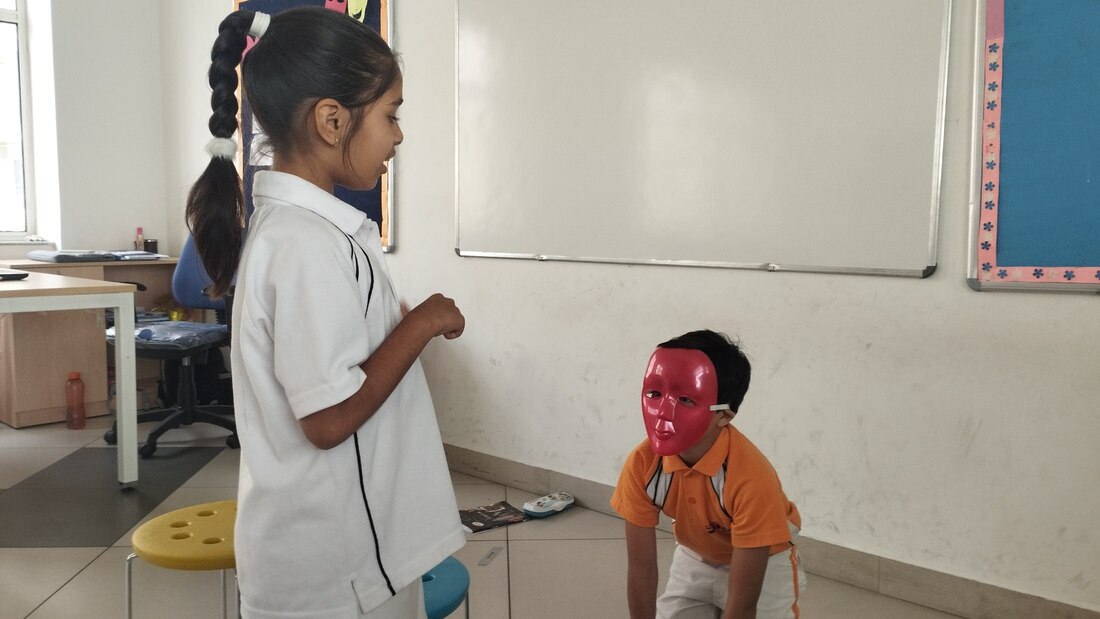
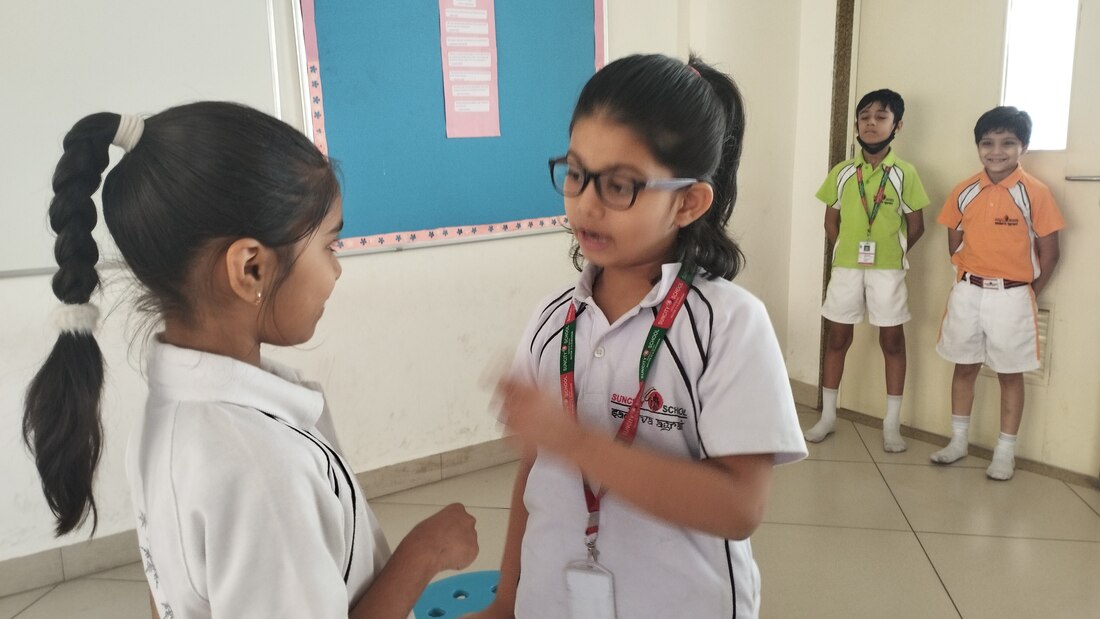
 Gibberish Improvisation :
•  Students were introduced to communicating through sounds, rhythms, and gestures instead of real words.
•  This built confidence, spontaneity, and clarity in physical expression.
Through these activities, students discovered how theatre can communicate powerful ideas without depending on spoken language, strengthening both imagination and emotional awareness.


INDIAN DANCE

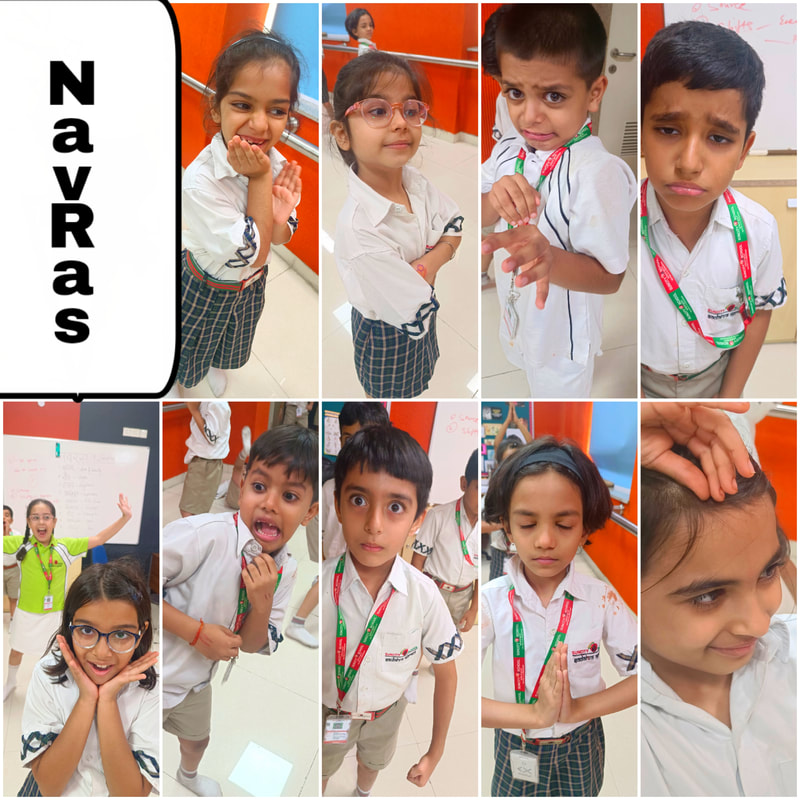
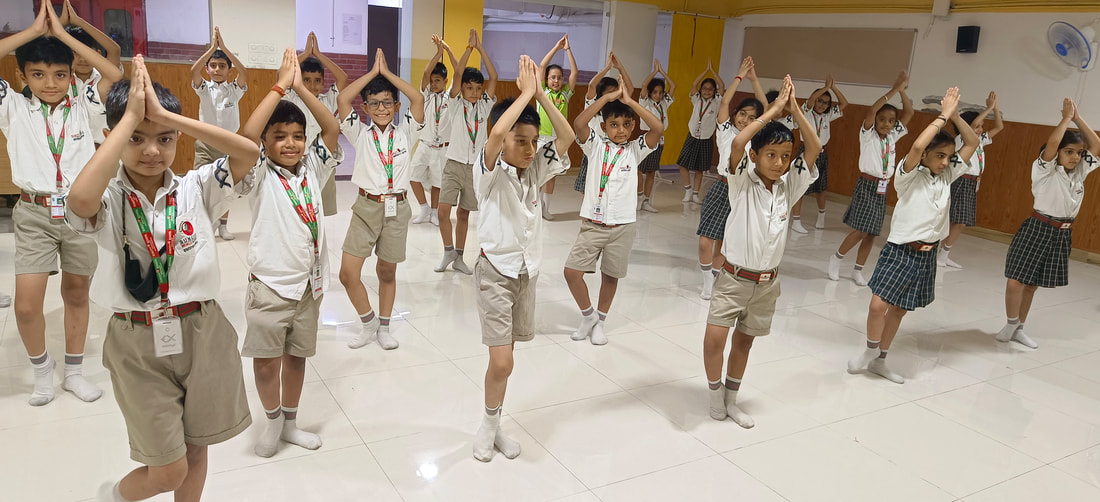
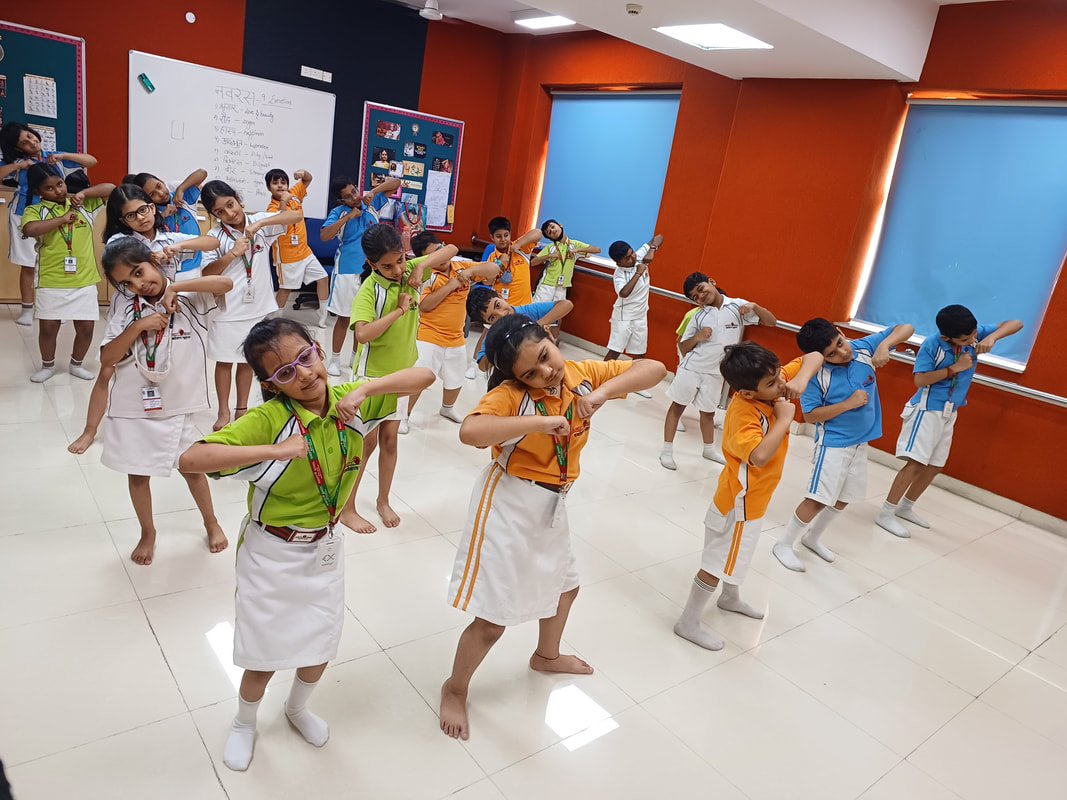
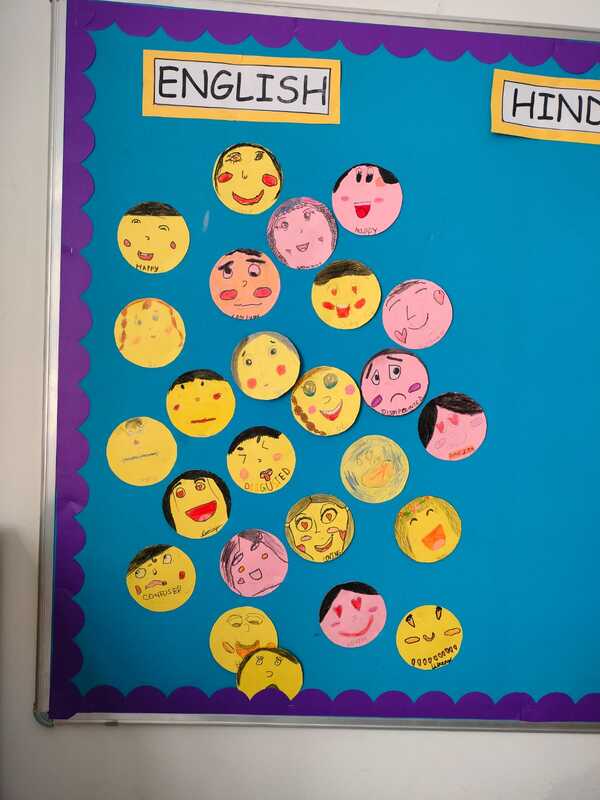
Students learned about Navrasa – the nine fundamental emotions in Indian dance. This helped them understand basic human emotions and their influence on behavior and expressions. The nine rasas are as follows: ● Shringara – Love, Beauty ● Hasya – Laughter ● Karuna – Kind-heartedness, Sorrow, or Compassion ● Raudra – Anger ● Veera – Courage or Heroism ● Bhayanaka – Fear or Terror ● Bibhatsa – Disgust ● Adbhuta – Wonder or Surprise ● Shanta – Peace or Tranquility Learning about Navrasa enhances students’ artistic expression, critical thinking, and emotional intelligence.


VISUAL ARTS

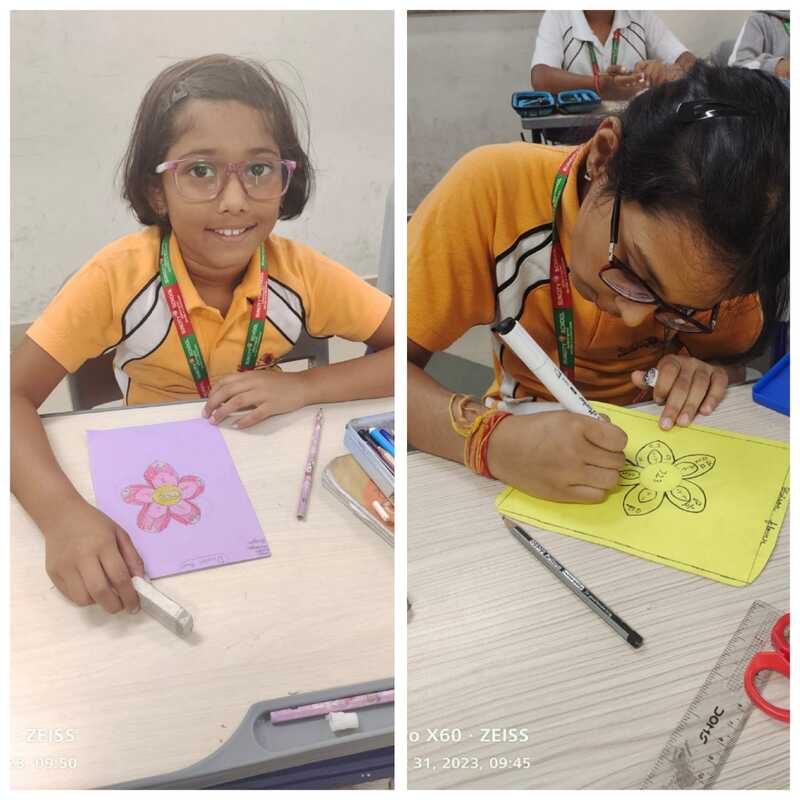
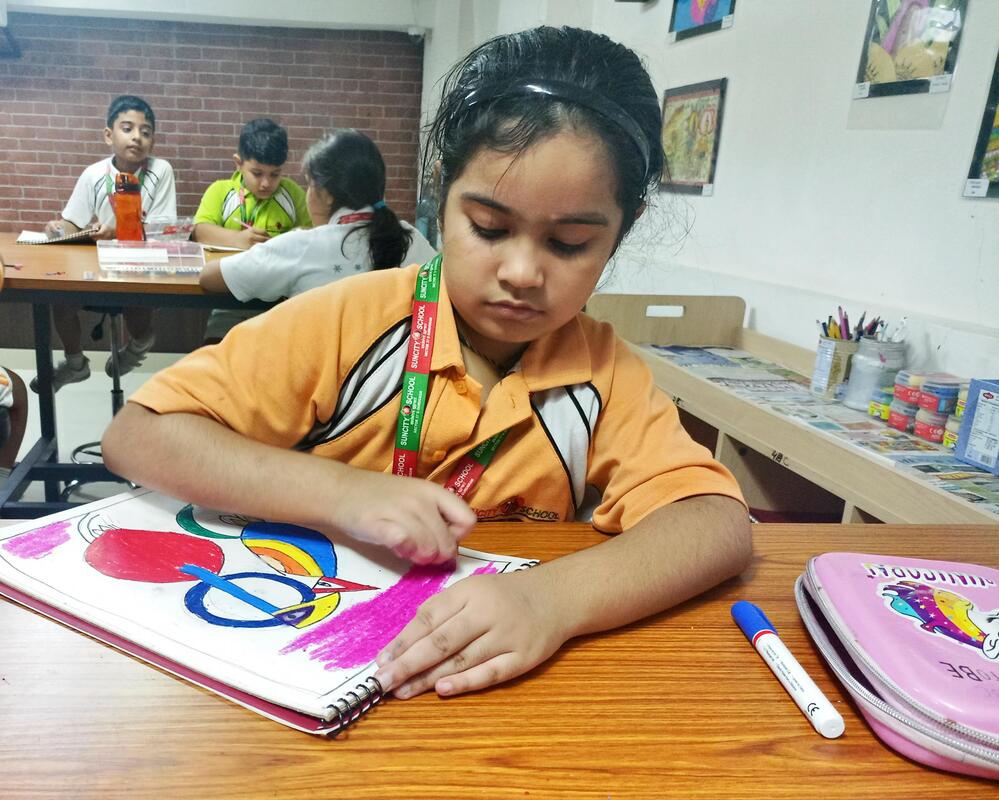
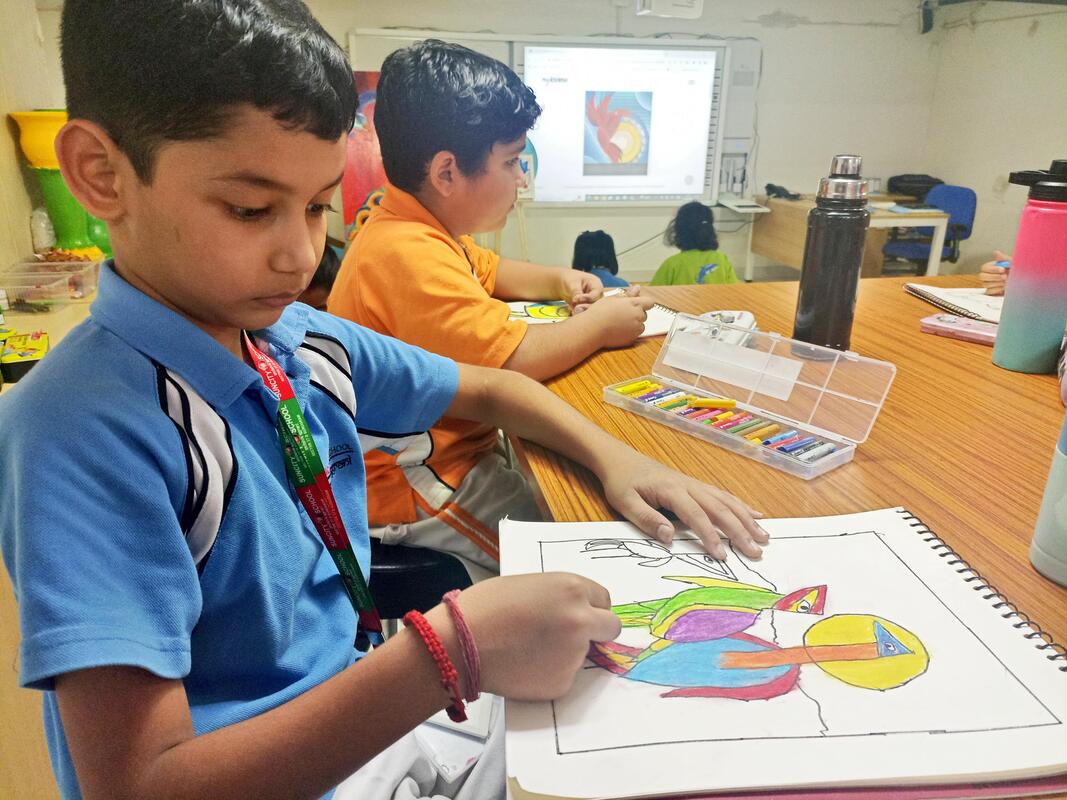
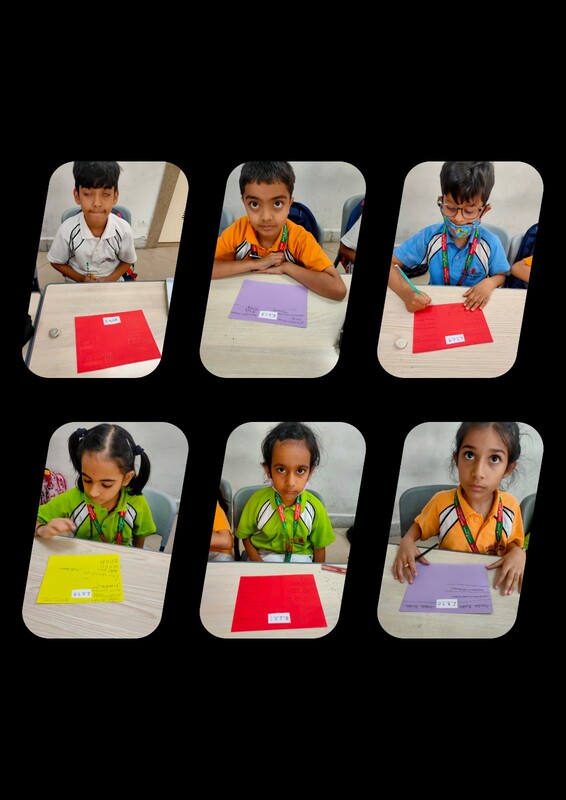
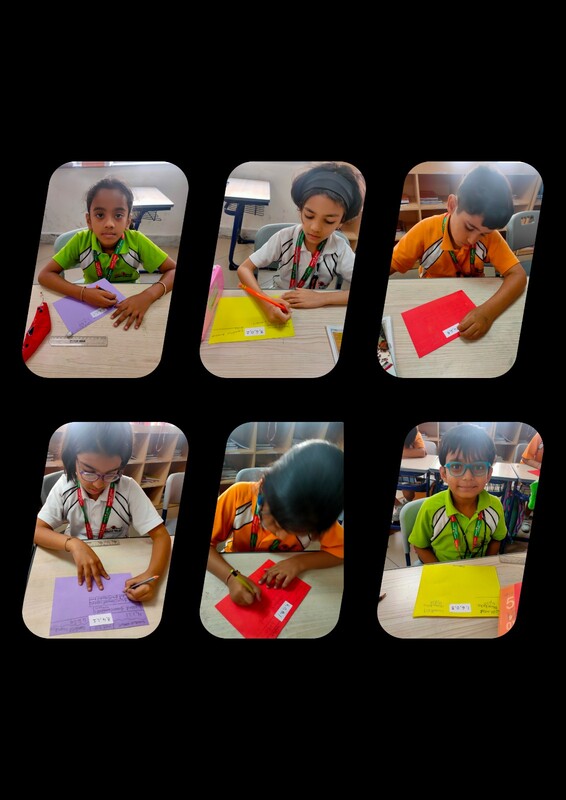
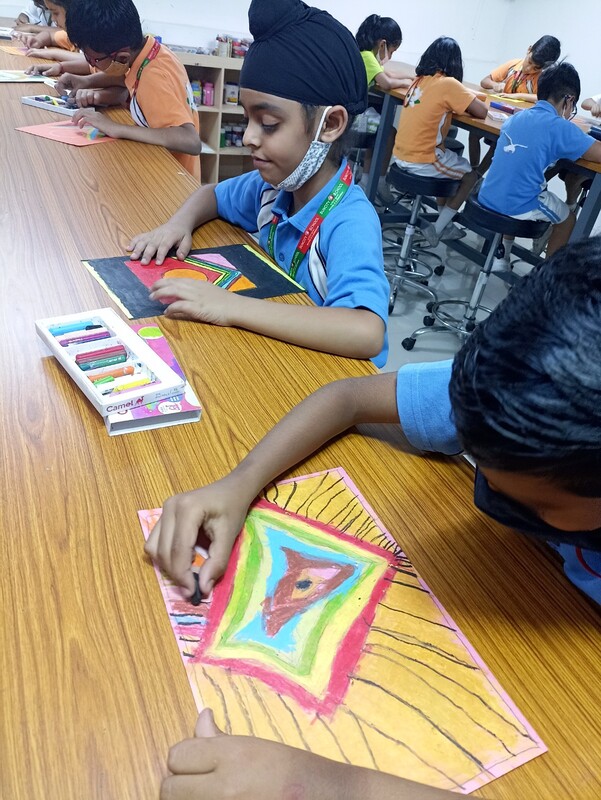
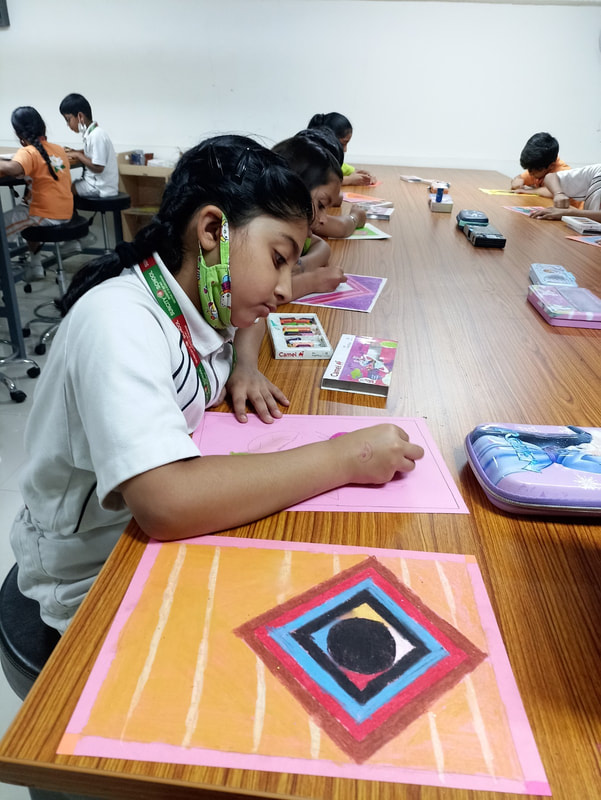
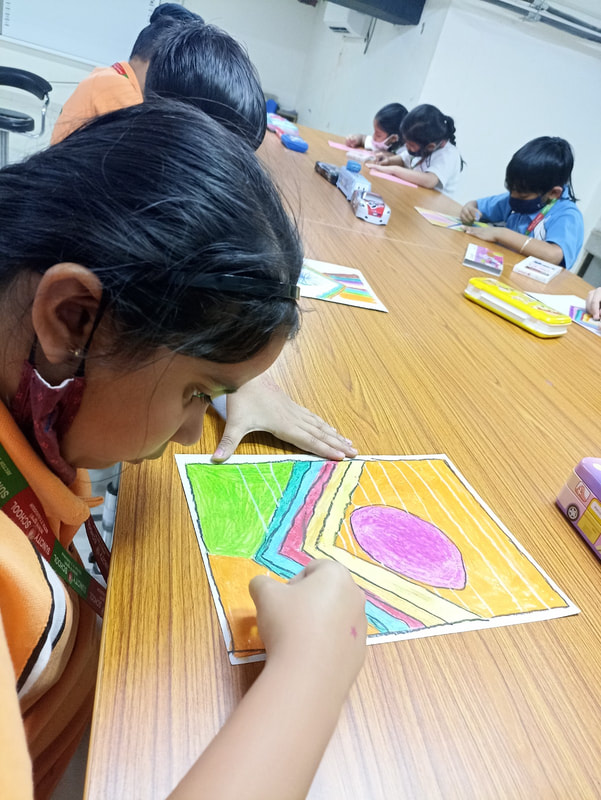
Students first sketched their letter designs lightly using a pencil and then coloured them neatly with markers. They decorated their papers using their own creative ideas, adding patterns, shapes, and vibrant colours. Each student explored different ways to make their letters unique, showing imagination and creativity throughout the activity. This typography task allowed them to express themselves artistically while learning how letters can be designed in fun and meaningful ways. Students first sketched their letter designs lightly using a pencil and then coloured them neatly with markers. They decorated their papers using their own creative ideas, adding patterns, shapes, and vibrant colours. Each student explored different ways to make their letters unique, showing imagination and creativity throughout the activity. This typography task allowed them to express themselves artistically while learning how letters can be designed in fun and meaningful ways. Students first sketched their letter designs lightly using a pencil and then coloured them neatly with markers. They decorated their papers using their own creative ideas, adding patterns, shapes, and vibrant colours. Each student explored different ways to make their letters unique, showing imagination and creativity throughout the activity. This typography task allowed them to express themselves artistically while learning how letters can be designed in fun and meaningful ways.   
0 Comments

Optimistic October

11/3/2025

0 Comments


ENGLISH

October was a month of engaging learning and creativity for our Grade III learners. Students explored “Would You Like to Live Here?”, learning about different types of houses and
 connecting their understanding to SDG 11 – Sustainable Cities and Communities. They also strengthened their grammar skills through fun activities on conjunctions and improved their
 factual writing by composing short, informative paragraphs about seasons and festivals. The highlight of the month was the integration with SDG 13 – Climate Action, 
where students wrote about how trees help fight climate change. Through reading Robinson Crusoe, children developed critical thinking and problem-solving skills.

HINDI

​अक्टूबर: त्यौहारों और सीख का संगम 
'उत्सवों की रौनक के बीच बच्चों की सीख और संवेदनशीलता का सुंदर मेल'
अक्टूबर का महीना सचमुच उल्लास और उमंग से भरा रहा। जहाँ एक ओर त्यौहारों की रौनक ने वातावरण को रंगीन बनाया, वहीं दूसरी ओर कक्षा में सीखने का उत्साह हर ओर झलकता रहा।
इस महीने की शुरुआत मुहावरों की अवधारणा से हुई, जिसने बच्चों की वाकपटुता और अभिव्यक्ति शैली को निखारा। साथ ही, पर्यायवाची शब्दों के अभ्यास के माध्यम से उनके शब्दकोश ज्ञान में वृद्धि हुई। समानार्थक शब्दों को समझते हुए न केवल उनका ज्ञान बढ़ा, बल्कि उनके लेखन और पठन कौशल में भी उल्लेखनीय सुधार हुआ।त्यौहारों की उमंग में और भी रंग भरने के लिए यह दीवाली याद रहेगी पाठ का पठन करवाया गया। जिसके माध्यम से बच्चों ने हमारे पर्वों का महत्व, संस्कृति की समृद्धि और पर्यावरण को स्वच्छ रखने का संदेश समझा। उन्होंने संवेदनशीलता, सहानुभूति और जिम्मेदारी जैसे जीवन-मूल्यों को आत्मसात किया। साथ ही, जेबखर्च की बचत का सदुपयोग करते हुए उन्होंने यह भी सीखा कि हम अनेक होते हुए भी एक हैं।
इस प्रकार, अक्टूबर का महीना बच्चों के चहुमुखी — बौद्धिक, भावनात्मक, भाषाई और सामाजिक विकास — का प्रतीक बन गया।यह वास्तव में एक शानदार और यादगार महीना रहा जिसने सीखने और जीवन के आनंद को एक सुंदर धागे में पिरो दिया। 
https://youtu.be/QhOzdauT6IM 
https://youtu.be/DPK9pd03WxQ 

SCIENCE

​October was a vibrant tapestry of joy, celebration, and discovery in our classroom. Amidst the festive cheer, our young learners continued their journey through the fascinating chapter on Air, Water, and Weather, where they explored the wonders of nature, the changing seasons, and how weather shapes our world. Next our learners embarked on an exciting adventure into the world of Measurement. Through hands-on activities, students learned to measure using both standard and non-standard units, uncovering how measurement plays a vital role in our everyday lives—from cooking and crafting to building and exploring.This month was a beautiful blend of curiosity and creativity, offering rich experiential learning that sparked imagination and deepened understanding. Our classroom was truly alive with questions, laughter, and the joy of discovery.

SOCIAL SCIENCE

​Connecting the World – Through Movement and Messages

October was a month of discovery for our Grade III learners as they explored Means of Transport and Communication. They learned how people and messages travel across distances and how transport connects our world.
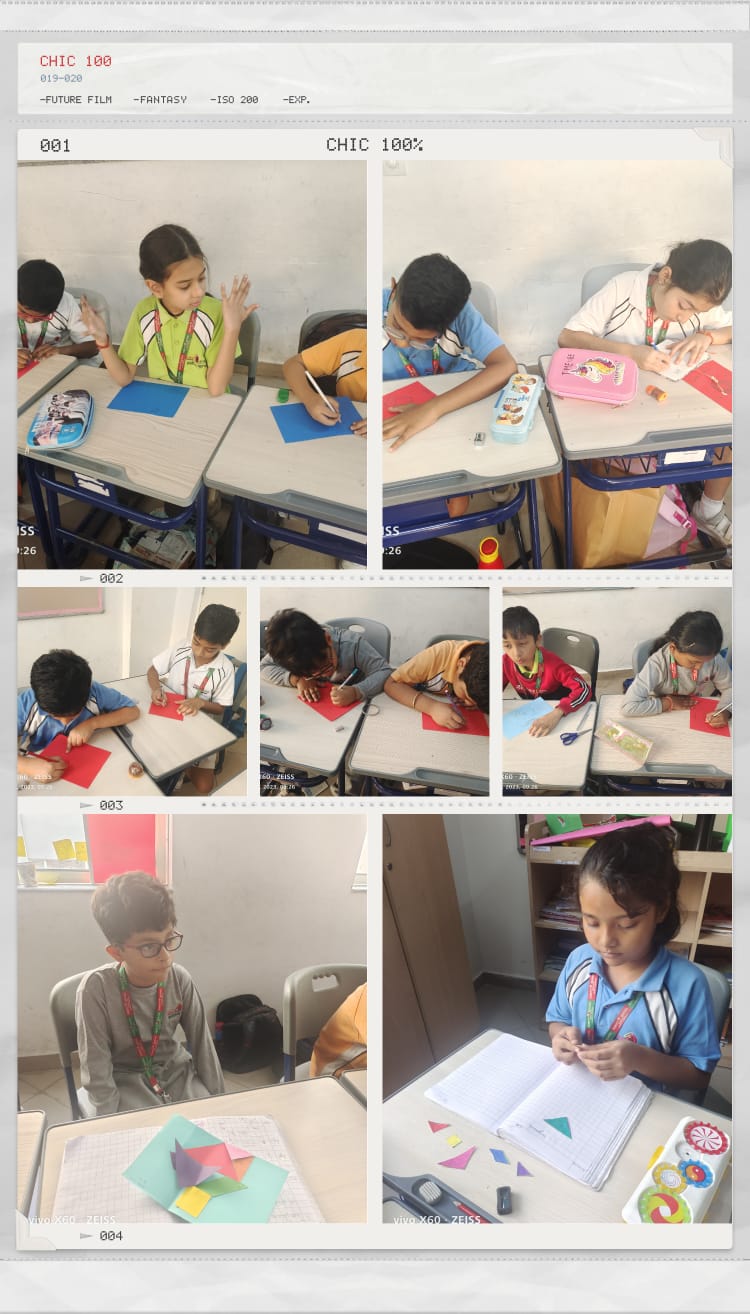
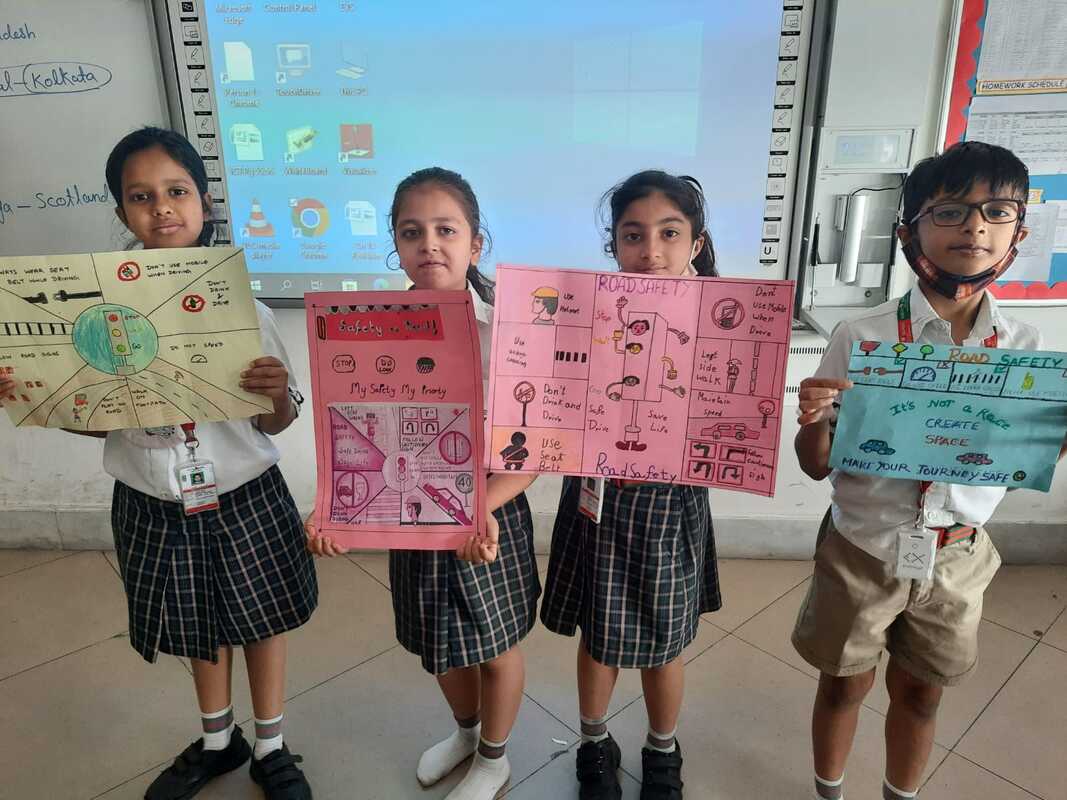
Through hands-on activities like reading rail and air tickets, students learned to identify travel details such as names, dates, and destinations—just like real travellers! They also discussed traffic signs and road safety, understanding the importance of being alert and responsible on the road.
Linking their learning to SDG 11 – Sustainable Cities and Communities, they realised that safe travel and responsible behaviour help make our cities safer and smarter.
October was all about learning to move, connect, and communicate responsibly in our everyday lives.

MATHS

In October, young learners explored the concept of fractions. They became familiar with terms such as numerator and denominator and practiced reading and representing fractions visually by shading parts of a whole. Students differentiated between like and unlike fractions and, using fraction kits, built creative models to understand quarters, halves, one-eighths, and one-sixths. They were also introduced to unit, proper, and improper fractions, reinforcing their understanding through sorting and note-making activities. Engaging word problems helped them practice comparing, adding, and subtracting like fractions.
Following this, students embarked on a new topic — Measurements. Through interactive discussions, they explored Standard and Non-Standard units of measurement, identifying the limitations of non-standard units and recognizing the importance of uniform methods for accuracy. They learned to measure length using a centimeter scale and understood the difference between uniform and non-uniform units. Learners also studied various forms of measurement — Length, Weight (Mass), and Capacity — and applied their learning through hands-on activities. They practiced measuring, adding, subtracting, comparing, and converting between units, strengthening both conceptual understanding and problem-solving skills. These lessons fostered critical thinking and encouraged real-world application of mathematical concepts.

ICT

​Grade III students were introduced to a new and exciting application — MS Word — through an engaging hands-on activity. To begin with, they were asked to write on a sheet of paper and make changes such as altering text colour and formatting. While they enjoyed the activity, they soon realized how much easier and faster it was when the facilitator demonstrated the same task digitally using MS Word.
The students were then introduced to the various components of the Word window and learnt how to create a new document, enter and edit text, save their work, print it, and close the file. They thoroughly enjoyed the practical session, enthusiastically typing their own short passages and experimenting with text styles and colours. The activity not only sparked their interest in digital writing but also helped them understand the importance of using technology for everyday tasks efficiently.

CLASS ASSEMBLY 3-A

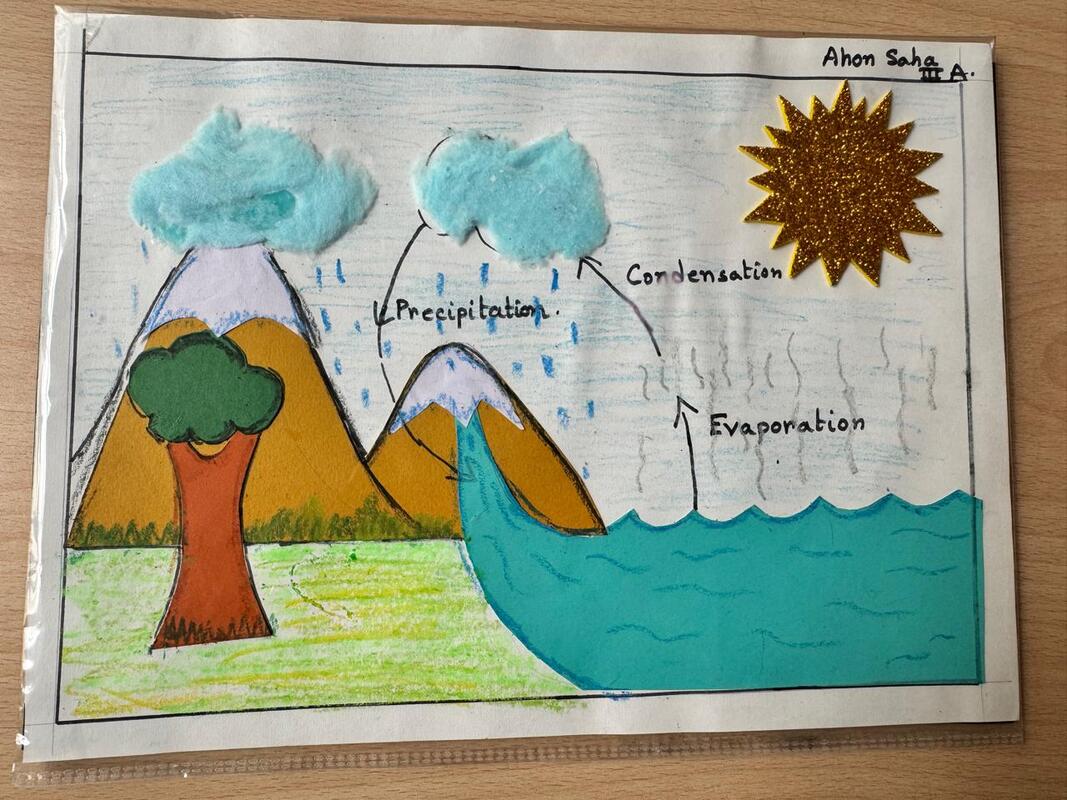
 ​On 31st October 2025, Grade III-A presented an engaging assembly on -The Journey of a Water Droplet, highlighting the water cycle and the importance of conserving water. Through a creative skit, students illustrated how the water cycle works and emphasised its significance in our daily lives. The assembly also featured a lively dance performance and an interactive quiz to make learning enjoyable. The Principal, Ms Jayshree Patel, inspired the students with her encouraging words. The event concluded with the playing of the school and national anthems, leaving everyone motivated to use water responsibly and protect this precious resource.

PHYSICAL EDUCATION

​Physical Education Highlights – Advancing Skills & Confidence
This month, our students moved beyond the basics, refining techniques and applying them in competitive settings across multiple sports.
Badminton – Precision & Tactical Control: Training advanced to multi-shot rally sequences, mid-rally adjustments, and deceptive net play.    (OORJA TRIALS)                                                                                    Swimming – Speed & Endurance Training: Learners worked on interval drills, flip turns, and stroke correction to enhance speed consistency
Gymnastics – Strength & Sequencing: Students combined multiple elements such as cartwheel-to-handstand transitions and dynamic beam routines.
Judo– Counter-Attack & Groundwork: Moving beyond basic throws, students practiced combinations leading to pins and escapes.
Cricket –Strategic Game Scenarios: Players analyzed field placements, adjusted batting orders, and practiced situational bowling.                         (OORJA TRIALS)
Shooting – Stability & Accuracy: Grip and stance drills advanced to dry firing exercises, developing muscle memory and mental focus.
Football – Tactical Play: Students moved into structured formations, pressing techniques, and set plays to strengthen team coordination.
Tennis – Match Play Skills: Beyond forehand and volley, emphasis was on rally endurance, serve consistency, and tactical court positioning.
Basketball- Our basketball sessions introduced students to court positioning, lay-up shots, and the correct shooting stance. They also explored the format of both full-court and 3v3 matches. Through these engaging drills, students enhanced their game awareness, improved their shooting accuracy, and developed teamwork skills, making learning basketball both fun and foundational for future competitive play.
Our young athletes are steadily building discipline, resilience, and tactical understanding—laying the foundation for higher-level competitive play.

INDIAN MUSIC

Vocal Warm-Up Exercises:
Before singing, warming up the voice is essential.
Breathing exercises – Deep breaths in and out to control breath support.
Humming (mmmm) – Helps relax vocal cords and improve resonance.
Diwali storyDiwali, also called Deepavali, is the Festival of Lights.
It celebrates the victory of good over evil and light over darkness.
The most popular story is from the Ramayana:
Lord Rama returned to Ayodhya with Sita and Lakshman after defeating the demon king Ravana.
The people of Ayodhya welcomed them by lighting lamps (diyas) all over the city.
Since then, Diwali is celebrated by lighting diyas, bursting fireworks, and sharing sweets with family and friends.
[Ram Bhajan-Ram ka gungaan kariye]

WESTERN MUSIC

Grades III Unite with “We Are the World” 🌍      
Our Grades III  students recently inspired the school community with a heartfelt performance of “We Are the World” by Michael Jackson and Lionel Richie. Their strong vocals beautifully conveyed the song’s message of unity, compassion, and hope.
Some students also played the Clapbox, adding rhythm and energy to the performance while encouraging teamwork and musical coordination.
Learning Objectives:
1. Express unity and empathy through singing and rhythm
2. Build confidence and teamwork
3. Explore tempo, dynamics, and coordination with instruments
SDG 4: Quality Education
This activity supports Quality Education by fostering creativity, collaboration, and social-emotional growth.
We are proud of our young performers for showing that when we raise our voices together, we truly are the world. 🌟

WESTERN DANCE

                                                                                 
TOPIC: HIP-HOP BEGINNERS. Students learnt the following:                                                                          1. Groove: Feel the Bounce, Rock, and Flow- Students learnt to embody the essence of hip-hop through bounce (soft knee pulses), rock (weight shifts), and flow (smooth transitions).                                                    2.  Rhythm: Beats, Tempo & Clapping Drills- Through clapping games and tempo exercises, students developed an awareness of musical timing. They learnt to move in sync with beats, building coordination and musical sensitivity.                                                                                                       
 3. Isolation: Control One Part at a Time- Students practiced moving individual body parts—head, shoulders, chest, hips, knees—without engaging the rest.                    
 4. Footwork: Steps & Directional Movement- Basic hip-hop steps like the Two-Step, Grapevine, and Step-Touch were introduced. Students explored movement in different directions—forward, backward, sideways.     5. Musicality: Match Movement to Music- They experimented with timing, pauses, and dynamic changes to bring music to life through dance.

DRAMA

     In October, our drama students explored the Art of Storytelling, discovering how stories can entertain, educate, and inspire. Through interactive activities and creativity, they learned how every story has a beginning, middle, and end, and how emotions, imagination, and structure bring a story to life.
Key Learning Highlights:
 Understanding Story Elements: Students discussed the importance of structure, characters, conflict, theme, pacing, imagery, dialogue, and emotional resonance.
One-Word Story: Each student added one word at a time to build a spontaneous and imaginative story, encouraging teamwork and quick thinking.
 One-Sentence Story: In the next stage, students constructed a complete story where each contributed one sentence, focusing on flow and logical sequence.
Reflection: The class concluded with discussions on how stories convey messages, emotions, and values that leave lasting impressions on the audience.

INDIAN DANCE

  Students learnt about Navrasa - Nine fundamenta emotions in Indian dance .It helps them to understand basic human emotions, its influence on human behaviour and expressions. ● Shringara  (Love, Beauty)
Hasya  (Laughter)
Karuna  (Kind-heartedness, Sorrow, or Compassion)
 Raudra  (Anger)
Veera  (Courage or Heroism)
 Bhayanaka  (Fear or Terror)
Bhibhatsa  (Disgust)
Adbutha  (Wonder or Surprise)istic expression, critical thinking and emotional intelligence.

 VISUAL ARTS ​

 ​Grade III students explored optical illusions through lines and shapes.
They learned how the brain perceives illusions and how artists use this knowledge to trick the eye.
Each student selected their favorite illusion and recreated it using lines.
For coloring, they used different mediums of their choice — crayons, colored pencils, oil pastels, or watercolors — adding a personal touch to their artworks.   
0 Comments

SUCCESSFUL SEPTEMBER

10/8/2025

0 Comments


ENGLISH

​September was filled with exciting learning experiences for our Grade III students under the theme Food and the universal value of Kaizen (continuous improvement).
Children explored fairy tales through The Princess and the Pea, strengthened their grammar skills with singular and plural nouns, and enhanced their spellings with plural forms ending in –es. Health awareness took centre stage with Staying Healthy, where students learned about germs, hygiene, and making healthy lifestyle choices. The classic Robinson Crusoe encouraged problem-solving and resilience. Engaging activities such as poster-making, reading comprehension, poem recitation, and presentations nurtured creativity, collaboration, and critical thinking—making the month joyful and meaningful for every learner.

SCIENCE

​This month, students continued their inquiry-based learning journey with a deep dive into the chapter on Soil, followed by an exciting introduction to Air, Water, and Weather.
They explored how soil is formed, its types, composition, and importance through hands-on activities and observations. The new chapter introduced them to the components of air, uses of water, and the water cycle, sparking curiosity about the natural world around them.
Informative videos and PPTs supported visual understanding and kept the learning dynamic and engaging, helping students connect concepts to real-life experiences.
Picture
Picture
Picture
Picture
Picture
Picture
Picture
Picture

SOCIAL SCIENCE

“Tasting knowledge, one bite at a time – learning where food comes from and how to care for it.”

September was a month of flavour and awareness for our Grade III learners as they explored the journey of food and the importance of mindful eating.
Their visit to the school refectory gave them a behind-the-scenes look at how meals are prepared with care and hygiene. They also learned how food travels from farms to markets and the value of eating local and seasonal produce.
A discussion on junk food vs. healthy food encouraged students to reflect on their choices and understand the benefits of nutritious eating. Connecting with SDG 12 – Responsible Consumption and Production, they pledged to reduce food waste and make sustainable choices.
Students also explored the rich world of Indian spices and their everyday uses, along with discovering traditional cooking utensils used in Indian kitchens.
September was not just about learning food facts—it was about building respect, gratitude, and responsibility for every bite we take.
https://www.youtube.com/watch?v=-qdYEUu3PYc 
https://drive.google.com/file/d/1Jsj18Hhu2jGTP0jpHQIZAQOI8FQifdLN/view?usp=drive_link 
https://www.youtube.com/watch?v=uchmFzHYNwo 
https://drive.google.com/file/d/1oA8cjJAER3W3MDeUA22CQ6z2pufgQItI/view?usp=drive_link 
https://youtu.be/YimuIdEZSNY?feature=shared 
https://drive.google.com/file/d/1JW65G1aCG3UA45OPViFn_CX5w_b9DDrl/view?usp=drive_link 
https://youtu.be/2-5du2oVM5g?feature=shared 
https://youtu.be/2MxKrGXAyH8?feature=shared 

MATHEMATICS

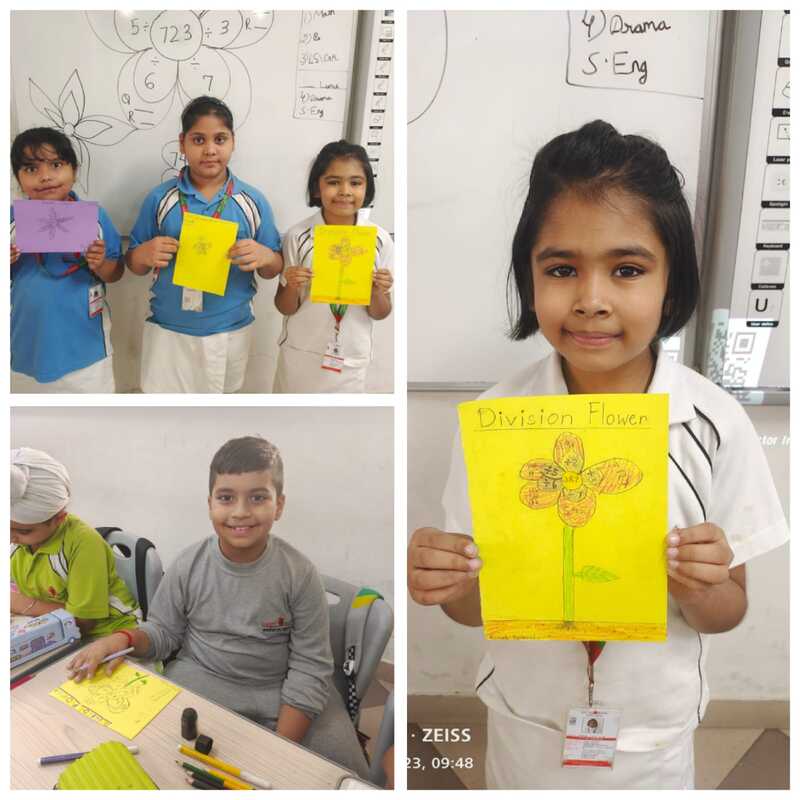
In September, our Grade III learners were introduced to another mathematical operation—Division.
They began with a fun recap activity that helped them revisit key terms related to division. The concept was first introduced through the repeated subtraction method, followed by exploring the idea of remainders using straws and other real-life objects, making the learning experience concrete and meaningful.

Students then progressed to understanding the rules of division and applied the RUCSAC method to solve word problems. A major highlight was their introduction to the long division method, where they learned to divide 2- and 3-digit dividends by a 1-digit divisor—an exciting new skill they grasped with enthusiasm.

Adding to the joy of learning, the Food Fun with States activity beautifully integrated Math with Social Studies. Through this, learners not only strengthened their division skills but also connected them with real-life contexts and cultural understanding.
Picture

HINDI

“शिक्षा की जड़ें कड़वी होती हैं, लेकिन फल मीठा होता है।” – अरस्तु
 सितम्बर : सीखने और सृजनशीलता से भरा महीना 
सितम्बर माह की शुरुआत क्रिया की अवधारणा से हुई। विद्यार्थियों ने गतिविधियों और कहानी-पाठ के माध्यम से क्रिया शब्दों की पहचान की और उन्हें लेखन कार्य में प्रयोग करना सीखा। इससे उनकी भाषा की समझ और भी गहरी हुई।
इसके बाद विशेषण की अवधारणा का आरम्भ हुआ, जहाँ बच्चों ने विशेष्य और विशेषण के बीच का अंतर जाना। इस अभ्यास ने उनके ज्ञान को समृद्ध किया और भाषा पर पकड़ मजबूत की।
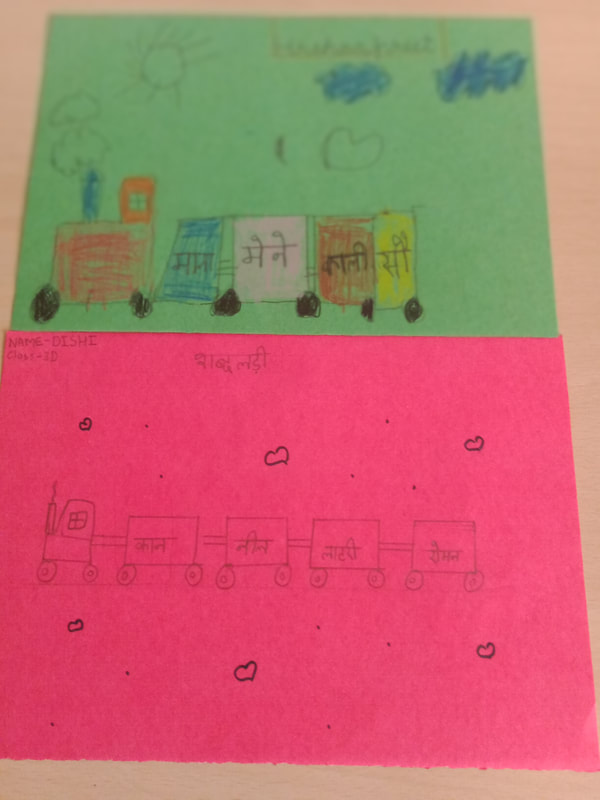
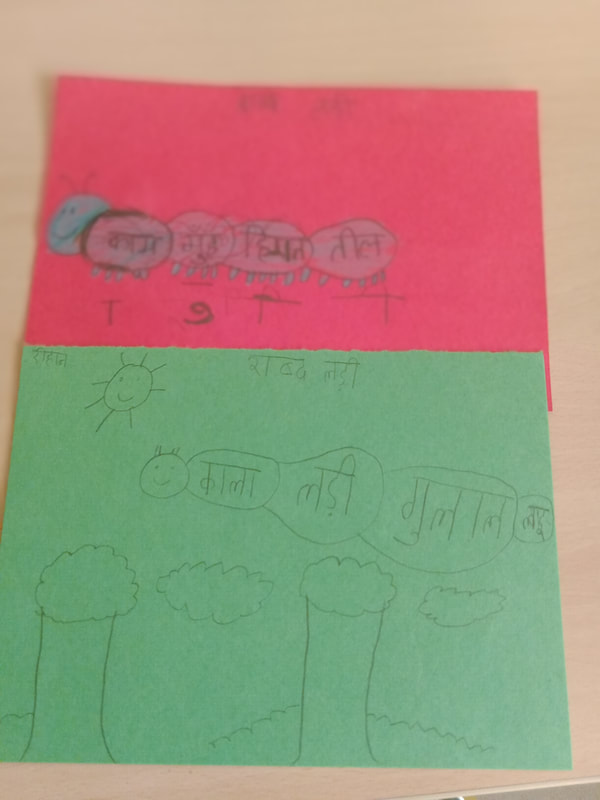
हिन्दी दिवस पर शब्द-लड़ी गतिविधि आयोजित की गई, जिसने उनके शब्द-भंडार में उल्लेखनीय वृद्धि की। साहित्य की ओर कदम बढ़ाते हुए बच्चों ने “पृथ्वी” कविता का भावपूर्ण पाठ किया। इसे विज्ञान और भूगोल से जोड़कर पृथ्वी से जुड़े तथ्यों को साझा किया गया तथा पृथ्वी बचाने के लिए गतिविधि आयोजित हुई, जिसने उनमें पर्यावरण के प्रति जागरूकता जगाई।
'मैं टीवी हूँ' पाठ के माध्यम से विद्यार्थियों ने जाना कि वैज्ञानिक आविष्कार किस प्रकार हमारे जीवन को सरल और उपयोगी बनाते हैं और उसका गलत तरीके से उपयोग हानिकारक है |
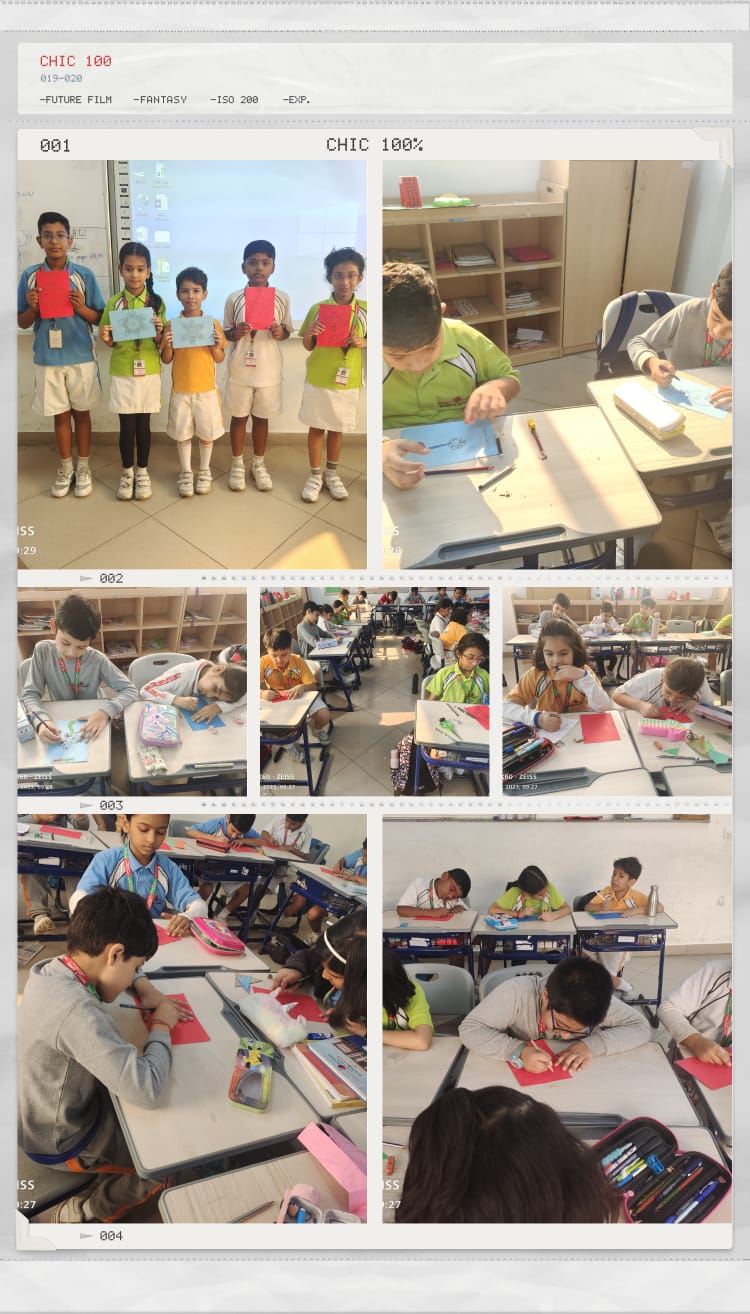
वाचन कौशल के विकास हेतु करवाई गई सामूहिक गतिविधियों ने बच्चों में आत्मविश्वास, सहयोग और सृजनशीलता को बढ़ावा दिया। समूह में चर्चा और प्रस्तुति के अभ्यास ने उन्हें विचार प्रकट करने और अभिव्यक्ति में निपुण बनाया।
इस प्रकार सितम्बर का पूरा महीना बच्चों के भाषाई, बौद्धिक, सामाजिक और रचनात्मक विकास के लिए समर्पित रहा। उन्होंने न केवल ज्ञान अर्जित किया बल्कि जीवन से जुड़ी मूल्यों को भी अपनाया।  https://www.youtube.com/watch?v=dp9N_G92Ypg  https://www.youtube.com/watch?v=KkuS1V0HleA 

हिंदी दिवस  अंतरसदनीय  प्रतियोगिता

१५ सितंबर को विद्यालय में हिंदी दिवस की अंतरसदनीय प्रतियोगिता ‘भाषा सम्राट’ को आयोजित किया गया जिसमें छात्रों ने बड़े ही उल्लास के 
साथ प्रतियोगिता में भाग लिया और दिए गए विभिन्न विषयों पर अपने विचार प्रस्तुत किए और जीवन से जुड़े महत्त्वपूर्ण विषयों पर अपने विचारों
की अभिव्यक्ति दी | कक्षा तीन के नन्हें रचनाकारों ने मासिक विषय ‘भोजन’, सतत विकास लक्ष्य 2 (शून्य भूखमरी) व सतत विकास लक्ष्य 12
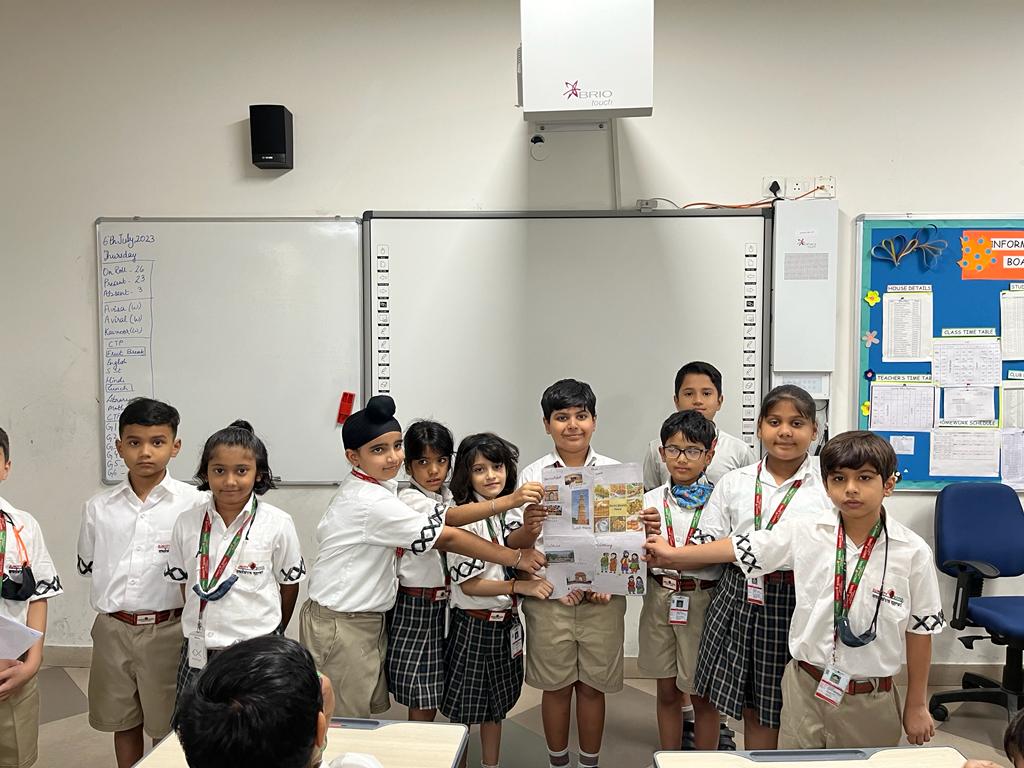
(संवहनीय उपभोग व उत्पादन) पर आधारित कहानियाँ प्रस्तुत कर श्रोताओं के मन को आह्लादित किया |  
ICT

Our Grade III students were thrilled to begin their journey with Scratch 3.0!
To introduce them to the concept of block programming, a fun activity was conducted where two students followed a set of instructions given by the facilitator. This hands-on game helped them easily understand how programming works step by step.

Once familiar with the idea, the young learners explored the Scratch interface, discovering its various components and their functions. The highlight of the session was when they created colourful circles and other shapes using Scratch. The activity not only boosted their creativity but also offered them a joyful first experience in coding.

CO- SCHOLASTIC

PHYSICAL EDUCATION

Physical Education Highlights – Advancing Skills & Confidence

This month, our students moved beyond the basics, refining techniques and applying them in competitive settings across multiple sports.

Badminton – Precision & Tactical Control: Training advanced to multi-shot rally sequences, mid-rally adjustments, and deceptive net play. 

Swimming – Speed & Endurance Training: Learners worked on interval drills, flip turns, and stroke correction to enhance speed consistency

Gymnastics – Strength & Sequencing: Students combined multiple elements such as cartwheel-to-handstand transitions and dynamic beam routines.

Judo– Counter-Attack & Groundwork: Moving beyond basic throws, students practiced combinations leading to pins and escapes.

Cricket –Strategic Game Scenarios: Players analyzed field placements, adjusted batting orders, and practiced situational bowling.     

Shooting –Precision under Pressure: Training evolved to include controlled breathing for accuracy, target transition drills, and focus-building techniques.

Football – Advanced Game Strategy: Learners explored zonal marking, quick transitions, and set-piece executions. Focus was on communication, anticipation, and adaptability within competitive team play.

Tennis – Power & Tactical Depth: Training included topspin variations, return strategies, and endurance rallies.

Basketball- Advanced Offensive & Defensive Play: Players moved into pick-and-roll strategies, defensive rotations, and fast-break transitions.

Through these advanced modules, our young athletes are not just improving physically but also mentally—learning to think, adapt, and perform like seasoned competitors. Their journey toward mastery continues with discipline, focus, and passion.


INDIAN MUSIC

Vocal Music Activities – Introduction of Raga Bhairav with Teen Taal
In September, the Vocal Music Department centered its activities around Raga Bhairav, a foundational morning raga in Indian classical music. Students explored the raga’s distinct mood, which evokes a sense of peace and devotion. Through guided practice sessions, they learned to identify its key notes—Komal Re and Komal Dha—and how these contribute to its meditative quality. Group singing exercises and individual performances allowed students to express the emotional depth of the raga. Teachers also shared the historical and theoretical background of Raga Bhairav, enriching students’ cultural understanding. This focused approach improved both technical skills and musical sensitivity, laying a strong foundation in classical vocal training. The month concluded with an in-class recital, where students confidently showcased what they had learned, earning praise for their progress and dedication.

WESTERN MUSIC

Reflecting Through Music 🎶
This September, students from Grades III to V revisited some of the most meaningful and inspiring songs they’ve learned throughout the year. The revision sessions served as a wonderful opportunity to reinforce musical concepts, vocal techniques, and the values embedded in each piece.

Songs Revisited:
“Count on Me” – celebrating friendship, trust, and support
“Sleeping Child” – encouraging peace, empathy, and global awareness
“A Million Dreams” – inspiring imagination, hope, and belief in the future
“I Have a Dream” – expressing courage, unity, and the power of holding onto dreams

Each song revision allowed students to deepen their understanding of rhythm, pitch, dynamics, and expression. With the use of instruments like the Clapbox, students continued to explore rhythm in an engaging and hands-on way.

Beyond musical skills, these sessions helped reinforce important life values such as kindness, collaboration, resilience, and self-belief—reminding us once again how music is not just something we learn, but something we live.

WESTERN DANCE

  A complete revision sessions of the Dance forms learned from Apr-Aug                                                                                                                                                                      
1. April–August Recap & Revision Highlights- As the rhythm continues, our Grades 3–5 students returned to the class with energy, enthusiasm, and a shared goal: to revisit, refine, and rejoice in the Western dance forms they’ve explored from April to August. This revision series was more than a recap—it was a celebration of growth, grit, and groove.                   
                                                                    
 2.  Warm-Up & Body Awareness- Each class began with dynamic warm-up routines and stretching sequences that reawakened muscle memory and encouraged mindful movement. Through simple locomotor and non-locomotor exercises, students reconnected with their bodies, building awareness of posture, alignment, and spatial control.     
                                                                                                 
 3. Reinforcement & Retention- The students revisited key concepts from earlier units—rhythmic patterns, style-specific movements, and expressive techniques. Through guided repetition, students reinforced their understanding while supporting one another’s learning journeys. 
                                                      
 4. Improvement & Refining- With a focus on clarity and precision, students worked on refining their execution. Whether it was mastering syncopation in Jazz or enhancing fluidity in lyrical sequences, students practiced with purpose—improving speed, accuracy, and expressive depth in every move.                                                                                                                                      
5. Building a Strong foundation-
By the end of the revision cycle, students demonstrated noticeable improvement in musicality, technique, expression, performance skills.

DRAMA

In September, our drama classes focused on the exciting world of improvisation. Students explored solo, dual, and group improvisations, learning how to think on their feet and create stories in the moment. They worked on short improvised scenes in the classroom, experimenting with characters, settings, and situations that unfolded spontaneously. A key highlight was understanding the powerful concept of “Yes… and”—the golden rule of improvisation. This helped them accept ideas from their peers and build on them creatively, fostering teamwork, imagination, and confidence. The sessions were filled with laughter, surprises, and memorable moments of spontaneous storytelling.

Indian Dance

Students learnt steps and movements of Garba - Folk dance of Gujarat. This lesson has been planned to make them understand  the significance of Navratri and garba dance as cultural heritage of Gujarat. Students learnt dance moves on the traditional song of Gujarat - Dholida Dhol Re Vagad. They learnt to dance in pairs , create different patterns and formations.

VISUAL ARTS

Grade 3 and 4 students created beautiful drawings of the Qutub Minar, showcasing their creativity and artistic skills. Using pencil colours, they filled their artwork with bright and lovely shades, bringing the tall tower to life with neat details. Each student displayed great patience and imagination, making the Qutub Minar look lively and majestic through their colourful creations.


Grade 5 students created beautiful drawings of musical instruments using bright and vibrant oil pastels. Each artwork is filled with creativity, imagination, and attention to detail. The students expressed their love for music through colorful and lively designs. Their use of rich colors brings life and rhythm to every instrument they drew. Altogether, the display showcases their artistic talent and joyful spirit.

0 Comments

AMAZING AUGUST

9/3/2025

0 Comments


ENGLISH

The August English Planner for Grade III was designed to nurture curiosity and creativity while strengthening core language skills. With Plants as the monthly theme, students dived into engaging grammar lessons on adjectives, degrees of comparison, and verb tenses. These concepts were explored through interactive activities such as the “Adjective + Noun Pass” game, spelling challenges, and descriptive writing exercises that made learning lively and memorable.
Creative writing held a special place that month, as learners drafted their own imaginative stories using fun prompts like Leafy’s Magical Journey, The Tortoise Races Again, and Cinderella Forgets Her Slipper Again. Such tasks encouraged them to apply narrative structure, build characters, and expand vocabulary while weaving in humor and creativity.
By focusing on reading comprehension, critical thinking, collaboration, and expression, the planner ensured holistic growth. It inspired children not just to learn English, but to truly enjoy the art of storytelling. This growth and enthusiasm were beautifully showcased during the Parent Walk-In, where students confidently shared their written work and actively participated in live classroom activities—giving parents a glimpse into their learning journey and creative progress.

SCIENCE

​This month, students showcased their enthusiasm and 21st-century skills—critical thinking, collaboration, and creativity—during the Parent Walk-In event, leaving parents inspired by their confident presentations and thoughtful interactions.
Their learning journey began with an exploration of plants and their parts, followed by a hands-on germination activity that brought textbook concepts to life. Diagrams of the shoot and root systems supported visual understanding, while a nature walk allowed students to observe and record real-life examples of roots, stems, and leaves. Leaf printing and seed-sharing activities deepened their grasp of plant anatomy and nutrition.
A blend of interactive videos, PPTs, and experiential strategies ensured that learning remained dynamic, accessible, and rooted in real-world connections.

SOcial Science

​“Small hands, big hearts – learning to care, share, and grow.”
August was a joyful and thoughtful month for our Grade III learners as they explored the people, places, and values that make our country special.
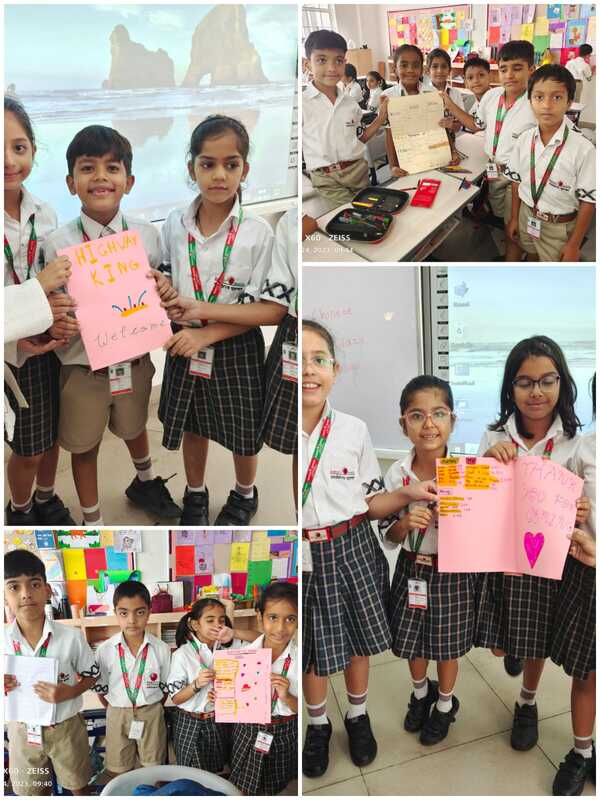
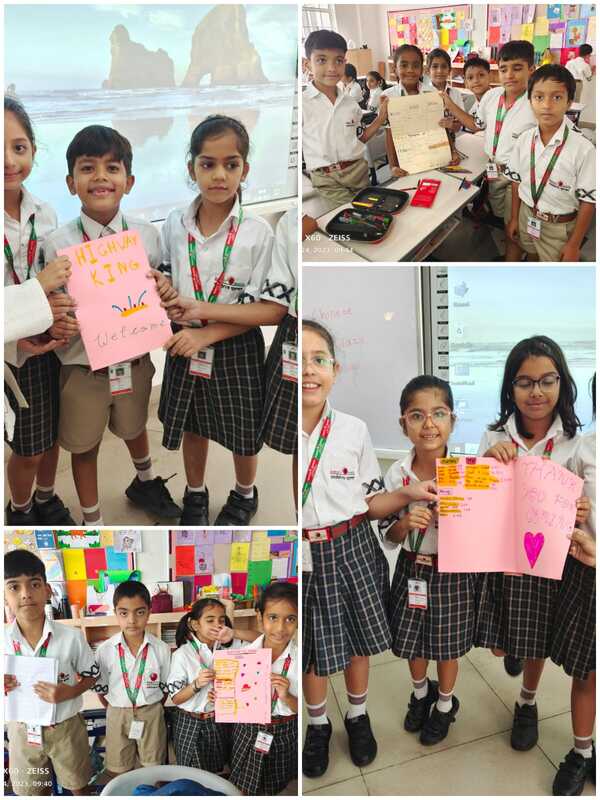
They began by learning about different Occupations and the importance of every job in our community. Whether it’s a doctor, teacher, farmer, or postman—students reflected on how each person helps society run smoothly. As part of the “My Community” segment, students made beautiful thank-you cards for their helpers like guards, maids, and drivers—adding a touch of love and gratitude through colours and kind words.
While exploring the theme “Our Country – Know Your India,” learners took a virtual journey across states, capitals, national symbols, and languages. They discovered the beauty of unity in diversity and proudly shared what they love most about India.
A special highlight was the introduction to organic farming. Students learned how food is grown without harmful chemicals, and how farmers protect nature and health at the same time. Inspired by this, they created Seed Art—using real seeds to make creative posters and artworks.
August was filled with appreciation, creativity, and connection. Our young learners didn’t just study about India and their community—they felt proud to be a part of it.
https://drive.google.com/file/d/1J57rCqNKgkCsGhEmsJOnrkpo4V4IQZqv/view?usp=drive_link 
https://youtu.be/Rl_JJ6ub8n8?si=ca9gqL71Hn_Rqa45 
https://youtu.be/5Cb7kc1eED4?si=tG8YWZqlqp3kRmWf 
https://drive.google.com/file/d/17oi3ffJvjeUAmtIabqvqFYmHMQpjNJuc/view?usp=drive_link 
https://youtu.be/_hkWk3SxDD4?feature=shared 
https://youtu.be/u-l3KfmFNx0?feature=shared 

MATH

In August, students continued to strengthen their understanding of subtraction, focusing on 4-digit numbers with regrouping. They were then introduced to subtraction word problems using the RUCSAC method (Read, Understand, Choose, Solve, Answer, and Check). Emphasis was placed on framing complete answer statements, which they diligently practised in their notebooks. To reinforce their grasp of both addition and subtraction, a Mental Maths quiz was conducted, offering a fun and engaging revision experience.
Taking learning beyond the classroom and into an experiential mode, a Parent Walk-In Exhibition was organised as part of the Maths, Science, and Art Integration initiative. During this event, the young learners transformed into confident educators, enthusiastically demonstrating their understanding of basic mathematical operations, the Shin Programme, and Mental Maths techniques to their parents.
Following their mastery of subtraction, students were introduced to a new mathematical operation — Multiplication. They began by connecting multiplication to real-life situations and discovered how repeated addition forms the basis of multiplication tables. Key terms and vocabulary related to multiplication were introduced, and the fundamental properties of multiplication were explored and discussed in a child-friendly manner.
Students also learnt efficient strategies to multiply numbers by 1, 10, and 100, enhancing their fluency. The concept of vertical multiplication was introduced, with practice examples involving 2- and 3-digit multiplicands and single-digit multipliers.
To culminate the month’s learning, a hands-on Maths Activity – Birthday Party Planning was conducted. Here, students applied their knowledge of addition, subtraction, and multiplication to plan a party within a set budget — encouraging real-world application, logical thinking, and creativity.

HINDI

​अगस्त माह : सीख और सृजन का रंगीन सफ़र 
अगस्त का महीना हमारे नन्हे सितारों के लिए कुछ खास रहा। पेरेंट वाक इन  के अवसर पर बच्चों ने अपनी एकता, आत्मविश्वास, ज्ञान और कलाओं का ऐसा सुंदर संगम प्रस्तुत किया कि देखकर सभी अभिभावकों की आँखें खुशी और भावनाओं से भर आईं। व्याकरण की यात्रा की शुरुआत बच्चों ने शुद्ध-अशुद्ध शब्दों, विलोम शब्दों और लिंग की अवधारणा से की। विलोम शब्द सीखने का मज़ेदार खेल इतना रोचक रहा कि बच्चे खेलते-खेलते सीख गए और फिर उन शब्दों को अपने निजी अनुभवों से जोड़ते हुए और गहराई से समझ पाए। साहित्य में 'समस्या ऐसे सुलझी' पाठ ने बच्चों को यह सिखाया कि हर समस्या अपने साथ समाधान भी लाती है—ज़रूरत है तो केवल सकारात्मक सोच की। बच्चों ने अपनी छोटी-छोटी समस्याओं पर विचार किया और उनके समाधान भी खोजे। कविता – वर्षा रानी के दौरान जब उनसे पूछा गया कि “अगर आप बारिश होते तो क्या करते?” तो बच्चों ने अपनी कल्पनाओं के पंख फैलाए और ऐसे-ऐसे उत्तर दिए जिसमें उनकी आत्मचिंतन की क्षमता, कल्पनाशील शक्ति और आलोचनात्मक सोच झलक उठी। कला और लेखन में रंगों और शब्दों ने मिलकर उनकी दुनिया और भी सुंदर बना दी। सभी ने चित्रकारी की और अपने अनुभवों व भावनाओं को शब्दों में ढाला।यह पूरा सफ़र हमारे स्कूल की वार्षिक विषय  “काइज़ेन” निरंतर सुधार और सीखने की भावना को प्रतिबिंबित करता है। वहीं, अगस्त मासिक विषय  “पेड़-पौधे” ने बच्चों को प्रकृति से जुड़ने, जीवन में हरियाली और संतुलन का महत्व समझाया। साथ ही, बच्चों की गतिविधियाँ सतत विकास लक्ष्य - ३  उत्तम स्वास्थ्य एवं खुशहाली से  भी जुड़ी रहीं, क्योंकि इस दौरान उन्होंने सकारात्मक सोच, मानसिक संतुलन और आनंदमयी सीख को अपनाया।
इस प्रकार अगस्त का महीना केवल पढ़ाई का ही नहीं बल्कि सीख, सृजन, आत्मविश्वास, प्रकृति-प्रेम और स्वस्थ जीवनशैली का अद्भुत संगम रहा। इस प्रकार अगस्त का महीना बच्चों के लिए सिर्फ़ पढ़ाई का नहीं बल्कि सीख, सृजन, आत्मविश्वास और भावनाओं का अद्भुत संगम रहा।
https://www.youtube.com/watch?v=2gG4LowQVXw 
https://wordwall.net/resource/23734435/kriya-sentences-game-class-3-hindi-

ICT

​Grade 3 students were introduced to Scratch 3 programming. They explored the different components of the Scratch window, including the sprite, script area, blocks, and block palette. Through hands-on practice, they created colourful shapes such as circles and squares, while understanding the logic and sequencing behind each step. This activity not only helped them grasp the basics of coding but also encouraged creativity and problem-solving skills. The students showed great enthusiasm, performed well in the “Brain Developer” exercises of the chapter, and enjoyed experimenting with blocks to see instant results on the screen.

CO-Scholastic

physical education

Physical Education Highlights – Advancing Skills & Confidence
This month, our students moved beyond the basics, refining techniques and applying them in competitive settings across multiple sports.
Badminton – Strategy & Endurance: Training advanced to rally construction, deceptive shots, and longer match formats to test stamina and tactical play.
Swimming – Technique Integration: Students combined breathing, arm strokes, and kicks into coordinated freestyle laps, emphasizing endurance and stroke efficiency.
Gymnastics – Control & Flow: Progression included handstand-to-roll transitions, beam combinations, and vault drills to enhance fluidity and confidence.
Judo– Advanced Throws: Beyond O Soto Gari, students practiced combinations and counters, learning to anticipate and react with precision.
Cricket – Match Awareness: Focus shifted to batting partnerships, field placements, and bowling variations, preparing students for real-game strategy.
Shooting – Stability & Accuracy: Grip and stance drills advanced to dry firing exercises, developing muscle memory and mental focus.
Football – Tactical Play: Students moved into structured formations, pressing techniques, and set plays to strengthen team coordination.
Tennis – Match Play Skills: Beyond forehand and volley, emphasis was on rally endurance, serve consistency, and tactical court positioning.
Basketball- Our basketball sessions introduced students to court positioning, lay-up shots, and the correct shooting stance. They also explored the format of both full-court and 3v3 matches. Through these engaging drills, students enhanced their game awareness, improved their shooting accuracy, and developed teamwork skills, making learning basketball both fun and foundational for future competitive play.
Our young athletes are steadily building discipline, resilience, and tactical understanding—laying the foundation for higher-level competitive play.
​

Indian Music

​Exploring Rhythm & Beats: with RAAG  Bharav and Asami  folk song 
1. Basic Hand Movements in Tabla-
Tabla is a popular Indian percussion instrument consisting of two 
drums — Dayan (right drum) and Bayan (left drum). Learning Tabla 
starts with understanding basic hand movements.
Na/ Ta – Struck with fingers on the edge of the Dayan (right hand)
Tin – Full finger strike in the center of the Dayan
Dha – Combination of Bayan (left hand open stroke) and Na (right hand)
Ge/ Ke – Played with the base of the palm on the Bayan for a bass effect
Basic Congo Patterns & National Anthem Rhythm-
The Congo drums are a fun and energetic way to learn rhythm. Students are introduced to:
Open tone (O) – Played with fingers on the edge of the drum
Bass tone (B) – Played with the full hand in the center
Slap tone (S) – A quick, sharp sound made with fingertips
  Introduction of Raag Bharav and Asami folk song 
                                                                                                                                                                                

Western music

​Grade III to V Inspire with “I Have a Dream” ✨
Our talented students from Grades III to V recently captivated the school community with a moving performance of “I Have a Dream,” originally performed by the Swedish pop group ABBA and composed by Benny Andersson and Björn Ulvaeus.
This iconic song, known for its uplifting lyrics and timeless melody, gave students the opportunity to express hope, belief, and the power of dreams through music. It was not just a performance — it was a celebration of courage, imagination, and positivity.
A special rhythmic touch was added through the use of the Clapbox (a type of Cajón percussion instrument), played by students to maintain tempo and enhance the overall musical experience. This helped students understand rhythm in a hands-on way, while encouraging active musical participation beyond singing.
Learning Objectives:
1. To explore vocal expression and musical storytelling
2. To build confidence through public performance
3. To understand and maintain rhythm using the Clapbox
4. To develop listening and coordination skills in group music-making
5. To connect music with meaningful life values such as hope, perseverance, and dreams
SDG 4: Quality Education
This performance directly supports Sustainable Development Goal 4: Quality Education, by fostering inclusive and holistic learning opportunities that go beyond textbooks. Music education plays a crucial role in nurturing creativity, critical thinking, emotional intelligence, and collaboration — key components of lifelong learning.
The students’ heartfelt performance reminded us all of the importance of believing in oneself and dreaming big. Together, they reminded us that dreams, when shared through music, can truly inspire change. 🌟 
​
      

western dance

​Dancing for Change: Embodying SDG 6 Through Movement(Clean Water and Sanitation)—into dance education opening up new pathways for creativity, empathy, and awareness. Through expressive movement, students expressed themes of water scarcity, hygiene, pollution, and global responsibility. Here's how this integration unfolded in the classroom:                                                                                                             
 1. Exploring Fundamental Movements: Water in Motion- Starting with locomotor and non-locomotor basics like walking, reaching, bending, and stretching, learners explored fluidity as a metaphor for the flow of water. Movement quality became a symbol—cleanliness expressed through light, airy motion, and pollution depicted through heavy, tense dynamics.
2. Movement Qualities & Dynamic Contrast- Energy exploration helped students convey scarcity and abundance, Scarcity: Tight, collapsing shapes. Abundance: Expansive, flowing gestures. These contrasts powerfully illustrated shifts in access to clean water—before-and-after scenarios captured through choreography.                                                                                                                                                          3.Storytelling Through Dance- Dance became a medium for advocacy as students used gesture and body language to express environmental care and urgency. Simple narrative frameworks were guided to the students to express compositions like: Cause and effect (e.g., contamination and illness) Problem and solution (e.g., sanitation campaigns) cultivating empathy for communities affected by water crisis.                                  4. Musicality & Rhythm- Students performed movements that mirrored the rhythm of water—drips, waves, gushing torrents. Pauses and silences were taught as powerful metaphors for scarcity or contamination, encouraging deeper reflection through stillness.                                                                                                     5. Students reflected on their learning and connected them directly to SDG 6.                                                    6. Cultural and Global Relevance- By addressing real-world water issues through dance, students gained perspective on both local and global challenges. Choreographic interpretations highlighted cultural diversity, international action, and community-based solutions—all expressed through powerful movement storytelling.
​

drama

​Introduction to Voice Resonance & Pitch – Students discovered how sound vibrates in the body and how resonance adds strength to their voice.
High & Low Pitch – Through playful vocal drills, they explored the difference between high and low pitch, practicing vowels (a, e, i, o, u) to improve clarity.
 Breath Control & Pitch – Activities highlighted how breath supports pitch and projection, teaching students to sustain sound effectively.
 Body Movement with Sound – Linking movement with voice helped students express emotions with energy and confidence.
Dialogue & Narration – Using pitch, projection, and modulation, students brought dialogues and short narrations to life, showing how voice creates dramatic impact. They did improvisations with different pitch and tone. 
​

indian dance

​Kathanak (story) about Lord Krishna to understand the festive spirit for janmashtami. Students learnt a dance based on semi classical movements and hasta mudras . They learnt to tell a story about Radha and Krishna through dance movements. 
​

visual arts

​Grade 3 and 4  students created butterfly drawings using watercolours. They learned how to draw butterflies and explored the use of watercolours. After being taught the basic techniques, they were free to choose their own colours and experiment creatively.
0 Comments

The Joy of July

7/28/2025

0 Comments


Science

After a refreshing summer break, our curious learners returned full of energy and excitement, ready to dive into July's hands-on science adventures. Students explored essential Safety Rules and learned about First Aid by identifying key components of a First Aid Box. Their research on the Peacock, our majestic national bird, added a cultural touch to their scientific journey.

Building on that momentum, students investigated the fascinating world of animal eating habits. Engaging video clips illustrated why animals eat in different ways and how their teeth are adapted for gnawing, chewing cud, or swallowing. A lively group discussion led to the concept of the food chain, which students brought to life through a collaborative activity. By crafting both a food chain and a food web, they deepened their understanding of ecological interdependence and how energy moves through our ecosystem. It was a month of exploration, creativity, and meaningful connections to the world around us!
​
Picture

social science

“Learning is a treasure that will follow its owner everywhere.” 
July was a month full of curiosity and discovery for our Grade III learners.
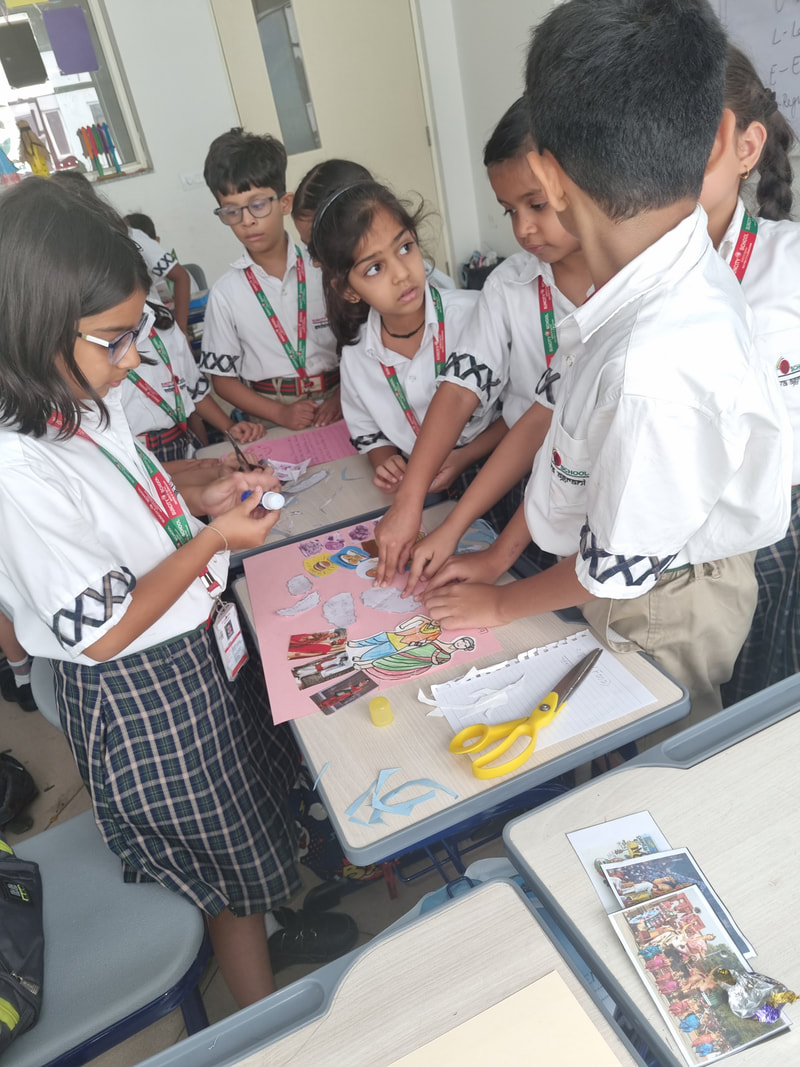
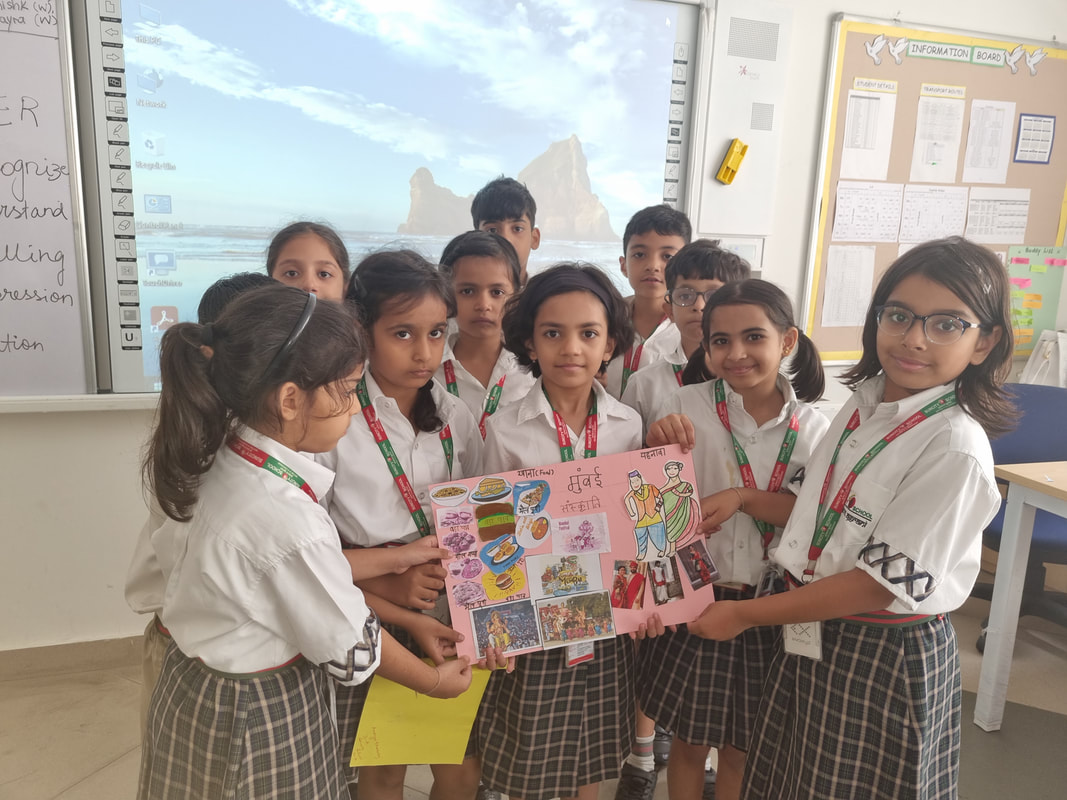
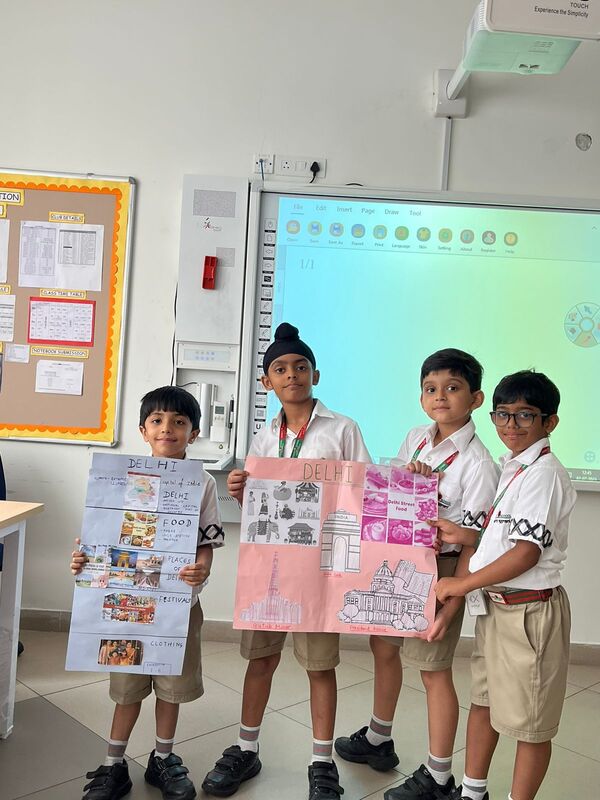
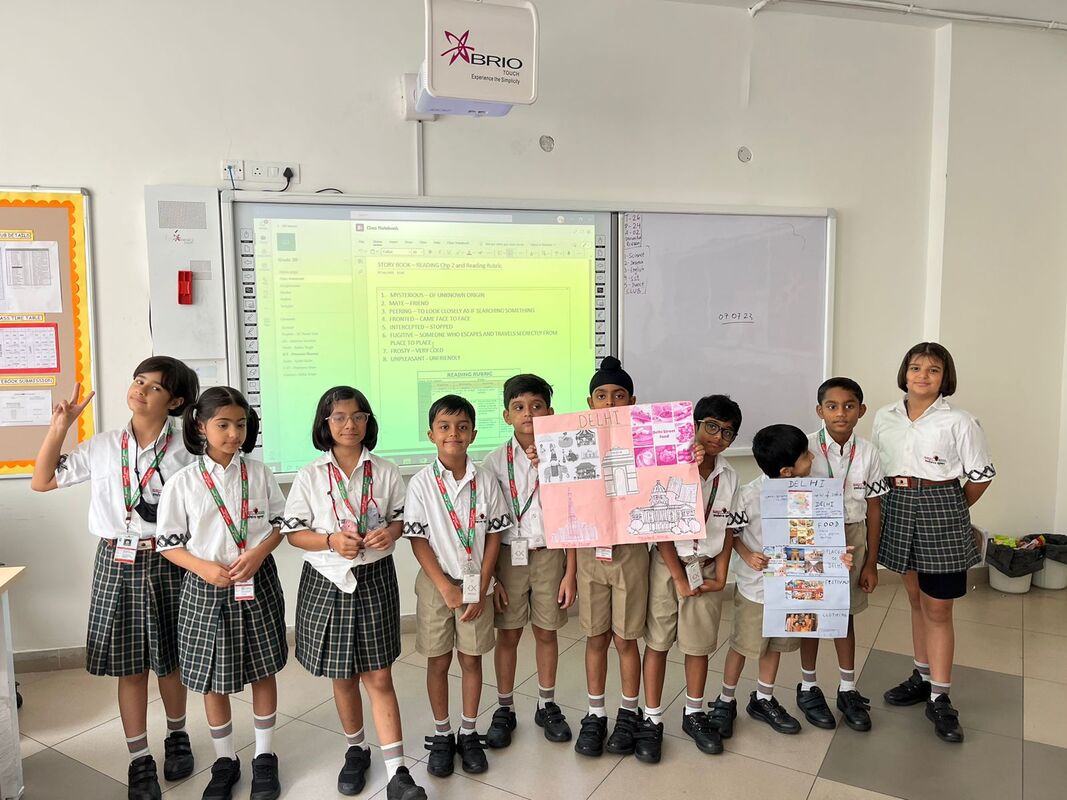
They explored the important cities of India—Delhi, Mumbai, Chennai, and Kolkata—and discussed interesting facts about each. The topic was initiated with a KWL chart and concluded with a reflection task in their notebooks. Students engaged in critical thinking as they discussed why Delhi faces severe pollution issues.
To build on their understanding, children practiced map work, locating these cities and improving their map and spatial skills.
The month also included revision for PA-1, and students confidently appeared for their assessments.
Towards the end, the class began an engaging new topic—Occupations—where they learnt about Sericulture and the other animal-based occupations.
The month helped build awareness, thinking skills, and curiosity about the world around them.
   
Picture

Hindi

ग्रीष्मकालीन अवकाश के बाद कक्षा में बच्चों की वापसी उत्साह से भरी रही। बच्चों ने अपने अवकाश के अनुभव साझा किए, जिससे संवाद की शुरुआत सहज बनी और कक्षा में सकारात्मक वातावरण बना।व्याकरण में ‘सर्वनाम’ की अवधारणा को एक कहानी के माध्यम से समझाया गया। बच्चों ने अपने जीवन से जुड़े अनुभवों के माध्यम से शुद्ध भाषा के महत्त्व को जाना। ‘सर्वनाम वृक्ष गतिविधि’ के ज़रिए न सिर्फ उन्होंने शब्द सीखे, बल्कि सहयोग और साझेदारी की भावना भी विकसित की।वचन की अवधारणा को एक गतिविधि द्वारा आरंभ किया गया जिसमें बच्चों ने वस्तुओं की संख्या पहचानकर वचन का अंतर समझा। इसके साथ ही संगीत, कला और शारीरिक गतिविधि को जोड़ते हुए एक खेल करवाया गया जिसमें बच्चों ने वचन से जुड़े प्रश्नों के उत्तर दिए। इससे उनकी समझ और मज़बूत हुई। साहित्य के अंतर्गत ‘जन्मदिन का उपहार’ पाठ की शुरुआत की गई। बच्चों ने जन्मदिन और उपहार से जुड़ी भावनाएं साझा कीं और एक शुभकामना संदेश कार्ड बनाकर अपनी रचनात्मकता दिखाई। लेखन कार्य के ज़रिए उन्होंने अपनी भाषा-शैली और विचार अभिव्यक्ति को सुदृढ़ किया।  
​

​​English

​This July, our Grade III learners engaged in a rich blend of creativity, language development, and revision. They explored Pourquoi stories—imaginative tales that explain why things are the way they are—while also diving into engaging animal tales. Through picture composition activities, students learned to describe scenes using vivid vocabulary, structured paragraphs, and the 5W1H technique (Who, What, When, Where, Why, How). Grammar sessions focused on personal pronouns, enhancing their ability to write clearly and avoid repetition.
A special highlight was the integration of SDG 4 – Quality Education, where students observed images depicting inclusive and joyful learning and wrote thoughtful paragraphs on its importance. Regular Spell Well dictation, vocabulary-building tasks, and creative writing exercises reinforced classroom learning.
Alongside all this, students actively participated in PA 1 revision, working on comprehension, literature, grammar, and step-by-step writing worksheets to ensure thorough preparation. It’s been a productive and enriching month of learning!


​Math

Our young Suncitizens delved into the mathematical operations of addition and subtraction in the month of July. A fantastic concept elucidation activity captivated the children as they collaborated with their peers to identify key addition and subtraction terms. They related these terms to real-life situations and created their own addition and subtraction stories. This month witnessed wonderful innovation from the students. Furthermore, they revisited the properties of addition and subtraction, effortlessly adding and subtracting 3- and 4-digit numbers with and without regrouping.
They were introduced to word problems involving number operations and guided on how to solve these problems using the RUCSAC method (Read, Understand, Choose, Solve, Answer, Check). It was remarkable to see them not only working on word problems but also creating their own.
​

​ICT

Grade 3 students had a fun and interactive session while learning about Windows 11. They explored important features such as the Desktop, snap feature, and different types of icons. They learned how to open applications, arrange and sort icons, and change the desktop background and screen saver to personalize their computer.
Students were also introduced to the different shapes of the mouse pointer and found it exciting to see how it changes based on actions. Additionally, they understood the correct steps to safely shut down a computer. The session helped them build confidence in using basic computer functions with ease.
​

​Co-Scholastic
​

Physical Education

Physical education is more than just play — it’s a blend of discipline, technique, and teamwork. This month, our young athletes enthusiastically participated in a diverse set of sports, each designed to build specific motor skills, coordination, confidence, and sportsmanship. Here's a glimpse into the action-packed month across different sports disciplines:
Badminton: Precision & Power
Students sharpened their skills with a focus on the forehand service, understanding placement and technique. They practiced clear and toss drills in parts to break down movement. Engaging half-court rallies helped them build consistency, while 11-point matches allowed them to apply their learning in a real-game environment. The excitement on court was palpable!
 Swimming: Breathe, Float, Glide
Our budding swimmers dove into mastering breathing techniques, both inside and outside water. They practiced bubbling, which is key to building breath control. On land, freestyle kicking on the spot strengthened leg coordination, while the arm action drills refined the overall freestyle stroke technique. Students are becoming more confident and water-ready every session.
Gymnastics: Strength Meets Balance
Gymnastics sessions this week focused on core techniques: the handstand fall on the vaulting table, pull over on uneven bars, and jump sets on the beam. These activities helped students improve upper-body strength, coordination, and balance, all while promoting body awareness in a fun and supportive environment.
 Judo: Mastering the Art of the Throw
In Judo, students learned the O Soto Gari — a major outer leg throw. With emphasis on balance, timing, and controlled movements, they explored the principles of leverage and technique that make martial arts both graceful and powerful.
 Cricket: From Basics to Game Play
The cricket ground was buzzing with energy as students explored the basic rules of the game, followed by drills in bowling, fielding, and batting. Emphasis was placed on hand-eye coordination to sharpen reflexes. To bring it all together, a practice match was organized, allowing them to implement their skills in a team setting. A true crowd-puller!
Shooting: Focus and Form
In the shooting zone, safety and discipline took center stage. Students were introduced to the weapon fundamentals and range commands. They practiced double-hand holding with a 1kg dumbbell (30 sec) and without dumbbell (45 sec) to strengthen grip and control. Exercises like dummy wall holding and firing position drills helped students understand the precision and calm required in the sport.
 Football: Footwork and Flair
Football drills this week honed dribbling and ball control through short and long taps using both in-step and out-step techniques. Students practiced push passes and ball receiving skills, gradually building towards attack strategies like 1v1, 2v2, and 3v3 plays. These drills culminated in dynamic match play where students demonstrated teamwork, strategy, and agility.
 Tennis: Stroke by Stroke
Tennis sessions emphasized hand-eye coordination, followed by practice in forehand strokes, volley techniques, and service drills. Students were also trained in court movement to improve footwork and positioning. They are steadily developing rhythm and precision with every session.
​

Indian Music

 National Anthem Practice on Swartarang
“Jana Gana Mana” — One Voice, One Nation, One Heart.
As we prepare for the Swartarang celebration, it’s time to come together in harmony and practice our National Anthem with respect and pride.
Why It Matters:
The National Anthem is a symbol of our unity, our history, and the spirit of our nation.
Singing it together reminds us that no matter our background or language, we are all part of one India.
Let’s Raise Our Voices with Pride!
At Swartarang, your voice is part of something bigger.
Singing the National Anthem together 
is how we begin — united, respectful, and ready to celebrate the arts!
National Anthem Practice with Harmonium!
As part of our school’s music program, we’re excited to announce National Anthem practice sessions 
accompanied by the harmonium! This is a wonderful opportunity to learn how to sing “Jana Gana Mana” with live musical support, helping everyone stay in tune and feel the beauty of our national song.
Nagma Practice in Teen Taal on Harmonium!
Get ready to dive into the rhythms of Indian classical music! Our music sessions focus on practicing Nagma in Teen Taal, accompanied by the harmonium.
What’s Nagma?
Nagma is a repeating melodic phrase played on the harmonium that provides a beautiful background for students to learn rhythm and timing.
What’s Teen Taal?
Teen Taal is a very popular 16-beat rhythmic cycle used in Indian classical music. Learning Teen Taal helps build strong timing and coordination skills!
​

Western Music

 "A Million Dreams" — Songs That Inspire Us!
“Every night I lie in bed, the brightest colors fill my head…”
Music has the power to lift our spirits, spark imagination, and help us believe in ourselves—and few songs do this better than "A Million Dreams" from The Greatest Showman.
Why Students Love “A Million Dreams”:
1. It reminds us to dream big.
2. It shows that imagination can shape the future.
3. It encourages us to believe in ourselves—even when others don’t.
4. It connects to goals, creativity, and kindness.
Inspiration for the Classroom or Home:
Write about your own "million dreams." What do you hope for your future?
Create dream boards or posters that show your goals.
Sing or perform the song as a class activity or talent show number.
Talk about people in history who followed their dreams and changed the world.
Favorite Lyric to Remember:
“There’s a house we can build, every room inside is filled with things from far away…”
 Your dreams are the blueprint of your future—so don’t be afraid to build them big!
​

​Western Dance

Embodying SDG 6 Through Movement(Clean Water and Sanitation) 
Dance education opening up new pathways for creativity, empathy, and awareness. Through expressive movement, students expressed themes of water scarcity, hygiene, pollution, and global responsibility. Here's how this integration unfolded in the classroom:                                                                                    1. Exploring Fundamental Movements- Water in Motion- Starting with locomotor and non-locomotor basics like walking, reaching, bending, and stretching, learners explored fluidity as a metaphor for the flow of water. Movement quality became a symbol—cleanliness expressed through light, airy motion, and pollution depicted through heavy, tense dynamics.
2. Movement Qualities & Dynamic Contrast - Energy exploration helped students convey scarcity and abundance, Scarcity: Tight, collapsing shapes. Abundance: Expansive, flowing gestures. These contrasts powerfully illustrated shifts in access to clean water—before-and-after scenarios captured through choreography. 
3. Storytelling Through Dance- Dance became a medium for advocacy as students used gesture and body language to express environmental care and urgency. Simple narrative frameworks were guided to the students to express compositions like: Cause and effect (e.g., contamination and illness) Problem and solution (e.g., sanitation campaigns) cultivating empathy for communities affected by water crisis. 
4. Musicality & Rhythm- Students performed movements that mirrored the rhythm of water—drips, waves, gushing torrents. Pauses and silences were taught as powerful metaphors for scarcity or contamination, encouraging deeper reflection through stillness.   
5.  Students reflected on their learning and connected them directly to SDG 6                                             6. Cultural and Global Relevance- By addressing real-world water issues through dance, students gained perspective on both local and global challenges. Choreographic interpretations highlighted cultural diversity, international action, and community-based solutions—all expressed through powerful movement storytelling.                                                                                                              
​                                                                            
                                                                                                                                                                                                                                                  

Drama 

In the month of July students explored  Voice & Speech Skills
Voice & Speech Basics – Students learned how breath control and pitch impact clarity and expression.
Voice Projection – Through games and posture training, they explored how to project confidently without straining.
Speech Patterns – Activities focused on rhythm, pace, and modulation to convey meaning and emotion.
Tongue Twisters – Fun and challenging tongue twisters helped improve diction, fluency, and focus.
The month empowered students to become expressive, confident speakers—building strong vocal foundations for performance and communication. Their growing self-awareness and control over speech were both visible and inspiring!


Indian Dance

Students learnt about " Hasta Mudras ". They practiced the series of Asamyukta Hasta Mudras as explained in Natyashastra, its use ,usages and sanskrit chanting in traditional way as well as in our daily life. They have seen visual presentation about Asamyukta Hasta Mudras . Students learnt a dance based on use and usages of Hasta Mudras.
​

Visual Arts

​Student used marble, dripped into the paint and rolling on the paper. Also used inside half-cut pipes, creating colourful curved patterns on paper.  They observed how the marble’s movement forms arcs, spirals, and curves.  Students study the shapes and use their imagination to make a drawing.             
0 Comments

Amazing APRIl - MAY

5/21/2025

0 Comments

 
​ENGLISH
As we embrace the start of the new academic year, April has been a vibrant and engaging month for our third graders in English! Rooted in the universal theme of Kaizen (continuous improvement) and the monthly theme "I, Me, Myself", our young learners began their learning journey by discovering more about themselves and those around them. The month kicked off with an exciting “All About Me” activity where children shared personal stories, interests, and dreams. 
Through the heartwarming story A Home for Grandfather, students explored values like empathy, respect, and the importance of family. Our learners dove into the world of nouns—common, proper, collective, and abstract—using creative tools like the “Noun Gallery,” where they illustrated and showcased their favorite people, places, and things. 
Children learned to sequence and write clear, step-by-step instructions on daily tasks, like brushing their teeth or planting a seed. To inspire a love for classics, students were introduced to Daniel Defoe’s Robinson Crusoe. They practiced reading aloud, built vocabulary, and explored the themes of survival, courage, and self-reliance. 
Spelling units on specific sound patterns helped students improve their listening, spelling accuracy, and sentence structure.
https://youtu.be/wVjfIwMpQT8
https://www.youtube.com/watch?v=MBYeZEPB8x0
This May, our Grade III learners explored the theme “I, Me, Myself” through engaging English lessons. They mastered articles and punctuation using stories, games, and fun characters like Detective Question. Students enjoyed poetry through “Sorry, Sorry, Sorry” . 
​
HINDI
नए शैक्षिक सत्र की शुरुआत बच्चों के आपसी परिचय और संवाद से की गई। बच्चों ने एक-दूसरे की अच्छाइयों को पहचाना और उनसे कुछ सीखने की प्रेरणा ली। साल की थीम ‘Kaizen’ यानी निरंतर सुधार को ध्यान में रखते हुए उन्हें नैतिक मूल्यों और आत्मविकास से जुड़ने के लिए प्रेरित किया गया। भाषा के क्षेत्र में बच्चों ने पढ़ना, लिखना, सुनना और बोलना—चारों कौशलों पर काम किया। उन्होंने भाषा के अलग-अलग रूपों को समझा और रोज़मर्रा की ज़िंदगी में उनकी ज़रूरत को महसूस किया। स्वर, व्यंजन, संयुक्त अक्षर, अनुस्वार और अनुनासिक जैसी अवधारणाओं को मज़ेदार गतिविधियों के ज़रिए सिखाया गया, जैसे 'जादुई थैला' से चीज़ें निकालकर उनके नामों में स्वर-व्यंजन पहचानना। अनुनासिक की ध्वनि को समझने के लिए नाक से आवाज़ निकालकर बोलने और अनुस्वार वाले शब्दों से तुकबंदी करने जैसी गतिविधियाँ करवाई गईं। इससे बच्चों को न केवल मज़ा आया, बल्कि भाषा को गहराई से समझने का मौका भी मिला। साहित्य में ‘खेल-खेल में’ पाठ के ज़रिए बच्चों ने कहानी का भाव समझा और उसे अपने जीवन से जोड़ने की कोशिश की। संज्ञा जैसे व्याकरण के विषयों को भी खेलों के ज़रिए पढ़ाया गया—जैसे बिना नाम बताए चीज़ों का वर्णन करना, जिससे बच्चों को महसूस हुआ कि नाम यानी संज्ञा हमारे जीवन में कितनी अहम है। इसी तरह, गिनती, दिन और महीनों के नाम का महत्त्व बताते हुए चर्चा की गई कि अगर ये चीज़ें न हों तो हमारे जीवन में क्या कठिनाइयाँ आ सकती हैं। इससे बच्चों की सोचने की क्षमता बढ़ी और उन्होंने सवालों पर गहराई से विचार करना सीखा।
पूरे शिक्षण में यह ध्यान रखा गया कि बच्चे केवल रटें नहीं, बल्कि समझें, करें और अनुभव से सीखें। बच्चों को ऐसे माहौल में सिखाया गया, जहाँ वे अपने अनुभव साझा करें, प्रश्न पूछें, रचनात्मक बनें और धीरे-धीरे आत्मनिर्भरता की ओर बढ़ें।    https://www.youtube.com/watch?v=yF_TphWiDyo 
https://www.youtube.com/watch?v=ZvnmrPu3C7I 
​https://www.youtube.com/watch?v=jh1sRcVkF0I              
​
SCIENCE
​April began with a series of interactive ice-breaking activities. Students were then encouraged to observe their surroundings during a Nature Walk, where they experienced firsthand the differences between living and non-living things. Using audio-visual aids such as PowerPoint presentations, videos, and images, they learned to differentiate features of living and non-living things, including respiration, growth, movement, and reproduction. The class also conducted a germination activity, where students enthusiastically participated in a hands-on experience that demonstrated how living things grow, whereas non-living things do not. Additionally, students explored the structure of their bodies, learning about cells (the basic units of life), tissues, organs, organ systems, and organisms. This study included learning about the positions and functions of various organs, which strengthened their understanding and provided clarity on these concepts.
https://www.youtube.com/watch?v=saL8acHZJ8Q 
https://www.youtube.com/watch?v=r8fST3DHRJo 
https://www.youtube.com/watch?v=_S83_yGbMq4 
https://www.youtube.com/watch?v=b9mTpJmJXU0 
In May, students continued their learning journey by studying various organ systems. They visited the laboratory to learn about the skeleton and how it functions. A fun activity involved checking their friends' pulses, which helped them understand how the heart works. Through audio-visual aids such as PowerPoint presentations, videos, and images, students gained insights into the functioning of different body systems. They also participated enthusiastically in a hands-on respiratory system activity using balloons and straws, which deepened their understanding of the nose, windpipe, and lungs. The peer teaching methodology proved effective in helping students revise for UT-1.
ahttps://www.youtube.com/watch?v=r8fST3DHRJo
https://youtu.be/Z0p2HCFp8KM
​
SOCIAL SCIENCE
“The more you know about the past, the better prepared you are for the future.” – Theodore Roosevelt
The new academic session began on a vibrant note with our enthusiastic young learners diving into the fascinating world of Early Humans. With curious minds and creative energy, the students explored the life of nomads and how early humans searched for food.
They were amazed by the discovery of fire and the invention of farming and the wheel—milestones that transformed human life forever. To deepen their understanding, the students conducted a comparative study between Early Humans and Modern Humans through thoughtful discussions and expressive drawings. They further learnt about the pride of India- the National Symbol of the country. They also enhanced their learning about India and its states and marked the same on the political map of India.
It was a joy to see the learners step into the shoes of early humans and connect history with their everyday lives!
Video Links: 
https://youtu.be/1hKnfVaP-NQ?si=59_sT6gpT7iyhD0w                                                                                    https://youtu.be/XzG1aPw7YBc?feature=shared                                                                                                  https://www.bookwidgets.com/play/65H0ygudiQAFElUhvAAAA/GCDUNGSteacher_id=4883361288945664
https://wordwall.net/resource/15235179/india-map-state-and-union-territories
MATHEMATICS
The new academic session began with a fun exploration of the shapes we see around us. Students identified and discussed different shapes using real-life classroom objects and interactive PowerPoint slides. They were introduced to 3D shapes and learned to tell the difference between 2D and 3D shapes. They also drew 3D shapes in their notebooks and noted down their key features. To deepen their understanding, students enjoyed playing hands-on games using wooden shape blocks. 3D shapes were also created by students using Judo Gyan Kit. Additionally, students were excited to do Shin Edu workbook page no. 1 and 2 in Math Lab.
In May, the focus shifted to numbers. Students began by forming four-digit numbers through fun activities. To connect learning with real life, they were asked to find four-digit numbers at home or in their surroundings, and they came up with some interesting examples. The concept of place value was introduced using place value blocks, which helped students understand how numbers are built. They created four-digit numbers and learned to represent them in different ways: standard form, expanded form, word form, and using models. They also learned the difference between face value and place value through simple, engaging activities.
Students practiced comparing and ordering numbers and worked on related sums in their notebooks. To make learning even more enjoyable, they played games to understand odd and even numbers. Toward the end of the month, they were introduced to rounding numbers to the nearest tens in a clear and easy-to-understand way. 
​
ICT
We kicked off the session with a fun and engaging ice-breaking activity, followed by an introduction that set the stage for the exciting learning ahead. The students were thrilled to explore new applications and tools in ICT, starting with the advanced features of Paint. They learned how to use various tools, including selecting, cropping, resizing, and flipping images. The students showed a strong understanding of the concepts, demonstrated through their successful completion of practical exercises.
Next, we shifted our focus to the computer system, diving into a new topic: Hardware and Software. The students explored the different categories of hardware, such as input devices, output devices, storage devices, and processing devices. They also gained an understanding of the different types of software and how hardware and software are interdependent, working together to make the system function smoothly. The students grasped these concepts well, sparking curiosity and deeper interest in how computers work.
​
PHYSICAL EDUCATION
Badminton: Practicing footwork and movements with a shuttlecock, Students were practicing 6 corners footwork and clear skill practice, 21 points matches and knock out.                                                                    Swimming: Breathing techniques inside and outside water, bubbling, freestyle kicking on spot,arm action of freestyle stroke.
Gymnastics: Standing bridge, hop kartwheel, Wall handstand, High beam, Balancing beam and Podium jump  Judo :  Ukemi’s (techniques to back fall), Tsugi Ashi (Walking Movement), Mae ukemi (Front fall),  Ayumi Ashi ( walking Movement).
Cricket:  Basic rules of the sport, Bowling basics, Fielding drills, Hand-eye coordination drills and Batting basics. Practice match to aaply the skills learnt.                                                                                                    Shooting: Weapon introduction, fundamentals and safety rules, range commands, double hand holding with 1Kg dumble (30 sec) without dumble (45 seconds) Dummy holding on the wall, firing position.                        Football:    Ball control & Dribbling: Drills to teach: Short Taps (In-step), Short taps (Out-step), Long taps (In-step), Long taps (out-step)
Passing & Receiving: Recap dribbling fundamental: Push pass (In Step), Push pass (out step), In step receiving the ball
Attack: Drills to teach: Dribbling in forward direction, Dribbling with 1vs1, 2vs2, 3vs3.

INDIAN MUSIC
Exploring Rhythm & Beats:
Basic Hand Movements in Tabla-
Tabla is a popular Indian percussion instrument consisting of two 
drums — Dayan (right drum) and Bayan (left drum). Learning Tabla 
starts with understanding basic hand movements.
Na/ Ta – Struck with fingers on the edge of the Dayan (right hand)
Tin – Full finger strike in the center of the Dayan
Dha – Combination of Bayan (left hand open stroke) and Na (right hand)
Ge/ Ke – Played with the base of the palm on the Bayan for a bass effect

Basic Congo Patterns & National Anthem Rhythm-
The Congo drums are a fun and energetic way to learn rhythm. Students are introduced to:
Open tone (O) – Played with fingers on the edge of the drum
Bass tone (B) – Played with the full hand in the center
Slap tone (S) – A quick, sharp sound made with fingertips

Students also explore the rhythm of the Indian National Anthem
 (Jana Gana Mana) by clapping or playing it gently on Congo. 
This helps them feel the slow, respectful 3-beat rhythm that gives 
the anthem its grandeur.

Introduction to Teen Taal (16-Beat Cycle)
Teen Taal is the most commonly used taal in Indian classical music.
 It has 16 beats divided into 4 equal parts (vibhags) of 4 beats each
​
WESTERN MUSIC
Music that Moved Us: Celebrating Values Through Song 
April and May featured two meaningful songs that beautifully complemented the values we promote in school.
First, “Count on Me” by Bruno Mars lit up the room with its joyful celebration of friendship and support. The students sang with energy and enthusiasm, and their cheerful voices reminded us all of the importance of being there for one another. It was heartwarming to see them embrace the message of kindness and dependability — values we nurture every day in our school community.
In contrast, “Sleeping Child” by Michael Learns to Rock provided a quiet, touching moment during the sessions. With its message of peace, love, and hope for a better world, this gentle ballad offered a chance for reflection. The students performed it with remarkable maturity and emotion, leaving a lasting impression on everyone in the audience. It was a beautiful reminder of the innocence of childhood and the importance of compassion in our world.
​
WESTERN DANCE
Western Dance : Step Into Style
This month in Western Dance class, students from Grades 3 to 5 explored the energetic and expressive world of Jazz dance under the guidance of Ms. Jessica Wilson. The sessions were dynamic, educational, and full of rhythm and creativity!
Here’s what they learned:
Fundamental Jazz Posture and Alignment
Students practiced essential Jazz techniques, including Jazz walks, kick-ball change, pivot turns, and step touch—all while focusing on maintaining correct posture and body alignment.
Ballet Basics
They were introduced to the five main positions of Ballet, with a focus on 1st position, which they practiced thoroughly. This provided a strong foundation for balance, control, and grace.
The Origins of Jazz Dance
Ms. Jessica also shared insights into the origin and cultural significance of Jazz dance, helping students appreciate its rich history and influence.
Warm-Up and Stretching
Emphasis was placed on the importance of warm-ups and stretching exercises, with students learning detailed routines to prepare their bodies safely and effectively for dance.
Musicality and Transitions
Students explored the concept of musicality, learning to move in sync with rhythm and beats. They also practiced smooth transitions and coordination between steps.
Putting It All Together
Finally, students combined the basic steps into simple, expressive dance sequences, performing with style, confidence, and emotion.
These lessons not only nurtured technical skill, but also built confidence, creativity, and an appreciation for the art of dance.
​
INDIAN DANCE​
In our dance sessions, children begin and end each class with Bhumi Namaskar, a traditional gesture of saluting the Earth. This practice helps students cultivate focus, humility, and a deep respect for the art form.

They have also been learning Tatkaar (rhythmic footwork) and Hastak (graceful hand movements) in various layas (tempos). These foundational techniques provide a comprehensive muscular workout—strengthening and toning the leg muscles, enhancing flexibility, and improving blood circulation. More than just movement, these lessons nurture discipline, rhythm, and a meaningful connection to cultural heritage.

VISUAL ARTS
Grade III students explored optical illusions through lines and shapes.
They learned how the brain perceives illusions and how artists use this knowledge to trick the eye.
Each student selected their favorite illusion and recreated it using lines.
For coloring, they used different mediums of their choice — crayons, colored pencils, oil pastels, or watercolors — adding a personal touch to their artworks.                                                                                

​DRAMA
Stepping Into Character
During the months of April and May, our students dove into the world of drama through a series of energetic and imaginative activities. These sessions blended movement, observation, and creativity, laying the foundation for expressive and confident performances.
Here’s what they explored:
1. Igniting Imagination: Students began by imagining themselves as different characters and creatures, tapping into their creativity.
2.  Expressing Through Movement: They discovered how body language and movement can convey powerful emotions and tell compelling stories.
3. Theatre Walks: Practicing the theatre walk helped build stage presence and confidence, key skills for any performer.
4. Focus and Fun: Engaging theatre games were used to strengthen concentration and focus, all while having fun.
5. Sharpening Observation: Students honed their observation skills, paying attention to subtle details in people and nature around them.
6.Animal Studies: They explored animal behavior—from the grace of a cat to the strength of a lion—and experimented with voice and movement to transform into these creatures.
These drama sessions were not just about acting—they were about building empathy, awareness, and expressive confidence. We’re so proud of the creativity and enthusiasm our young performers brought to every session!
​
NUMBER NINJA – INTER-HOUSE MENTAL MATH COMPETITION
The Inter-House Number Ninja Competition for Grades III to V was conducted with great enthusiasm, bringing together all four houses — Arctic, Indian, Atlantic, and Pacific. Participants battled through three thrilling rounds that tested their quick thinking, sharp math skills, and logical reasoning.

The atmosphere was buzzing with excitement as students cheered passionately, proudly supporting their houses and adding to the vibrant team spirit. The final buzzer round, held on 21st April, was especially intense and filled with high energy and anticipation. Kudos to all participants for their enthusiasm, teamwork, and dedication.

​The event was a resounding success — not just a competition of speed and accuracy, but a celebration of mathematical curiosity, collaboration, and sportsmanship. Here's to nurturing a lifelong love for math that goes far beyond numbers!
INTER - HOUSE SPELL BEE CHALLENGE
​The Inter-House Spelling Bee Competition, “Words That Shape the World!”, was held with great enthusiasm and participation from all four houses: Arctic, Indian, Atlantic, and Pacific. The event celebrated language, confidence, and quick thinking, resonating with Margaret Fuller’s words, “Today a reader, tomorrow a leader.”
The competition featured three dynamic rounds:
 Round 1 – Pull the Spell Challenge
 Round 2 – See It, Spell It
 Round 3 – The Word Scrambler
Participants faced increasingly challenging words in a knockout format, demonstrating impressive vocabulary and composure. The auditorium came alive with cheering peers and vibrant house spirit.
The event was a resounding success, showcasing our students’ linguistic talent and teamwork. 
INTER - HOUSE FOOTBALL AND TABLE TENNIS COMPETITION 
The Interhouse Football and Table Tennis competitions for Grades 3 to 5 were held on the 16th and 17th of April, offering students an exciting opportunity to engage in healthy competition and demonstrate their athletic talents. These events aimed to promote key values such as teamwork, sportsmanship, and perseverance.

Students participated with remarkable enthusiasm, representing their houses with pride and determination. The football matches were energetic and action-packed, with players displaying impressive coordination, strategy, and collaboration on the field. Meanwhile, the Table Tennis matches showcased the students' agility, focus, and precision, as they competed in fast-paced, skillful rallies.

The competitions were not only a platform for students to develop and exhibit their sporting abilities, but also to build camaraderie and mutual respect among peers. The vibrant atmosphere and spirited cheering from housemates added to the sense of community and encouragement.

Overall, the events were a resounding success, fostering a love for sports and instilling valuable life skills in all who took part.
​
INTER - HOUSE CRICKET AND SWIMMING COMPETITION
​The Interhouse Cricket and Swimming competitions for Grades 3 to 5 were held on the 5th and 6th of May, encouraging teamwork, sportsmanship, and active participation. Students competed with enthusiasm, displaying impressive skill and energy in both team and individual events. Cricket matches highlighted strategic play and teamwork, while swimming events showcased speed, technique, and determination. The competitions were a great success, fostering school spirit and a love for sports.
​
THE HAPPY TEETH WORKSHOP
On April 9, Suncity School 37D hosted The Happy Teeth Workshop for Grades 3 to 5, led by dental expert Dr. Manisha Verma. The interactive session taught students the correct brushing techniques, importance of regular oral care, and consequences of neglect. An animated story about bad breath made learning fun and memorable. Students left inspired to maintain healthy teeth and bright smiles for overall well-being.
EARTH DAY
At Suncity School 37D, students from Grades I to V joyfully celebrated Earth Day with creative and meaningful activities that deepened their respect for our planet.
Grade III gave voice to the Earth through vibrant posters calling for care and protection. This activity inspired our young learners to become thoughtful stewards of the Earth, committed to a sustainable future.
​
0 Comments

February AND MARCH

3/10/2025

0 Comments


english

February was filled with revision, creativity, and confident performances!
Students polished their Grammar and Informal Letter Writing skills, expressing their thoughts beautifully. The Poem Recitation Assessment saw them bring verses to life with confidence and expression.
They also honed their Story Writing and Literature skills, making their narratives more engaging. Doubt sessions helped clear concepts, ensuring they felt ready for the final exams.
With dedication and enthusiasm, our young learners stepped into their assessments with confidence. We are proud of their progress and eager to see them shine!

hindi

​मास की शुरुआत कविता -जागो और जगाओ कविता का सस्वर वाचन कराकर छात्रों को सुबह जल्दी जागने के फ़ायदों से परिचित कराया गया। वार्षिक परीक्षा हेतु विभिन्न पुनरावृत्ति पत्रों द्वारा व्याकरण, साहित्य व रचनात्मक लेखन की पुनरावृत्ति करवाई गई। भाषायी कौशल व रचनात्मक अभिव्यक्ति का विकास पुनरावृत्ति के माध्यम से कराया गया | 
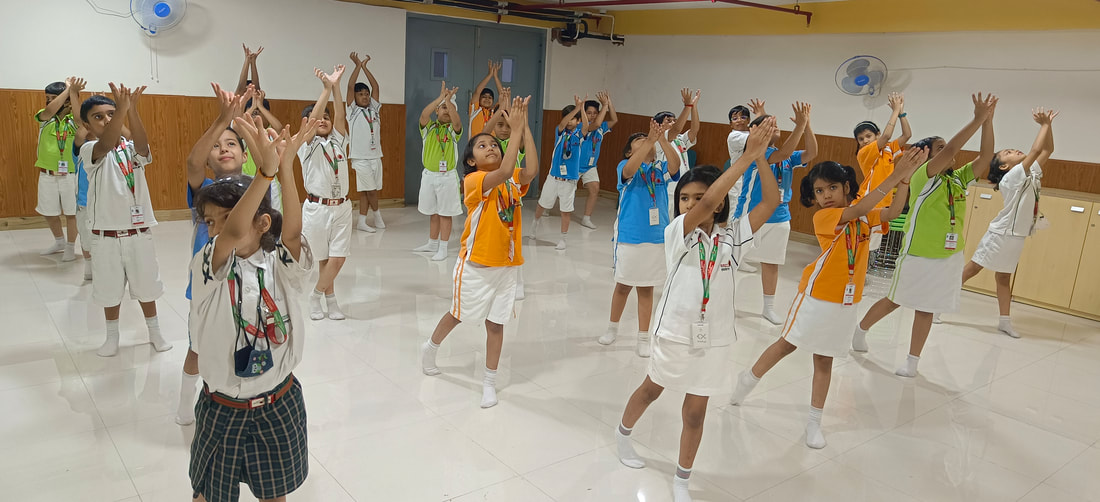
maths

​In the month of February, students explored the topics of Data Handling and Shapes. They analyzed and interpreted data using pictographs , enhancing their ability to organize and represent information visually. Geometry terms like ray , line segment , closed and open figures were explained to strengthen their spatial awareness. To ensure thorough preparation for the final examination, students revised all key topics, including Division, Metric Measures, Time and  Pictorial Representation, through structured practice and problem-solving exercises.

science

February month started with the new concept of Our Earth where students learned about the movement of the earth - Rotation and Revolution; how day and night and seasons are caused. This month was about learning new concepts and recapitulating the old ones. Revision of the Term-end syllabus was conducted using different platforms like MS Form quiz, oral recapitulation and written assessments. Doubt clearing sessions were also taken along with Sample Paper discussion
https://youtu.be/0-h92FrJFAs?si=YRiH8WoQ50GTrfLh

Social science

February was an exciting month of learning as students explored continents, oceans, and Earth’s unique features using maps and globes. They deepened their understanding through interactive activities like the Save Earth Pledge, where they expressed ways to protect the planet. Students also discovered why Earth is called the Blue Planet and compared globes vs. maps using a 3D model. They learned about cardinal directions and reinforced concepts through written assessments and oral recapitulation of key chapters, quizzes  and discussions.
The month concluded with a sample paper discussion, ensuring thorough preparation for the annual exams. Through hands-on experiences and engaging lessons, February was a journey of discovery and learning.
Links: 
- https://www.youtube.com/watch?v=zGtemTLAjCw 
- https://www.youtube.com/watch?v=BPV0PSn5Org
- https://www.youtube.com/watch?v=4DlNhbkPiYY

ict

​The students prepared for their Scratch practical by working on various projects and reviewing concepts for their annual examination.

​WESTERN MUSIC​

​​Instruments percussion:
Main instruments as clap box, different drumming rudiments as in single strokes, double stroke, paradiddles with a syncopated rhythms, practicing with the time signature of 4/4 with right left right right left pattern
along with backing track of different songs for more creative reason. 

DRAMA

In February, students explored improvisation through various activities. They performed small scene improvisations based on given situations, applying different theatre techniques they had learned throughout the session. These exercises helped them enhance their creativity, spontaneity, and performance skills. Additionally, they engaged in puppet improvisations, where they crafted and presented improvised stories using puppets. This activity allowed them to experiment with storytelling, character expression, and voice modulation.

INDIAN DANCE

Revision of all the dance steps ,movements and choreography learnt. Content for revision are : practice of generic steps and movements learnt for folk and classical dance, practice of choreography on patriotic theme, festive theme Dusshera, Diwali etc. 

LIFE SKILLS

We concluded our life skills classes by deepening our ability to work together and solve problems. They learned the importance of teamwork, understanding that everyone’s contributions are valuable, and worked on respecting each other’s opinions. They( also practiced problem-solving, where we approached challenges with patience, creativity, and clear thinking. Another important skill we developed was empathy, where we learned to understand how others feel and show compassion. These life skills helped us work better in groups and build stronger, more respectful friendships.

VISUAL ARTS

​In the month of February, students were given the creative freedom to express themselves on paper, showcasing their imagination and artistic skills. This activity served as a reflection of their learning and growth throughout the year. Additionally, they utilized this time to complete any pending artwork, ensuring a comprehensive culmination of their artistic journey.
0 Comments

OUTSTANDING October

10/30/2024

0 Comments


ENGLISH

This month, students explored Unit 2, Would You Like to Live Here? through fun activities and discussions about different places to live. They practiced comprehension skills and framed sentences to improve their writing. In grammar, we introduced conjunctions and made learning interactive with activities and group exercises. Students also completed tasks in their books and notebooks to strengthen their understanding.We also celebrated Mental Health Day with a special activity, helping students learn the importance of taking care of their m inds and emotions. It was a joyful month of learning and reflection!

Maths

In October, young learners were introduced to fractions, explored terms such as numerator and denominator, and practiced reading fractions. They learned to represent fractions visually by drawing and shading parts of a whole. Students became familiar with like and unlike fractions, learning to differentiate between the two. Using fraction kits, they explored quarters, halves, one-eighths, and one-sixths, creatively building real-life objects to deepen their understanding. They were also introduced to unit fractions and learned about proper and improper fractions, making notes and practicing sorting to solidify these concepts. Additionally, students developed skills in comparing, adding, and subtracting like fractions through engaging word problems.

ICT 

The students explored MS Word 2016, learning multiple techniques for selecting text using both the keyboard and mouse. They also practiced editing text and discovered tools for checking spelling and grammar, as well as using the thesaurus when needed. They enjoyed typing and experimenting with various features of Word.

Hindi

छात्रों को समय का महत्व समझाते हुए, विडियो दिखाकर ‘हर काम ठीक समय पर’ पाठ का परिचय दिया गया। काम को सही समय पर करने का महत्व बताते हुए छात्रों से पाठ का पठन करवाया गया। ‘समय का महत्व’ विषय पर कार्य-पुस्तिका में अनुच्छेद लेखन करवाया गया। छात्रों को लोककथा के विषय में बताते हुए कुछ प्रश्न पूछे गए तत्पश्चात पाठ-'टिपटिपा' का पठन करवाया गया व अभ्यास कार्य करवाया गया। सतत विकास लक्ष्य -१५ थलीय जीवों की सुरक्षा से एकीकृत करते हुए क्रियात्मक गतिविधि के अंतर्गत छात्रों ने समूह बनाकर विभिन्न जानवरों व उनके घरों के लाए गए चित्रों का कोलाज बनाया । छात्रों को एक शब्द के कई नाम हो सकते हैं इसकी जानकारी देते हुए पर्यायवाची शब्द का परिचय दिया गया व पाठ-पठन करवाकर अभ्यास कार्य करवाया गया । बहुमुखी प्रतिभा ‘चित्रांकन’ से एकीकृत क्रियात्मक गतिविधि के अंतर्गत छात्रों को भिन्न -भिन्न चित्र दिखाते हुए उनके पर्यायवाची शब्द कार्य -पुस्तिका में चित्र सहित लिखवाए गए । पुनरावृत्ति हेतु अभ्यास पत्र दिया गया। वीडियो लिंक की सहायता से वन्य प्राणी हाथी के विषय में उपयोगी जानकारी दी गई । नाटकीय ढंग से कविता- घूम हाथी झूम हाथी का सामूहिक गायन करवाया गया व साथ-साथ अभिनय करवाया गया। सतत विकास लक्ष्य -१५ थलीय जीवों की सुरक्षा व कला से एकीकृत क्रियात्मक गतिविधि के अंतर्गत छात्रों द्वारा आसान चरणों में हाथी का चित्र बनवाया गया व हाथी के विषय में तथ्य लिखवाए गए। छात्रों को न डरने की सीख और मुसीबत में विवेक का प्रयोग करने की सीख मिली । छात्रों को व्याकरणिक ज्ञान की जानकारी प्राप्त हुई व उनके शब्दकोश में वृद्धि हुई और छात्रों की भाषिक योग्यता में भी वृद्धि हुई ।
https://youtu.be/6gKJY1BeqAA?feature=shared
https://youtu.be/AZGUhyFMfNo?feature=shared
https://youtu.be/yHCbBNi69eI
https://youtu.be/7BNCOF23Jh4?si=ET3rnWPUyCX8GakR


science

Learners started this month's learning journey by exploring air, water and weather facts. They learned about the water cycle and observed the processes of evaporation, condensation, precipitation and collection through hands-on learning activity. They also explored different weather conditions, how these conditions change, and the causes behind these changes. Discussion and explanation were also done on the topic of seasons. They further delved into the topic of solids, liquids and gases where they learned about various types of matter. Age-appropriate videos, PowerPoint presentations, and interactive sharing sessions were used as teaching methods to facilitate learning. To expand their knowledge, samples of different types of matter were shown. Students also participated in activities using paper strips to explore the molecular structure of solids, liquids, and gases.
https://youtu.be/ncORPosDrjI?feature=shared
https://youtu.be/QQsybALJoew?feature=shared
​https://youtu.be/oIYyeFhZ7eE?feature=shared


social studies

Our young learners were introduced to the topic of Means of Travel, where they explored the evolution of transportation. They learned that, in the past, people often had to walk long distances, whereas today’s advanced modes of transport allow us to reach destinations more quickly and comfortably. Through engaging discussions, they discovered the different types and modes of transportation available today, including unique ones like submarines, spaceships, and metro trains. They also gained valuable knowledge about essential safety rules to follow while travelling, walking, and even playing. Additionally, they learned about the benefits of carpooling, the importance of public transportation, and the meaning behind traffic signals. The chapter concluded with a meaningful moral message: drive less, walk more.

PHYSICAL EDUCATION

Badminton: Warm-Up, Jogging Around the Court,Dynamic Stretches: Focus on wrists, shoulders, legs, Footwork Drills, Racket Grip Practice, Forehand Grip, Backhand Grip, Footwork Basics, Shuffling Drill, Front and Back Movement, Shadow Play, Basic Shots Practice, Serve Practice, Clear Shots, Drop Shots, Rally and Control.  
Gymnastics: Floor exercise round off, bars, swing and support position, vault jumping with spring board.
Judo: Ushiro sabaki (Movement), Stretching, Warm up with a mirror game, Exercise, Ushiro Sabaki (Movement), Fun activity (in or out), Cooldown / Meditation. Mae sabaki (Movement), Stretching, General warm up, Fun activity (dodgeball), Cooldown / Meditation.
Cricket: Bowling drills, Agility and speed drills, Practice matches, Hand-eye coordination games. 
Football: Heading; Throwing: skills taught
● Approach, Take off, Hang arch, Landing, Forehead heading in front on ground, Forehead heading with jump. Passing; Receiving: Recap dribbling fundamental.
● Push pass (In Step), Push pass (out step), In step receiving the ball Shooting &
Kicking: Drills to teach:
● In step, Short-distance kicking Attack: Drills to teach
​● Dribbling in forward direction, Dribbling with 1vs1, 2vs2, 3vs3.

Basketball: Basketball shooting, step back, fake and jump shot, 3*3 format matches, 5*5 format matches. 

performing & visual art

Annual Day preparation & practices
0 Comments

spiritual september

10/7/2024

0 Comments


English 

September month was filled with engaging activities across subjects for Grade 3. In Grammar, students mastered singular and plural nouns (Units 2, 5, 15) and explored punctuation (Unit 19). They delved into the Sustainable Development Goals through Worksheet 7 of their SDG book and showcased creativity in the Poetry Recitation Assessment. In Literature, the students explored "Staying Healthy" (Unit 11), including a handwashing activity to emphasize the benefits of good hygiene. Students also completed Robinson Crusoe (Units 8-10). Story-writing practice fueled imagination, while Nelson Spelling (Units 7, 8) enhanced vocabulary through dictation and spelling exercises.

science 


The month began with an introduction to and understanding of plants, as well as the various parts of plants. Our young learners also conducted an activity on germination to observe the different stages of this process. The concept became clearer through diagrams illustrating the shoot system and root system of a plant. To enhance their understanding, students were taken on a nature walk where they had the opportunity to observe different types of roots, leaves, and stems in nature and recorded their observations. They did the leaf printing activity to deeply understand the parts of plants. Students brought the seeds and presented them in the class and highlighted the benefits of using them in our diet. https://youtu.be/P1LH1C_HGTY?feature=shared They further delved into the topic of soil, where they learned about various soil types. Age-appropriate videos, PowerPoint presentations, and interactive sharing sessions were used as teaching methods to facilitate learning. To expand their knowledge, samples of different types of soil were shown. Students also engaged in discussions about the layers of soil and what it contains along with the importance of soil for a sustainable future. https://www.youtube.com/results?search_query=soil+formation​


social science 

This month, the children explored various occupations related to animals, with a detailed focus on sericulture. The learning experience was enhanced by integrating life skills, particularly how to care for a pet as an animal caretaker. Following this, the topic of food and its importance was introduced, covering oilseeds, cereals, and seasonal fruits and vegetables. The children also learned about Indian spices, mapping out the famous spices and the states where they are found. To further strengthen their understanding, they engaged in map work and completed a Frayer model activity to reflect on their learning. In addition, situation-based sessions on food wastage were conducted, making the concept clear and helping them connect to the value of saving food. They learned that "food saved now is food stored for later", emphasizing mindful consumption. The month’s learning culminated in the creation of posters on food wastage, reinforcing their understanding of the topic.

math 

Students were introduced to another mathematical operation- Division in the month of September. An interesting activity helped the children to do a recap of key terms related to division. The concept of remainder was understood by them with the help of straws and other real life objects. The children continued their learning further by understanding rules of division. Learners related division concept with real life surroundings and solved division word problems using RUCSAC method. Dividing a 2/3 digit dividend with 1 digit divisor using long division method was a new concept for them in Grade III in which the children sailed seemlessly. ​

hindi

​मास का आरंभ, हर्षोल्लास से 'शिक्षक दिवस' मनाते हुए किया गया। क्रिया के विषय में समझाकर अभ्यास-कार्य करवाया गया। छात्रों के भाषिक ज्ञान व शब्द भंडार में वृद्धि हुई। पाठ- 'मैं हवा हूँ' का परिचय हवा के विषय में चर्चा करते हुए व हवा के उपयोग बताते हुए दिया गया । तत्पश्चात पाठ का पठन करवाकर अभ्यास कार्य करवाया गया । छात्रों को स्वच्छ हवा व दूषित हवा के स्वास्थ्य पर प्रभाव का ए -४ शीट पर वर्णन करने का कार्य दिया गया । जन्माष्टमी के पावन पर्व से एकीकृत करते हुए भगवान श्री कृष्ण व सुदामा की दोस्ती का वीडियो दिखाया गया व जीवन में सच्चे मित्र की पहचान व उसके होने के महत्व को समझाया गया। तत्पश्चात पाठ - 'उड़न खटोला' का पठन करवाया गया छात्रों ने 'हिन्दी दिवस' बड़े ही जोश के साथ मनाया जहाँ उन्होंने वाद -विवाद गतिविधि में भाग लेते हुए समाज के महत्वपूर्ण विषयों पर अपने विचारों की अभिव्यक्ति दी। साथ ही साथ विभिन्न कक्षा परीक्षाओं में भाग भी लिया। चॉकलेट कैसे बनती है, इसके फायदे और नुकसान क्या है, वीडियो लिंक की सहायता से बताया गया। इस तरह से छात्रों की कल्पनाशक्ति, चिंतनक्षमता एवं बौद्धिक स्तर का विकास हुआ। छात्रों के व्याकरणिक ज्ञान की जानकारी, शब्दकोश में वृद्धि और छात्रों की भाषिक योग्यता में वृद्धि हुई। । छात्रों ने ‘दिखाओ और बताओ’ गतिविधि में भाग लिया व विभिन्न वस्तुओं को दिखाते हुए उनकी विशेषताओं का वर्णन किया। तत्पश्चात विशेषण समझाया गया व कार्यपुस्तिका व पाठ्य-पुस्तिका में अभ्यास-कार्य करवाया गया।
संबंधित लिंक:
https://youtu.be/nvA0zNBFTFQ?feature=shared
https://youtu.be/AvakIFgvDPQ

ICT

The students understood the components of Word 2016. They learnt how to select the text on word using the mouse and using the keyboard. They also learnt how to insert the text, move the text. Move the text, etc.

physical education

Badminton: Practicing footwork and movements with a shuttlecock, Students were practicing 6 corners footwork and clear skill practice, 21 points matches and knock out.
Swimming: Breathing techniques inside and outside water, bubbling, freestyle kicking on spot, arm action of freestyle stroke.
Gymnastics: Standing bridge, hop kart wheel, Wall handstand, High beam, Balancing beam and Podium jump
Judo: Tai sa baki ( turning movement ) ogosogi (waste techniques)tsugi ashi (walking movement).

Cricket: Bat swing drills, catching drills, fielding drills, Games for hand and eye coordination, Friendly matches.
Shooting: Weapon introduction, fundamentals and safety rules, range commands, double hand holding with 1Kg dumble (30 sec) without dumble (45 seconds) Dummy holding on the wall, firing position.
Football: Ball control ; Dribbling: Drills to teach: Short Taps (In-step),Short taps (Out-step),Long taps (In-step) ,Long taps (out-step) Passing ; Receiving, Recap dribbling fundamental, Push pass (In Step), Push pass (out step), In step receiving the ball shooting, Kicking Drills to teach, In step Short-distance kicking

indian music

सितंबर माह में छात्र छात्राओं द्वारा की गई गतिविधिया:
गायन अभ्यास: अलंकार
राग ताला परिचय कहानी के माध्यम से, तीन ताल परिचय, तबला बोल गीत, राग सारंग परिचय आरोह अवरोह बंदिश
प्रयोग हुए वाद्य: तानपूरा ऑडियो ट्रैक, तबला ,कांगो ,हारमोनियम ।
गायन तकनीक: गायन के अभ्यास की बुनियादी तकनीक
वाद्य -स्वरतारंग कांगो , बोंगो एवं तबला का प्रारंभिक परिचय , हस्तमुद्रा (तीन ताल )

WESTERN MUSIC

Our students have been learning to play "I Have a Dream" by ABBA, focusing on both drumming and guitar techniques. For the drums, they practiced the paradiddle pattern:
Paradiddle pattern: Right-Left-Right-Right and Left-Right-Left-Left
Technique: Begin slowly to ensure control and evenness in each stroke, then gradually increase speed while practicing with a metronome to maintain steady timing. Students also applied paradiddles in drum fills and grooves to enhance their versatility.
On the guitar, they followed a 4/4 strumming pattern:
1st beat: Strong, steady downstroke
2nd beat: Softer downstroke
After 2nd beat: Quick, light upstroke
3rd beat: Light, quick upstroke
After 3rd beat: Softer downstroke
Upstroke: Strong and steady
The students practiced using drums, guitar, piano, and keyboard, and they enjoyed blending these instruments to create a harmonious rendition of this beautiful song!

WESTERN DANCE

In their Western Dance lessons with Mr. Shree Ram, the students learned:
1. The dance form: indian cdontemporary on the song "Hua Shankhnaad."
2. Basic vocabulary of INDIAN Contemporary dance like Adda, Chowk, single leg posses and many more.
3. Creation of a small routine with powerful movement combinations and incorporating vocal expressions.

DRAMA

In September, our drama class focused on the topic "My Story" and explored creative ways to build narratives. Key activities included:
•
Introduction to Three-Act Structure: We discussed the elements of a story – beginning, middle, and end – to help students understand basic storytelling.
•
Collaborative Story Creation:
o Students built stories by speaking one word at a time.
o Later, they created another story, with each student contributing one sentence. Both stories were then performed in class.
•
Personal Narratives: Students shared personal incidents to improve their narration skills and learn how to introduce themselves and their stories effectively.
•
Group Story Re-creation: Students worked in groups, selected famous stories, and re-imagined them by changing the ending or adding new elements. They discussed and performed their re-created versions in class.
These activities enhanced creativity, teamwork, and storytelling skills.

INDIAN DANCE

In Indian Dance classes students learnt about " Five elements of nature" through dance. They understood the significance of five elements of nature to create balance and tranquillity on the earth. They mastered the steps based on semi classical dance with counts of 4 and 8. Steps and movements help them to understand Sanskrit lyrics and musicality. Gradually they understood Sanskrit lyrics with meaning and musicality along with dance moves and hast mudras of classical dance.
Song : Bhumi Mangalam.

life skills

The life skills took students on a reflective journey through a recap of earlier themes. Self-awareness, understanding one's strengths, and recognizing the qualities of a good friend were revisited. The class discussed the importance of kindness and how it connects to building strong friendships. Students shared personal experiences and engaged in group discussions to highlight their understanding of the topics. Activities focused on encouraging each student to reflect on their own behaviour, recognize the strengths they bring to their friendships, and commit to practicing kindness in daily interactions.
0 Comments

awesome august

9/8/2024

0 Comments


English

In August, our Grade 3 students engaged in a range of exciting activities that fostered creativity and language skills. We began with a Picture Composition exercise, where students showcased their imaginative abilities. The revision of pronouns reinforced essential grammar concepts, ensuring a solid foundation for their writing.
The highlight of the month was Unit 3, where we explored the classic tale "The Princess and the Pea." Students not only enjoyed reading and discussing the story but also exercised their creativity by framing sentences with vocabulary from the text and crafting their own alternative endings.
Our budding writers were introduced to the basics of story writing, sparking their interest in creating their own narratives. Additionally, assessments have started, allowing us to gauge the students' progress. It was a month full of learning, creativity, and growth!

​

Science


​Students participated in Parent Walk-In with full zeal and enthusiasm wherein students learned and enhanced their 21st-century skills like critical thinking, problem-solving, and collaboration. Parents were in awe after seeing the hard work that students have put in. Moving forward the topic, the eating habits of animals was introduced. With the help of video clips, students were taught how animals eat and why they have different types of eating habits. They also learned why animals have different types of teeth and various ways of eating, such as gnawing, swallowing, and chewing the cud.
After a little brainstorming and group discussion food chain was explained to the students, and they were asked to make a food chain as a group activity. This helped them to understand and relate how the food chain and food web are an integral part of our ecosystem. In the activity, they made a food chain and then a food web to explain how they are interconnected. Age-appropriate suitable videos, PPTs, and interactive sessions were the methodologies used in guiding the learning throughout.

https://youtu.be/3BVXnzKq5hY?feature=shared
​

Social Science

Taking the Occupation lesson forward, they were introduced to sericulture in detail. Students explored their map skills and marked on the map of India various states famous for the different types of occupations related to animals. Learners were asked - 'Do you think what you like to do in your free time is also an occupation?' So such thought-provoking questions made learners think about the difference between an occupation and a hobby. They gave exciting and informative presentations on the Animal Career Showcase, beautifully linking it to SDGs also. Some people visit us every day and help us keep our homes clean, cars clean, parks clean, keep our society clean, water tap issues, etc. Who are they? Do you think these people are important to us? The topic of community helpers was introduced with the help of a role play in the class in groups and the importance of these community helpers in our lives and the value of their work was discussed.
Using video clips, students were taught how animals eat and why they have different eating habits. They also learned why animals have different types of teeth and various ways of eating, such as gnawing, swallowing, and chewing the cud.

https://youtu.be/N5OuMbbT04Q
https://youtu.be/bvLghveYDIk-
​

Mathematics

The students continued to understand subtraction during August. They continued with the subtraction of 4-digit numbers with regrouping. Thereafter, they were introduced to Subtraction word problems using the RUCSAC method. Students were encouraged to frame the answer statements and write in their notebooks. They revisited both the number operations by Mental Math quiz. Taking learning further to an experiential mode and as a part of Math, Science, and Art Integration, a parent walk-in exhibition was organised where the little educators taught the basic operations of mathematics, the Shin Program, and Mental Math to their parents beautifully. After subtraction, students were introduced to another mathematical operation - MULTIPLICATION. They first related multiplication with their real-life surroundings and identified that repeated addition can be used to create multiplication tables. They were introduced to key terms and keywords related to multiplication. Thereafter, the properties of multiplication were taken one by one and discussed briefly with the children. The students learned short tricks to multiply any number by 1,10 and 100. The concept of vertical multiplication was introduced to the children where the multiplicands were of 2 and 3-digit numbers and the multiplier was a 1-digit number.
​

Hindi

मास का आरंभ 'भाषा सप्ताह एकीकरण' के अंतर्गत हिन्दी में पढ़ाए गए विषय ‘कोयल’ कविता सामाजिक विज्ञान से एकीकृत करते हुए कोयल पक्षी के विषय में शानदार प्रस्तुतीकरण के साथ किया गया जिसके द्वारा छात्रों के अंतरवैयक्तिक कौशल, भाषाई कौशल, और वाचन कौशल का विकास हुआ | मीठी बोली वाले पक्षी कोयल से किया गया । वीडियो द्वारा विभिन्न पशु - पक्षियों के चित्र दिखाकर पूछा गया कि अमुक प्राणी से हम क्या सीख सकते है । तत्पश्चात कोयल पक्षी के बारे में बताया गया कि यह पक्षी देखने में काला होते हुए भी अपनी मीठी बोली के कारण सभी को लुभाता है। इसी प्रकार छात्रों को मीठी बोली के फायदे बताते हुए उन्हे मीठी बोली बोलने के लिए प्रेरित किया गया । छात्रों को लिंक दिखाकर वचन का परिचय दिया गया व कुछ वचन शब्द स्वयं लिखने के लिए प्रेरित करते हुए अभ्यास कार्य करवाया गया । छात्रों को लिंक दिखाकर समान लय वाले शब्दों का परिचय दिया गया व कुछ समान लय वाले शब्द स्वयं लिखने के लिए प्रेरित करते हुए अभ्यास कार्य करवाया गया । छात्रों को वीडियो लिंक के माध्यम से शुद्ध – अशुद्ध का परिचय दिया गया और व्याकरण पुष्प से पठन कार्य करवाते हुए अभ्यास कार्य करवाया गया। शुद्ध – अशुद्ध की गतिविधि कराई गई जिससे छात्र नए शब्दों के अर्थ और उनके शुद्ध – अशुद्ध से परिचित होकर अपने शब्द भंडार में वृद्धि कर पाए। पाठ-'शेरु ने ढूँढी गेंद' का पठन करवाते हुए पालतू जानवरों के साथ मित्रतापूर्ण व्यवहार रखने व उनको रखने के लाभों से परिचित कराया गया। छात्रों को लिंक दिखाकर समान लय वाले शब्दों का परिचय दिया गया व कुछ समान लय वाले शब्द स्वयं लिखने के लिए प्रेरित करते हुए अभ्यास कार्य करवाया गया ।
https://youtu.be/ZxVQn6qg01I
https://www.youtube.com/watch?v=b2JLZMA49zE
https://youtu.be/ONt-H-pmoy0


ICT

The students were introduced to the user-friendly Windows 10 Operating System. They learned about its various features, including the taskbar, icons, selecting and deselecting items, changing the desktop background, setting a screen saver, exploring different mouse pointers, and shutting down the computer.
​

physical Education

Badminton:
Practicing footwork and movements with a shuttlecock, wall hitting, shuttle juggling, and knocking with partners. Students were practicing 4 corners footwork and clear skill practice.
Swimming: Breathing techniques inside and outside water, bubbling, freestyle kicking on spot, arm action of freestyle stroke.
Gymnastics:
Students practiced standing bridge, handstand-bridge, cartwheel on the balancing beam and free hand jump. Judo:
Ogoshi (Waist throw), Tai Sabaki (Turning movement), Uchi Komi (Technique practice) and Ukemis (Falls).

Cricket:
Due to maintenance of ground students played indoor Cricket at MPH and practiced Basic rules of the sport, Batting basics, Bowling basics, Fielding drills, Hand-eye coordination drills.

Shooting:
Weapon introduction, fundamentals and safety rules, range commands, single hand holding with 1Kg dumbbell. Dummy holding with the help of dummy and double hand holding without dumbbell.
Football:
Due to maintenance of ground students were going to Badminton, Gymnastics and Kho Kho.
​

Indian Music


अगस्त माह में छात्र छात्राओं द्वारा की गई गतिविधिया:
गायन अभ्यास: अलंकार
राग ताला परिचय कहानी के माध्यम से, तीन ताल परिचय, तबला बोल गीत, झण्डा गीत , राग भीमपालसी एवं भैरव परिचय आरोह अवरोह बंदिश
प्रयोग हुए वाद्य: तानपूरा ऑडियो ट्रैक, तबला ,कांगो ,हारमोनियम ।
गायन तकनीक: गायन के अभ्यास की बुनियादी तकनीक,गीत के माध्यम से तत वाद्यों का संक्षिप्त परिचय ।
वाद्य - कांगो , बोंगो एवं तबला का प्रारंभिक परिचय , हस्तमुद्रा (तीन ताल ) स्वतंत्रत दिवस कार्यक्रम मे चयनित छात्र छात्रों ने देशभक्ति गीत का प्रदर्शन किया

Western Music

Song: "I Have a Dream" by ABBA
Students have been learning to play "I Have a Dream" by ABBA, focusing on both drumming and guitar techniques. For the drums, they practiced using the paradiddle pattern:

Paradiddle Pattern: Right-Left-Right-Right and Left-Right-Left-Left
Technique: Start slowly to ensure each stroke is even and controlled. Gradually increase the speed while practicing with a metronome to maintain consistent timing. Students also incorporated paradiddles into drum fills and grooves to develop their versatility.
On the guitar, they used a 4/4 strumming pattern, which includes:

1st Beat: Downstroke - strong and steady
2nd Beat: Downstroke - slightly softer
After 2nd Beat: Upstroke - quick and light
3rd Beat: Upstroke - light and quick
After 3rd Beat: Downstroke - slightly softer
Upstroke: Strong and steady
The instruments used in this practice were drums, guitar, piano, and keyboard. The students enjoyed combining these elements to create a harmonious rendition of this beautiful song!

Drama

In August, our drama class focused on mastering essential voice and breath control techniques, crucial for effective performances. Here are the highlights:
•
Volume Control: Students practiced modulating their voices, understanding the importance of varying volume to convey different emotions and situations.
•
Breath Control: We introduced exercises to enhance breath control, helping students sustain longer phrases and maintain clarity in their speech.
•
Voice Projection Techniques: The class focused on projecting their voices without straining, ensuring they could be heard clearly in any setting.
•
Emphasis and Meaning: Students practiced how stressing or emphasizing specific words in a sentence can change its meaning, enhancing their expressive abilities.
•
Group Performance: Students applied these techniques in group activities, improving their ability to collaborate and perform cohesively as a team.
By the end of the month, students demonstrated significant improvement in their vocal abilities, contributing to more dynamic and engaging group performances.

​

Western dance

The students learned in the month of August
1. The dance form: Freestyle on the song "Rang De Basanti."
2. Basic vocabulary of freestyle dance like foot taps, hops, and shuffles.
3. Techniques of freestyle such as using the left side to initiate movements and shoulder isolations.
4. Creation of a small routine with powerful movement combinations and incorporating vocal expressions.
​

Indian dance

In August, students from grades 3 learned a dance based on the theme of Krishna and Radha. The choreography combined elements from two dance styles: Kathak and Garba. This Krishna-Radha-themed dance helped students understand and portray the characters of Krishna and Radha through their movements and expressions. The rhythm patterns, steps, and movements were set in counts of 4 and 8. Students learned to use Asamyukta Hast Mudras (single-hand gestures) such as Arala and Pataka from Kathak, and they explored floor patterns with claps typical of Garba. The dance was performed to the song "Radha Ke Sang Mein Aaj, Raas Rache Krishna Kanha."
​

Visual art

Students were introduced to the concept of balance in art through a pot with a flower as their subject. They learned how to construct the pot using basic shapes, followed by a demonstration on coloring with oil pastels to bring their drawings to life. The activity focused on understanding balance, shape construction, and effective use of oil pastels for vibrant coloring.
​
​

life skills

In the life skills sessions, we delved in the important topic of friendship. We discussed what friendship truly means and how to distinguish between good and bad friendships. The students learned that a good friendship is built on trust, respect, and mutual support, while a bad friendship might involve hurtful behavior or make them feel pressured. We also emphasized the importance of avoiding harmful friendships and being empathetic and kind to everyone they interact with. This lesson encourages them to choose friends wisely and treat others with compassion
0 Comments
<<Previous

    Class teachers

    Ms. Sumeet Kaur (III-A)
    Subject Specialist - Math
    Ms. Sanah (III-B)
    Subject Specialist - S.ST
    Ms. Garima (III-C)
    Subject Specialist - Science
    Ms. Aastha (III-D)
    Subject Specialist - S.ST
    Ms. Annu Gupta(III-E)
    Subject Specialist - Hindi
    Ms. Runjhun Mehta(III-F)
    Subject Specialist - Science

    Archives

    December 2025
    November 2025
    October 2025
    September 2025
    July 2025
    May 2025
    March 2025
    October 2024
    September 2024
    May 2024
    March 2024
    January 2024
    December 2023
    November 2023
    October 2023
    September 2023
    August 2023
    May 2023
    February 2023
    December 2022
    November 2022
    October 2022
    September 2022
    August 2022
    May 2022
    April 2022
    February 2022
    December 2021
    October 2021
    September 2021
    August 2021
    June 2021

    RSS Feed

Powered by Create your own unique website with customizable templates.
  • Blog
  • CLUB
  • Mission and Philosophy